
Drone Warfare Evolution Forces a Radical Shift in British Defense Doctrine
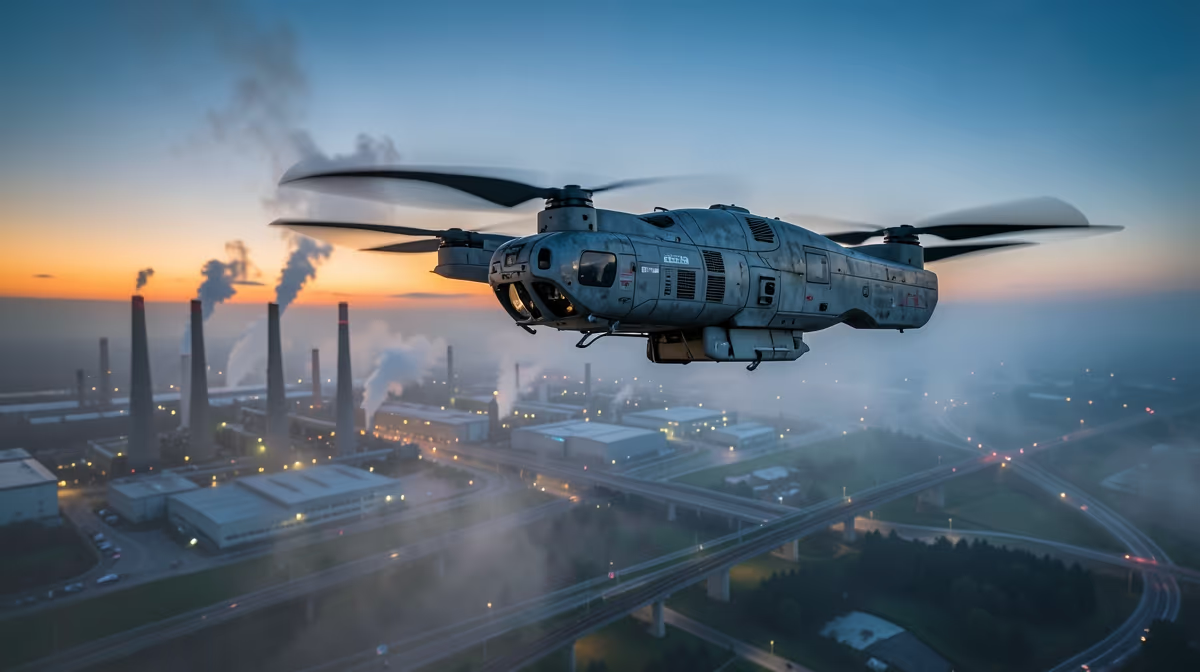
The rapid expansion of drone warfare has fundamentally altered the landscape of modern asymmetric conflict, creating new challenges for international security that demand an immediate re-evaluation of defense doctrines. As global military powers pivot toward high-tech, low-cost solutions, the United Kingdom is accelerating the integration of autonomous weapon systems into its armed forces to maintain tactical parity in an increasingly volatile global environment.
A Strategic Pivot in Defense Doctrine
The United Kingdom is accelerating the integration of advanced autonomous drone systems into its armed forces as part of a strategic pivot to counter emerging threats in Eastern Europe and beyond. Defence Secretary John Healey confirmed this week that the Ministry of Defence is prioritizing the rapid procurement of uncrewed aerial vehicles to modernize the British military's reconnaissance and strike capabilities. This shift is rooted in the strategic necessity to maintain force projection and intelligence superiority while minimizing personnel exposure in post-imperial military restructuring. The initiative represents a departure from reliance on high-end, legacy heavy armor toward more agile, scalable autonomous software and drone platforms that align with the broader Defence Command Plan.
The Shift Toward Rapid Procurement
The Ministry of Defence has outlined a new procurement framework designed to bypass traditional, lengthy acquisition cycles. This initiative aims to equip frontline units with loitering munitions—drones capable of hovering over target areas before engaging—within months rather than years. The shift is largely influenced by observations of drone warfare in the ongoing conflict in Ukraine, where small-scale, off-the-shelf technology has significantly altered battlefield dynamics. Industry leaders, including BAE Systems and QinetiQ, have been invited to collaborate with the Defence Science and Technology Laboratory to accelerate the development of swarm technology and artificial intelligence-assisted target acquisition. While officials emphasize that human oversight will remain central to engagement decisions, the move toward autonomous systems represents a significant shift in British tactical doctrine and logistical support.
Understanding Unmanned Aerial Systems
Drone warfare involves using unmanned aerial vehicles to carry out military missions, such as gathering intelligence or firing missiles, without a pilot sitting inside the aircraft. Instead, these drones are controlled remotely by operators on the ground, often thousands of miles away, or they can fly autonomously using pre-programmed instructions. In the UK, the military utilizes these systems to monitor conflict zones and perform precision strikes, which reduces the physical risk to British service personnel. The primary armed system currently in operation is the MQ-9 Reaper, which has seen extensive use since the early 2000s. These platforms allow for persistent intelligence gathering over long periods, changing the dynamics of counter-terrorism and reconnaissance missions.
The Ethical and Legal Landscape
Critics and ethics groups have raised concerns regarding the potential for autonomous weapon systems and the lack of international legal frameworks governing fully autonomous strikes. The debate centers on the morality of remote warfare and the accountability of nations when using machines to conduct lethal operations. In response, government spokespeople maintain that the UK remains committed to existing international humanitarian law, ensuring that legal and ethical standards are hardcoded into the development of all new autonomous platforms. Defence Secretary John Healey recently noted that the ability to deploy agile, cost-effective drone technology at scale is no longer an aspiration, but an operational necessity. As the technology evolves, the challenge remains to balance tactical advantage with established human-in-the-loop protocols for all kinetic strikes.
The Future of Swarming Capabilities
Expert predictions suggest the UK will shift toward a decentralized swarming capability model, prioritizing modular, low-cost drone platforms over traditional high-end assets to maintain operational parity. This evolution is already underway, with the Defence Science and Technology Laboratory leading research into swarm intelligence for British military applications. A best-case scenario for this integration involves the successful deployment of laser technology into maritime and land-based counter-drone defensive screens, which would significantly reduce reliance on expensive interceptor missiles. However, the worst-case scenario involves a high-profile drone incursion into sensitive airspace, revealing deep vulnerabilities in current domestic jamming and detection systems. In the immediate future, the Ministry of Defence is expected to announce expedited procurement protocols for AI-integrated loitering munitions, while parliamentary defense committees prepare to address the integration of counter-UAS technology into critical national infrastructure.
Historical Context and Global Influence
The current reliance on uncrewed systems mirrors historical precedents, such as the 1920s Air Control doctrine in the Middle East, where aerial bombardment was used as a cost-effective alternative to colonial infantry garrisons. Today, this strategy has been updated to include the normalization of algorithmic warfare and the potential for domestic surveillance mission creep as military drone technology is cross-pollinated with civil police forces. Geopolitically, these advancements serve to strengthen the Five Eyes intelligence architecture while positioning the UK as a critical European hub for drone-based counter-insurgency and persistent maritime surveillance. This transition represents a shift from traditional parliamentary oversight of manned deployments toward an executive-led model of warfare that facilitates more frequent, deniable interventions.
Frequently Asked Questions
How are drones used in modern warfare?
Drones, or Unmanned Aerial Vehicles (UAVs), are primarily used for intelligence gathering, surveillance, reconnaissance, and targeted strikes. They allow military forces to monitor hostile areas and conduct precision operations without putting human pilots at direct risk.
Are military drones legal under international law?
The use of military drones is generally considered legal under international humanitarian law, provided they adhere to the principles of distinction, proportionality, and military necessity. However, their use remains a subject of intense debate regarding accountability, transparency, and the potential for civilian casualties.
What is the role of AI in drone warfare?
Artificial Intelligence is increasingly being integrated into drone systems to enable autonomous flight, target identification, and enhanced navigation in GPS-denied environments. While AI can improve operational efficiency, it also raises significant ethical concerns regarding the use of lethal autonomous weapons systems.
How does drone warfare impact civilian populations?
Drone warfare can have a profound psychological impact on communities living under constant surveillance, leading to widespread anxiety and trauma. Critics also argue that the remote nature of drone strikes may lower the threshold for military intervention, sometimes leading to unintended civilian casualties.
Can drones be countered in battle?
Yes, military forces employ various counter-drone technologies, including electronic jamming, high-powered lasers, and kinetic interceptors. These systems aim to disrupt the communication links between the drone and its operator or physically destroy the aircraft before it reaches its target.
What are the advantages of using drones in conflict?
Drones offer a cost-effective solution for long-endurance missions and reduce the risk to military personnel by operating remotely. Their ability to provide persistent real-time intelligence gives commanders a significant tactical advantage on the modern battlefield.
Conclusion
The United Kingdom has formally committed to the rapid acquisition and integration of autonomous drone systems as a core pillar of its updated defense strategy. By prioritizing agile, scalable, and AI-integrated platforms, the Ministry of Defence aims to modernize its reconnaissance and strike capabilities in response to lessons learned from contemporary conflicts. While the government remains committed to maintaining human-in-the-loop protocols and adhering to international humanitarian law, the shift toward swarm-based tactical models signifies a generational change in military operations. Future developments will focus on finalized budgetary allocations and the refinement of counter-UAS technology to protect national infrastructure, ensuring that the UK maintains its operational edge in a rapidly evolving global security landscape.


.webp)


.webp)
