
Engels-2 Airbase Developments Signal a Major Shift in Strategic War
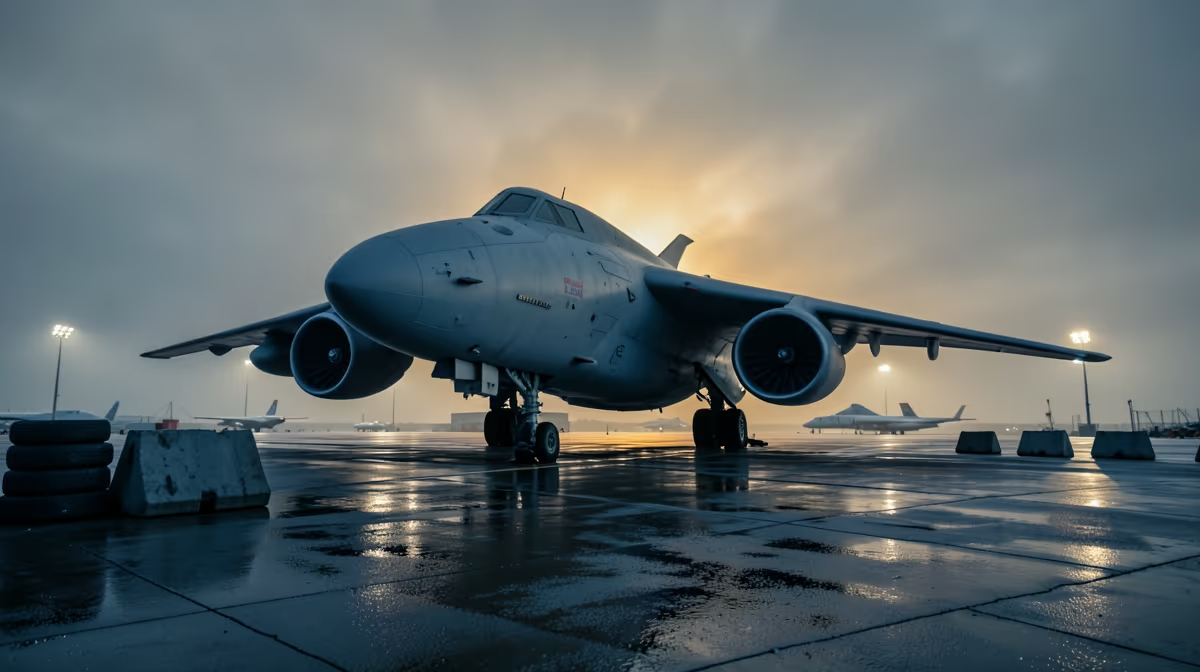
The Engels-2 airbase remains a critical focal point in the ongoing Ukraine war, serving as a primary hub for Russia's strategic bombers. Beneath the facade of conventional military operations, the facility has become a theater of intense observation and physical adaptation as the realities of modern warfare challenge established doctrines of long-range power projection.
Historical Context and Operational Role
Established during the 1950s at the height of the Cold War, the facility in the Saratov region was designed as a premier heavy bomber installation. Its location, approximately 850 kilometers southeast of Moscow and 500 miles from the Ukrainian border, was originally chosen to provide sufficient depth for strategic operations. Today, it stands as a cornerstone of the Russian Aerospace Forces, housing the Tu-95MS Bear turboprop bombers and the Tu-160 Blackjack supersonic strategic bombers. These aircraft are not merely tactical assets; they are central components of Russia's strategic nuclear triad, capable of conducting long-range missions and maintaining a continuous posture of deterrence. Since the intensification of the conflict in Ukraine in 2022, the airbase has transitioned from a routine training and deployment site into a frontline-adjacent logistics hub for sustained missile sorties, forcing a fundamental shift in how the Russian military views the vulnerability of its interior assets.
Defensive Vulnerabilities and Tactical Improvisation
The vulnerability of Engels-2 was exposed in late 2022 when the base sustained significant damage during unprecedented drone attacks. These incidents forced an immediate re-evaluation of Russian air defense doctrine and prompted the adoption of passive protection measures. Satellite imagery has recently confirmed that Russian personnel have deployed tires, sandbags, and reinforced concrete revetments around the fleet of bombers parked on the open tarmac. Defense analysts interpret these measures as a tactical response to the persistent threat of drone-delivered explosives and shrapnel. While effective against basic fragmentation, Western intelligence officials have characterized these modifications as a form of desperate improvisation, noting that the visible use of tires on strategic bomber airframes underscores a lack of hardened, specialized hangar infrastructure capable of protecting such high-value assets from precision strikes.
Geopolitical and Strategic Implications
The airbase sits at the center of the containment versus expansion struggle, acting as a pivot point for the security architecture of the Eastern European theater. For the Russian Ministry of Defence, the facility serves as a vital tool for projecting both nuclear and conventional power. However, it also functions as a lightning rod for domestic nationalist rhetoric and Western intelligence scrutiny. The economic cost of this posture is high; significant long-term capital expenditure is required for infrastructure hardening and ongoing maintenance, diverting resources from other domestic modernization efforts. This dynamic creates a "gray zone" status quo where the United States and its allies must carefully navigate the fine line between monitoring strategic shifts and avoiding actions that could trigger an uncalculated escalation.
The Dual Nature of Recent Legal Filings
While the physical security of the airbase remains a military priority, the term Engels-2 has also emerged in the American political and legal landscape. This secondary usage refers to specific, high-stakes procedural filings in the federal criminal investigation regarding the 2020 election. These documents, which include previously redacted information and internal memos, detail the intent and timeline of key figures involved in challenges to election results. Although unrelated to the Russian military installation, the prominence of this terminology reflects the intensity of current events. For the American public, these filings represent a major step in the judicial process following a Supreme Court ruling on presidential immunity, testing the boundaries of executive power and legal accountability in the context of democratic integrity.
Expert Assessments and Future Projections
Geopolitical analysts anticipate that the status of the airbase will remain tense as Russia attempts to balance the necessity of strategic projection with the risks of asymmetrical warfare. In the next 24 hours, US satellite reconnaissance is expected to increase monitoring of the facility to assess aircraft dispersal and operational readiness. Looking toward the next 72 hours, diplomatic rhetoric from NATO and US officials will likely emphasize the need for continued vigilance regarding Russian bomber capabilities. The expert consensus suggests that as long as the current conflict persists, Engels-2 will remain a barometer for Russia's ability to maintain its strategic depth against modern, precision-guided threats. The best-case scenario involves the military moving assets further inland to mitigate risks, while the worst-case remains an uncalculated kinetic engagement that could force an emergency shift in Western strategic deployments.
Frequently Asked Questions
What is the Engels-2 bomber?
The Engels-2 refers to the Engels-2 airbase in Russia, which serves as a critical strategic bomber facility. It is known for housing the Russian Aerospace Forces' fleet of Tu-95 and Tu-160 long-range strategic bombers.
Where is the Engels-2 airbase located?
Engels-2 is located near the city of Engels in the Saratov Oblast of Russia. It is situated along the Volga River, approximately 850 kilometers southeast of Moscow.
Why is the Engels-2 airbase strategically important?
The airbase is a primary hub for Russia's nuclear-capable strategic bomber fleet. Its location allows these aircraft to conduct long-range missions and maintain a constant airborne deterrence posture.
Has Engels-2 been targeted in conflicts?
Yes, the Engels-2 airbase has been the target of drone attacks during the ongoing conflict between Russia and Ukraine. These incidents highlighted the base's vulnerability despite its distance from the front lines.
What aircraft are stationed at Engels-2?
The base primarily hosts Tupolev Tu-95MS Bear turboprop bombers and Tupolev Tu-160 Blackjack supersonic strategic bombers. These aircraft are key components of the Russian strategic nuclear triad.
Is Engels-2 considered a high-security military zone?
Yes, Engels-2 is one of Russia's most heavily guarded military installations due to its role in national defense. It is protected by sophisticated air defense systems designed to counter aerial threats and missile attacks.
Conclusion
The Engels-2 airbase stands as a vital, yet increasingly vulnerable, fixture in Russia's long-range aviation strategy. Confirmed satellite imagery and persistent surveillance indicate that the facility is undergoing a difficult transition, attempting to offset exposure to asymmetrical drone warfare through passive structural hardening. As international observers continue to monitor the site for signs of asset dispersal or changes in operational tempo, the base remains a core indicator of the broader challenges inherent in maintaining legacy strategic assets within a high-tech conflict environment. The coming period will likely be defined by a continued emphasis on intelligence gathering and the careful management of regional defense postures by all involved powers.


.webp)


.webp)
