
Iranian Ballistic Missiles Spark Urgent US Response Amid Rising Tensions
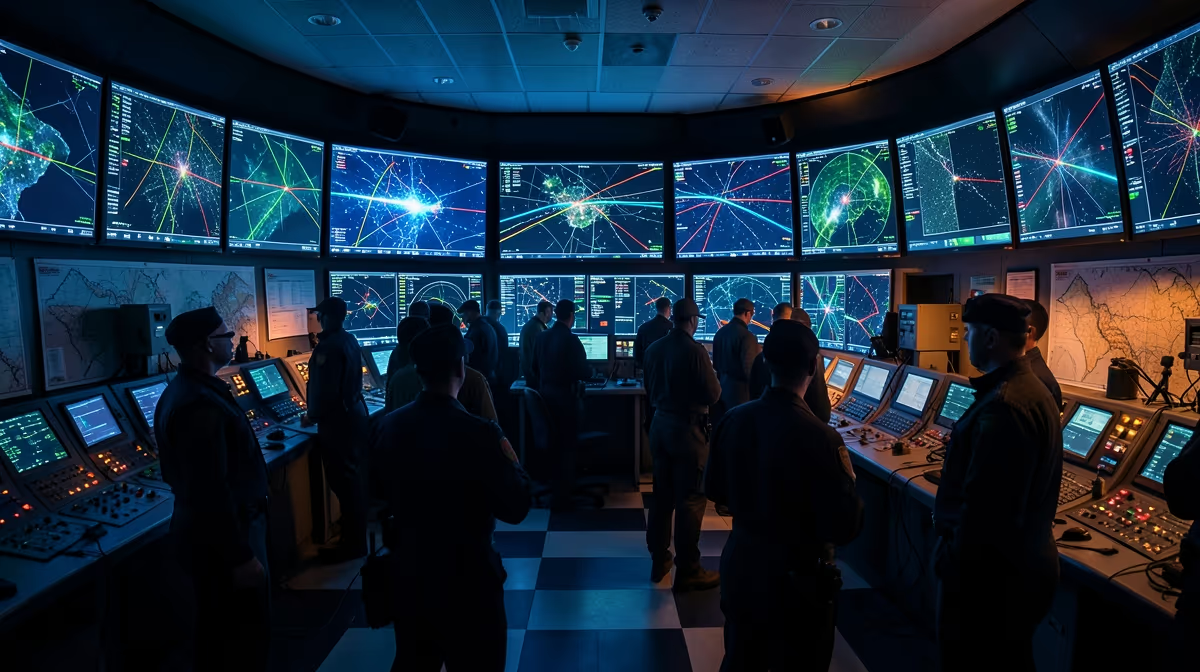
Satellite telemetry captured over western provinces reveals pre-launch sequences that have forced defense planners to reevaluate regional readiness metrics. Amid rising tensions in the Middle East, the deployment of iranian ballistic missiles has become a central focus for international defense analysts.
The Department of Defense announced on Tuesday that United States intelligence agencies have detected increased activity at several strategic Iranian ballistic missile sites, raising regional security concerns just weeks after renewed diplomatic talks stalled. Pentagon officials stated that satellite imagery captured over the past forty-eight hours reveals preparation and fueling procedures typical of pre-launch sequences within Iran's western provinces. While no active launches have been detected targeting American assets or regional allies, defense analysts emphasize that the heightened operational tempo exceeds routine training exercises. In response to the detected movements, U.S. Central Command has adjusted force posture metrics across key installations in the Middle East. Naval assets stationed in the Gulf of Oman have been placed on heightened alert, and integrated air defense systems, including Patriot and THAAD batteries, are actively tracking regional airspace. The White House reiterated its stance that Washington remains committed to deterring Iranian aggression while prioritizing diplomatic channels. However, national security advisors confirmed that all military options remain on the table should the Islamic Republic proceed with provocative missile tests or hostile actions against U.S. personnel. Pentagon Press Secretary Major General Pat Ryder stated that officials are closely monitoring the situation in coordination with regional partners, noting that any escalation or threat to United States forces will be met with a swift and decisive response.
Strategic History And Evolution
Iran began developing its ballistic missile program largely during the Iran-Iraq War in the 1980s when it struggled to acquire modern air power. Over the decades, with assistance from foreign partners and domestic engineering, Tehran built up its capabilities as a primary deterrent against the US and regional rivals like Israel. Historical records show that Tehran acquired Scud missiles from North Korea and Libya during the 1980s conflict, which laid the groundwork for domestic reverse-engineering programs and indigenous missile production facilities established in the 1990s. The 2015 signing of the Joint Comprehensive Plan of Action notably omitted ballistic missile restrictions, fueling intense congressional debate in the United States at the time. By the 2020s, Tehran deepened missile and technology-sharing agreements with foreign partners and regional proxies. Today, Iran has operationalized precision-guided munitions capable of directly challenging U.S. and allied missile defense shields in the region, operating one of the largest and most diverse ballistic missile arsenals in the Middle East with systems spanning short-range tactical weapons to inter-regional missiles.
Technological Mechanics And Defense
Understanding the physical nature of these weapons clarifies why defense planners treat them with extreme urgency. Iran has developed a massive arsenal of ballistic missiles that can fly incredibly fast and travel hundreds or thousands of miles. Unlike cruise missiles, which act more like flying airplanes, ballistic missiles shoot high up into the atmosphere before plunging back down toward their targets at terrifying speeds. Recently, these weapons have taken center stage in breaking news because of rising tensions in the Middle East, where Iran and its allies have used or threatened to use them against regional rivals and American interests. For the general public, hearing about iranian ballistic missiles can sound alarming, especially when news breaks about potential retaliatory strikes or heightened military alerts. However, these developments are part of a long-standing geopolitical standoff. The U.S. military and its partners in the region constantly monitor these threats and use advanced missile defense systems to intercept them if they are launched, aiming to prevent regional conflicts from escalating. Iran has significantly improved the guidance systems and overall accuracy of its ballistic missiles in recent years by integrating advanced satellite navigation and maneuverable reentry vehicles, reducing the circular error probable for key missile types and allowing precise targeting of specific military installations.
Underlying Drivers And Geopolitics
The roots of this military buildup trace back to technological isolation combined with an asymmetric warfare doctrine that compels Tehran to prioritize missile deterrence over establishing a conventional air force. Hardliners leverage the missile program to rally nationalist sentiment and neutralize domestic reformist factions by framing external threats as existential. Severe economic sanctions have forced Iran to rely on illicit supply chains and barter networks, creating a parallel shadow economy centered around defense procurement and dual-use technology. Geopolitically, Tehran uses missile proliferation as leverage in regional proxy conflicts and nuclear negotiations, altering the security architecture of the Middle East and alarming Washington's allies. An additional dimension involves the extensive use of decentralized underground missile cities, which complicates preemptive strikes and shifts the focus of deterrence to subterranean resilience. Furthermore, Iran has a history of transferring missile technology, components, and manufacturing know-how to regional allies and proxy forces, including the Houthis in Yemen and Hezbollah in Lebanon. This proliferation allows non-state actors to project power and threaten maritime and land targets across the region, leading international monitors and intelligence agencies to track these transfers closely due to violations of various United Nations resolutions.
Global Impact And Regional Risk
The potential consequences of an escalation extend far beyond the immediate Middle East theater. This situation matters because the use or threat of ballistic missiles can rapidly escalate regional skirmishes into a wider war that disrupts global oil supplies, spikes gas prices, and draws the U.S. military deeper into Middle Eastern conflicts. People living in the Middle East face the immediate physical danger of missile strikes, while people in the United States and globally are primarily affected by economic ripples, potential security alerts, and the ongoing risk of broader geopolitical instability. While the United States and its allies maintain robust missile defense shields in the region to intercept incoming threats, the persistent friction surrounding iran attacks and broader middle east conflict maintains continuous pressure on international markets and diplomatic channels. International defense analysts and economic monitors watch these dynamics closely, recognizing that sustained high-readiness postures can strain coalition logistics and alter maritime shipping routes in the Gulf of Oman and surrounding waters.
Short-Term Outlook And Intelligence Projections
Intelligence agencies and defense officials will closely monitor Iranian ballistic missile telemetry and readiness levels following recent regional tensions. Over the next twenty-four to seventy-two hours, diplomatic channels and regional allies will engage in consultations to deter further escalation while the United States considers maintaining an enhanced air defense posture in the Middle East. Expert predictions point toward heightened surveillance and deterrence signaling without immediate direct kinetic engagement, while economic and diplomatic pressures are reinforced. In the best-case scenario, de-escalation through back-channel diplomacy could result in a temporary freeze on provocative missile tests or transfers. Conversely, the worst-case scenario warns that a miscalculation or proxy strike could trigger a localized kinetic exchange, prompting defensive U.S. interventions and broader regional conflict.
Frequently Asked Questions
What are the main types of Iranian ballistic missiles?
Iran possesses a diverse arsenal of short-, medium-, and long-range ballistic missiles. Key examples include the Shahab and Khorramshahr series, which form the backbone of their strategic deterrent capabilities. These systems vary in payload capacity and range, with some capable of reaching targets up to 2,000 kilometers away.
Can Iranian ballistic missiles reach the United States?
Currently, iranian ballistic missiles cannot reach the mainland United States. Their longest-range systems are designed primarily for regional deterrence, targeting U.S. military bases, allies, and stability in the Middle East and parts of southeastern Europe. However, Iran continues to develop space launch vehicle technology that could potentially be adapted for intercontinental capabilities in the future.
How accurate are Iran's ballistic missiles?
Iran has significantly improved the guidance systems and overall accuracy of its ballistic missiles in recent years. By integrating advanced satellite navigation and maneuverable reentry vehicles, they have reduced the circular error probable for several key missile types. This technological advancement allows them to target specific military installations with greater precision than in previous decades.
Why are Iranian ballistic missiles a major concern for the US?
The U.S. and its allies view Iran's ballistic missile program as a severe threat to regional stability and global security. These weapons can be proliferated to proxy groups across the Middle East, threatening American service members and partner nations like Israel and Saudi Arabia. Additionally, their growing stockpile complicates broader diplomatic efforts regarding non-proliferation and Middle Eastern security.
Does Iran share its ballistic missile technology with other countries?
Iran has a history of transferring missile technology, components, and manufacturing know-how to regional allies and proxy forces, including the Houthis in Yemen and Hezbollah in Lebanon. This proliferation allows non-state actors to project power and threaten maritime and land targets across the region. International monitors and intelligence agencies track these transfers closely due to violations of various UN resolutions.
Are there international sanctions on Iran's ballistic missile program?
Yes, Iran's ballistic missile program has been subject to numerous international sanctions imposed by the United Nations, the United States, and the European Union. Although certain UN restrictions related to missile proliferation expired under the 2015 Iran nuclear deal timeline, Western nations maintain robust unilateral sanctions. These measures aim to restrict Iran's access to dual-use materials, foreign technology, and financial networks required for missile development.
Conclusion
U.S. intelligence agencies have confirmed increased pre-launch activity at strategic Iranian missile facilities, prompting defensive posture adjustments by U.S. Central Command and heightened surveillance across Middle Eastern installations. While no active missile strikes have occurred, the heightened operational tempo underscores ongoing friction regarding the broader middle east conflict and regional defense readiness. Intelligence officials and regional allies will continue monitoring telemetry and force readiness over the coming days, balancing deterrence measures with diplomatic engagement to prevent further escalation.


