
Perseid Meteor Shower Tonight Reveals Hidden Details About US Skies
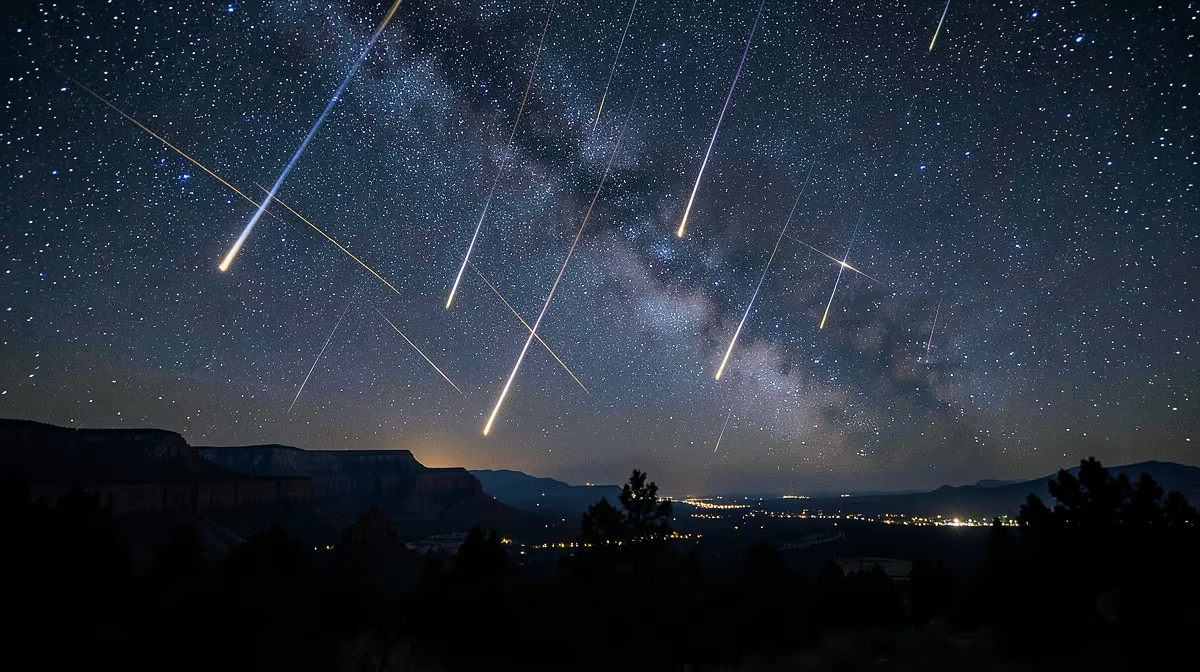
The annual Perseid meteor shower reaches its peak late tonight and into the early hours of Monday morning, offering observers across the United States the year's most reliable and spectacular celestial display. If you are wondering if you can see the perseid meteor shower tonight, you are in luck as the peak activity approaches across the United States, with rates expected to reach up to 100 meteors per hour under optimal conditions.
The Mechanics of the Display
The shower is caused by Earth passing through a dense debris trail left behind by the comet 109P/Swift-Tuttle. As our planet traverses this orbital path, small particles of rock and dust collide with the atmosphere at high speeds. These bits of space matter burn up upon entry, creating the vivid streaks of light we recognize as shooting stars. While the shower is named after the constellation Perseus, as the meteors appear to originate from that point in the sky, these celestial visitors can manifest anywhere in the heavens. This event has been documented for nearly 2,000 years, with the earliest records dating back to Chinese astronomers in 36 AD.
Optimal Viewing Conditions and Strategy
Stargazers are advised to find a location away from urban light pollution to maximize their experience. Unlike many other celestial events, the Perseids are known for producing a high number of bright meteors and fireballs—larger, more intense explosions of light that persist longer than an average streak. Because the moon will be in a first-quarter phase and set shortly after midnight, the sky will remain dark during the prime viewing hours, significantly enhancing visibility for those looking toward the northeast.
Experts recommend allowing at least 20 to 30 minutes for eyes to adjust to the darkness. No special equipment like telescopes or binoculars is necessary. In fact, these tools can hinder your experience because they restrict your field of view; it is best to use your naked eyes to scan the entire sky. While the constellation Perseus acts as the radiant point, you do not need to look directly at that spot. Instead, lie back and take in as wide a view as possible.
The Role of Amateur Astronomy in Space Monitoring
The Perseid meteor shower serves as a profound reminder of our connection to the broader solar system. It offers a rare opportunity for people to engage directly with astronomical events without expensive gear, fostering scientific curiosity and providing a moment of collective awe that transcends geographic and cultural boundaries. Beyond the public interest, there is a hidden layer of utility to these events. Amateur observatory networks often act as a critical validation layer for national security telemetry during meteor peaks. By documenting these natural phenomena, citizens help major powers like the United States distinguish between predictable celestial events and other anomalies, such as satellite movements or kinetic testing.
Geopolitical and Economic Implications
The significance of this event extends into the economic and political spheres. There is a noticeable surge in localized tourism revenue for remote dark-sky parks and an increase in equipment sales within the amateur astronomy sector. Geopolitically, the visibility of the shower allows nations to demonstrate their robust space domain awareness. As countries bolster their surveillance capabilities, the ability to accurately track and categorize the debris of Comet Swift-Tuttle highlights the sophisticated nature of modern space-based monitoring. Historical parallels, such as the 1833 Leonid meteor storm, remind us that our modern understanding of these showers was born from the scientific realization that meteor events are recurring, predictable, and manageable phenomena.
Predicting the Next 72 Hours
For the next 24 hours, peak activity will dominate the night sky. Observers in the US will see high rates of meteors per hour under clear, dark conditions, aided significantly by the early moonset. In the subsequent 72 hours, meteor rates will begin a steady decline. However, sporadic Perseids will remain visible for the next few days as Earth continues to pass through the debris trail. While the best-case scenario involves clear, cloudless skies across most of the US, the worst-case remains widespread cloud cover or localized thunderstorms that could obscure the view for those in the Atlantic coast and Deep South.
The Expert Consensus
According to NASA meteor expert Bill Cooke, the Perseids are the most popular meteor shower of the year because they happen in the summer, and they are prolific. If you see a meteor, the odds are it is a Perseid. Experts anticipate one of the strongest displays in recent years due to the moon's minimal interference, which is likely to lead to widespread public engagement and high social media activity. The International Meteor Organization and the NASA Meteoroid Environment Office continue to track these rates to maintain the integrity of our orbital debris models, ensuring that our understanding of the space environment remains current.
Frequently Asked Questions
Is the Perseid meteor shower visible tonight in the US?
The visibility of the Perseid meteor shower depends on the current date, as it typically peaks between August 11 and 13. If you are outside of this peak window, you may still see a few stray meteors, but the frequency will be significantly lower than during the annual maximum.
What is the best time to see the Perseid meteor shower?
The best time to view the Perseids is during the pre-dawn hours, typically between midnight and sunrise. During this time, the radiant point in the constellation Perseus is highest in the sky, providing the best chance to see the most meteors.
Do I need a telescope to see the Perseid meteor shower?
No, you do not need a telescope or binoculars to view the Perseid meteor shower. In fact, these tools can hinder your experience because they restrict your field of view; it is best to use your naked eyes to scan the entire sky.
Where should I look to see the Perseid meteor shower?
While the meteors appear to originate from the constellation Perseus, you do not need to look directly at that spot. It is recommended to lie back and look toward the darkest part of the sky to increase your chances of spotting the streaks as they cross various constellations.
How many meteors can I expect to see during the Perseids?
During the peak of the Perseid meteor shower under perfect, dark-sky conditions, you can expect to see upwards of 50 to 100 meteors per hour. Factors like light pollution, moonlight, and your specific location in the US will affect how many you actually observe.
How can I improve my chances of seeing the Perseid meteor shower?
To improve your viewing experience, travel to an area with minimal light pollution away from city lights. Give your eyes at least 20 to 30 minutes to adjust to the darkness, and bring a reclining chair or blanket to stay comfortable while looking up at the sky.
Conclusion
The Perseid meteor shower remains one of the most reliable and awe-inspiring natural events, driven by the orbital intersection of Earth with the debris of Comet 109P/Swift-Tuttle. With peak activity occurring tonight, residents across the United States have a prime opportunity to witness up to 100 meteors per hour, provided they seek out dark skies away from urban light pollution. As meteorological forecasts continue to track localized cloud cover, observers should remain flexible in their viewing plans. This event serves as both a moment of collective scientific wonder and a practical demonstration of our ongoing efforts to monitor and understand the complex space environment surrounding our planet.


.webp)


.webp)
