
Real Madrid Financial Strategy Is Changing Football Economics Forever
Beyond the gleaming white jerseys and the record-breaking trophy cabinets, a silent transformation is redefining the fundamental identity of the world’s most successful football club. Real Madrid remains a global powerhouse, not just on the pitch but in the world of football finance, setting new standards in sports economics by evolving from a traditional sporting entity into a multifaceted global entertainment conglomerate.
The Strategic Evolution of a Global Giant
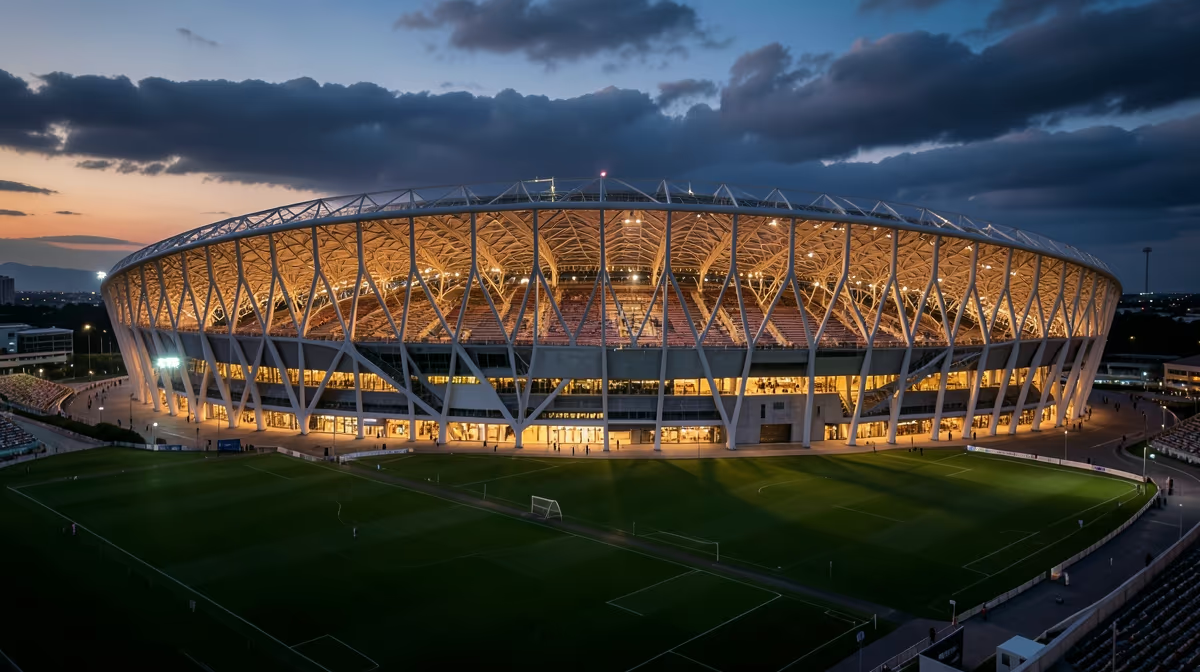
The modern iteration of the club is rooted in a deliberate pursuit of global brand hegemony designed to circumvent the financial limitations inherent in traditional domestic broadcasting rights. While history remembers the 1950s for establishing the club as a beacon of prestige under Santiago Bernabéu, today’s board is focused on infrastructure modernization. The Santiago Bernabéu Stadium is no longer just a pitch; it is being leveraged as an all-year-round entertainment venue. By maximizing multi-functional infrastructure, the organization is effectively decoupling its revenue streams from the volatility of match-day attendance, securing financial stability that few of its peers can emulate.
The Galactico Era Reimagined
The official signing of Kylian Mbappé on a five-year contract serves as the latest chapter in a storied history of star-studded recruitment. Following the expiration of his contract with Paris Saint-Germain, the French forward joins a squad already featuring talents like Vinícius Júnior and Jude Bellingham. This acquisition is more than a sporting decision; it is a calculated investment by President Florentino Pérez, who views Mbappé as the cornerstone of the club's long-term commercial and sporting project. The financial structure of this deal, inclusive of significant signing bonuses and performance incentives, underscores the club's commitment to maintaining a competitive ceiling that few rivals can reach, while simultaneously leveraging the immense global marketing reach of such high-profile athletes.
Economic Resilience and Market Positioning
Real Madrid occupies a unique space in sports economics, acting as both a soft-power extension of Spanish influence and a commercial juggernaut. The club has navigated the complexities of international sports ownership by aligning with Middle Eastern capital through strategic stadium sponsorships, a move that serves as a proxy for broader diplomatic positioning. Internally, the organization remains a study in discipline. Under manager Carlo Ancelotti, the club balances the high-intensity fixture schedule with a focus on tactical stability and squad rotation. This operational rigor is essential, as the club faces constant pressure to defend its status in La Liga and the UEFA Champions League while managing the financial risks associated with the changing landscape of European football.
Navigating the Governance Landscape
The aggressive pursuit of the European Super League project represents a critical hedge against the geopolitical risks and the financial dominance of state-backed clubs, particularly those within the English Premier League. This is not merely a dispute over tournament formats, but a fundamental challenge to the institutional monopoly held by UEFA. By questioning the current governance structures, the club is attempting to secure its long-term viability against an evolving economic environment where domestic broadcasting revenue is increasingly viewed as an insufficient model for elite, global-scale organizations.
Short Term Outlook and Tactical Preparedness
In the immediate future, the club’s priorities remain fixed on squad maintenance and competitive performance. Over the next 24 hours, the team will conduct recovery sessions focused on player fitness and the rehabilitation of key squad members. Looking toward the next 72 hours, official squad lists for the upcoming La Liga matchday will be released, accompanied by insights from Carlo Ancelotti regarding necessary tactical adjustments. The expert prediction suggests a continued commitment to defensive stability, ensuring that the rotation of the midfield combats fatigue during this high-intensity period of the season. The best-case scenario involves the successful return of injured personnel and a string of victories that narrows the points gap in domestic standings, while stakeholders remain vigilant against the risk of further injury setbacks that could disrupt the current momentum.
Frequently Asked Questions
How many Champions League titles has Real Madrid won?
Real Madrid is the most successful club in the history of the UEFA Champions League. As of 2024, they have secured a record 15 titles, cementing their status as the kings of European football.
Who is the current manager of Real Madrid?
The current manager of Real Madrid is Carlo Ancelotti. The Italian tactician is widely celebrated for his calm leadership and for guiding the club to multiple domestic and European trophies during his tenure.
What is the nickname of Real Madrid?
Real Madrid is most commonly known by the nickname Los Blancos, which translates to The Whites. This name refers to the club's iconic all-white home kit, which they have worn since their inception in 1902.
Where does Real Madrid play their home matches?
Real Madrid plays their home matches at the legendary Santiago Bernabéu Stadium, located in Madrid, Spain. The stadium is currently one of the most technologically advanced sports venues in the world following a massive renovation.
Who is the all-time leading goalscorer for Real Madrid?
Cristiano Ronaldo holds the record as the all-time leading goalscorer for Real Madrid. During his prolific nine-year stint with the club, he netted a staggering 450 goals in all competitions.
Why is the rivalry between Real Madrid and Barcelona called El Clásico?
The rivalry between Real Madrid and Barcelona is called El Clásico because it features the two biggest and most successful clubs in Spanish football. It is considered one of the most-watched sporting events globally, representing deep-rooted cultural and political differences.
Conclusion
Real Madrid continues to operate at the intersection of elite sporting achievement and sophisticated financial strategy. With the recent high-profile acquisition of Kylian Mbappé and the structural transformation of the Santiago Bernabéu, the club is positioning itself to withstand the fiscal challenges facing the broader football industry. As they balance immediate tactical demands under Carlo Ancelotti with a long-term vision of global commercial dominance, the organization remains the definitive benchmark for the professional sports entertainment market. Future success will depend on their ability to maintain squad depth, secure competitive performance on the pitch, and navigate the shifting regulatory landscape of European football governance.


.webp)


.webp)
