
Trump Administration USPS Ballot Changes Trigger New Election Worries
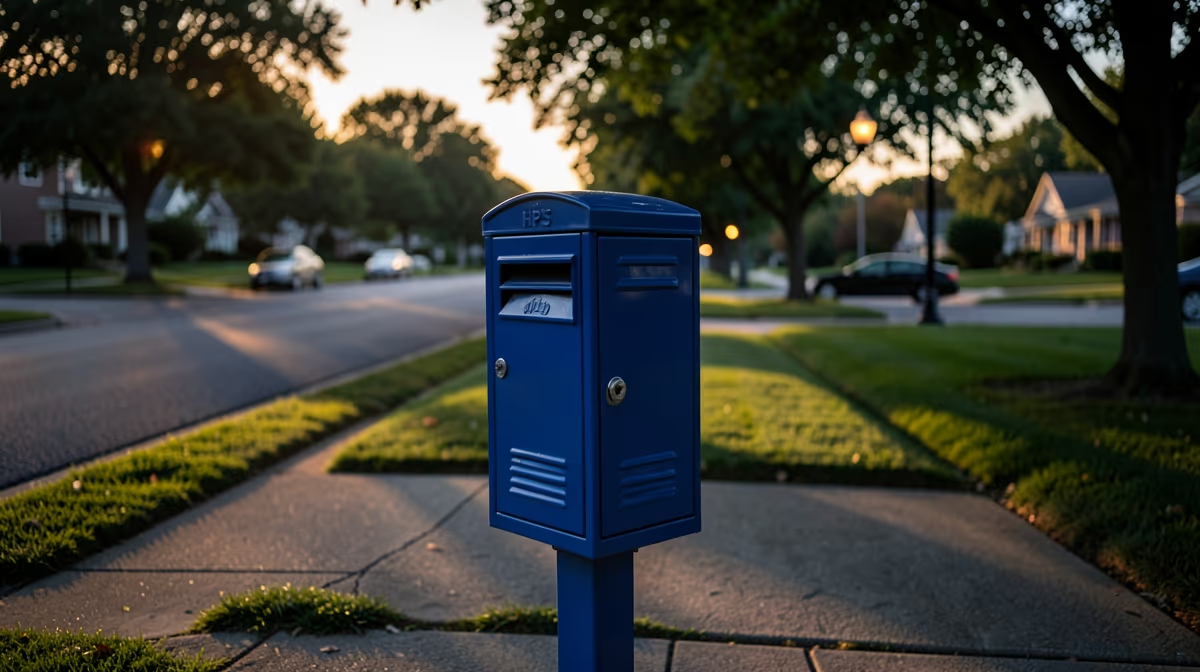
The delicate machinery of American democracy relies on the silent, consistent labor of the postal system, yet recent years have turned this essential service into the center of a volatile national debate. The ongoing scrutiny surrounding Trump administration USPS ballot changes has intensified as election officials prepare for upcoming cycles, focusing on how USPS ballot policy influences overall election security 2026. This intersection of infrastructure, fiscal policy, and public trust reveals how administrative decisions in Washington can ripple outward, potentially altering the logistics of the electoral process for millions of voters.
The 2020 Operational Pivot
During the 2020 election cycle, the Trump administration and newly appointed Postmaster General Louis DeJoy implemented significant operational changes within the U.S. Postal Service that sparked nationwide controversy and allegations of politically motivated voter suppression. These policies included the removal of high-speed mail sorting machines and the prohibition of late or extra trips by mail carriers. These directives, intended to cut costs, led to significant declines in on-time mail delivery performance, raising widespread alarm among election officials and the public regarding the potential for mail-in ballots to be delayed or invalidated during a surge in remote voting necessitated by the COVID-19 pandemic.
Institutional Tensions and Legal Challenges
Legal challenges emerged almost immediately, with multiple states suing the Trump administration, alleging that the changes were intended to undermine the integrity of the election by obstructing the mail-in ballot process. Postmaster General DeJoy, a major donor to President Trump, testified before Congress that the changes were part of a long-term cost-cutting initiative, though he ultimately suspended some of the most controversial policies following intense bipartisan backlash. Federal judges subsequently issued injunctions halting the machine removals and restricting the USPS from implementing further changes that would interfere with election mail. The episode became a defining political crisis, highlighting deep partisan tensions over the role of federal agencies in election administration and the operational capacity of the postal service under executive leadership.
The Logic of Reform versus Public Trust
At the heart of the controversy was the Delivering for America plan, which sought to prioritize fiscal sustainability and cost-cutting measures. Rooted in the need to address chronic structural deficits, these austerity measures were designed to centralize control and limit operational flexibility. However, these moves were perceived by many as a tactical effort to exert executive control over democratic infrastructure, leveraging administrative changes to influence electoral accessibility in a polarized climate. The conflict underscored a fundamental debate over whether the Postal Service should be run like a private business focused on profit or as a public service essential to democratic participation. This reliance on a semi-independent postal system as a critical infrastructure component highlights the risk of privatization-adjacent management styles when applied to essential government utilities.
Global and Historical Context
The erosion of trust in United States electoral integrity weakens the country’s international position as a model of stable democratic governance, potentially impacting U.S. soft power and diplomatic credibility in democratic promotion efforts. This situation echoes historical tensions seen during the 1970 postal strike during the Nixon administration, which forced a shift from a cabinet-level department to an independent agency. Today, that history highlights the ongoing struggle to balance postal autonomy with the need for political accountability. The 2020 crisis brought these institutional financial struggles into the national spotlight, forcing a public reckoning on the balance between operational efficiency and the safeguarding of voting rights.
Assessing Future Vulnerabilities
As we look toward future election cycles, experts suggest that persistent political friction is likely to continue, with USPS leadership facing intense pressure to guarantee service levels. This dynamic will likely lead to a compromise on resource allocation during peak election windows. Predictions for the next 24 hours indicate increased public scrutiny on mail-in ballot processing times and official statements from USPS leadership regarding election mail protocols. In the following 72 hours, observers expect potential congressional oversight hearings or demands for internal audits regarding logistical changes affecting mail-in ballot delivery. While the best-case scenario involves the successful implementation of operational adjustments to prioritize election mail, the worst-case remains the possibility of significant delays in ballot delivery, leading to widespread legal challenges, contested election results, and a deep crisis of public trust in the postal service.
Frequently Asked Questions
What changes did the Trump administration make to the USPS?
In 2020, Postmaster General Louis DeJoy, appointed under the Trump administration, implemented several operational changes, including removing high-speed mail sorting machines and reducing overtime for postal workers. These adjustments were aimed at cutting costs, but critics argued they intentionally slowed down mail delivery during the height of the COVID-19 pandemic.
Did USPS changes affect the 2020 election ballots?
The operational changes sparked widespread concern that they would delay the delivery of mail-in ballots during the 2020 presidential election. While the USPS eventually suspended some of these changes following public outcry and legal challenges, many voters were worried about the impact on ballot transit times.
Was there a controversy regarding USPS mailboxes under Trump?
Yes, reports surfaced about the removal of collection boxes in several states, which led to accusations that the administration was trying to suppress the vote. The Postal Service stated that these removals were part of routine adjustments based on mail volume, but the move intensified public scrutiny regarding mail-in voting integrity.
What was the purpose of the USPS policy changes in 2020?
The stated purpose of the policy changes was to address the agency's significant financial losses and to stabilize the long-term operational efficiency of the USPS. Supporters of the administration argued that these measures were necessary management steps, while opponents viewed them as politically motivated attempts to hinder mail-in voting.
Did court rulings impact the Trump-era USPS changes?
Multiple federal judges issued injunctions that blocked or rolled back the USPS changes in 2020, specifically those that threatened to disrupt mail delivery ahead of the election. These courts ruled that the policies could potentially interfere with the constitutional right to vote and ordered the Postal Service to prioritize election mail.
What happened to the mail sorting machines removed under Louis DeJoy?
During the summer of 2020, hundreds of high-speed mail sorting machines were decommissioned and removed from processing facilities across the country. Following intense political backlash and legal pressure, the Postal Service halted further removals of these machines to ensure the system could handle the anticipated surge in election mail.
Conclusion
The legacy of the 2020 operational shifts within the United States Postal Service remains a defining chapter in the history of American electoral administration. While confirmed developments demonstrate that operational changes caused measurable delays and triggered significant legal intervention, the underlying debate regarding the structural funding and political independence of the agency persists. As legislative discussions continue, the focus remains on ensuring that administrative reforms do not inadvertently undermine the reliability of the mail-in voting system. For voters, analysts, and policymakers, the path forward requires a constant balance between the necessity of fiscal sustainability for the postal service and the fundamental requirement for a secure, accessible, and transparent democratic process.


.webp)


.webp)
