
Iran US Military Escalation Expands Rapidly Across Regional Bases
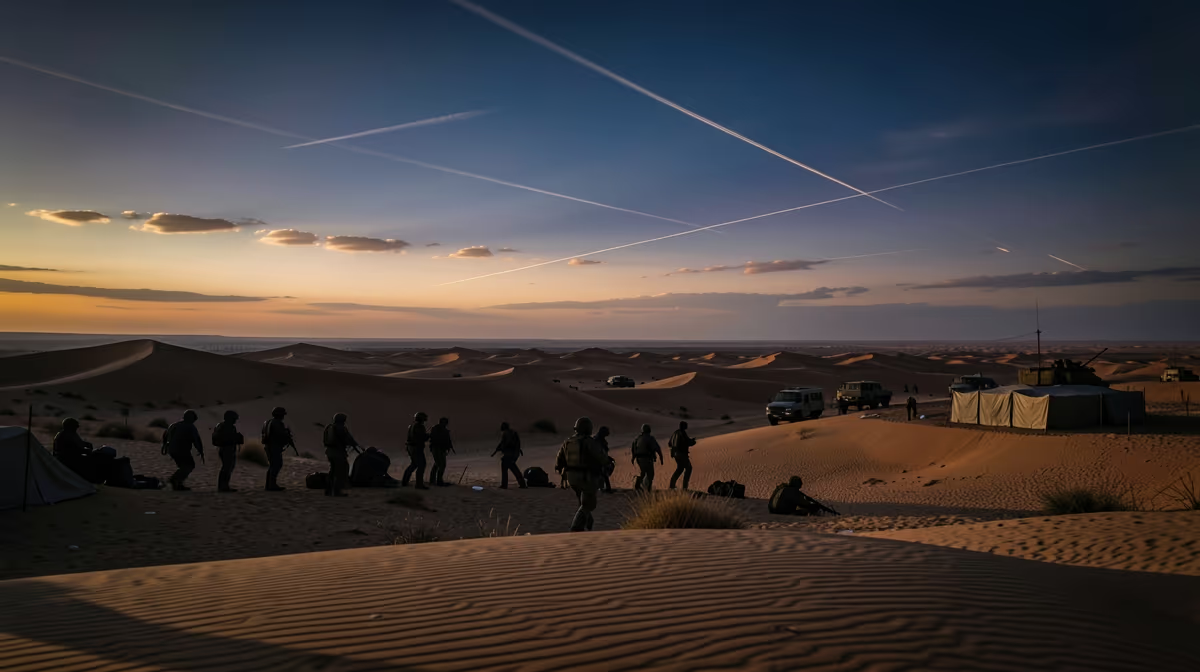
The latest Iran US military escalation has sent shockwaves across the region after recent incidents impacted Jordan and the UAE. A sharp military escalation between the United States and Iran has expanded into neighboring regions, with Iranian forces launching retaliatory strikes against bases in Jordan and the UAE following a US attack on Larak Island. Tensions in the Middle East reached a dangerous new threshold as state media and international reports confirmed active hostilities involving multiple nations. The latest flare-up began after US forces conducted an attack on Larak Island, prompting an immediate military response from Tehran.
The widening theater of conflict from Iranian territory to regional bases highlights the vulnerability of allied host nations and tests the deterrence posture of the United States in the Middle East.
What Unfolded
In retaliation for the US strike, Iran launched attacks targeting military positions and forces located in Jordan and the United Arab Emirates. Regional air defense systems and military assets were activated, with reports noting that Jordan intercepted incoming Iranian missiles following the initial US operation. The involvement of multiple territories outside the immediate zone of the primary US-Iran conflict highlights the growing risk of a wider regional war. Strategic locations, critical infrastructure, and military bases across the Gulf and Levant are currently under high alert as diplomatic channels struggle to contain the violence. International observers and regional governments are closely monitoring the situation as military exchanges continue. The geographic expansion of the conflict into Jordan and the UAE underscores the severe security implications for neighboring states caught in the crossfire of the escalating confrontation.
Key Developments
- The United States launched a fresh military attack targeting Larak Island in Iran
- In response to the US strike, Iran launched counter-attacks targeting US forces and bases in the region
- Jordanian authorities successfully intercepted incoming Iranian missiles following the US attack
- Iranian state media confirmed the retaliatory strikes hit locations in Jordan and the UAE
- The latest flare-up marks a significant military escalation between the US and Iran
Root Causes and Regional Spillover
The root cause of the crisis stems from escalating tit-for-tat military actions between the United States and Iran, triggered by a US strike on Larak Island, leading to immediate Iranian retaliatory missile strikes against US forces and positions in regional countries like Jordan and the UAE. Governments in Jordan and the UAE find themselves precariously caught in the crossfire of a wider US-Iran confrontation, forcing regional administrations to balance domestic security, public sentiment, and longstanding security alliances with Washington. The expansion of kinetic strikes to countries like Jordan and the UAE suggests Tehran is deliberately signaling to Gulf Arab states that hosting or facilitating US military assets carries immediate physical and diplomatic costs.
Economic and Geopolitical Impact
Geopolitical instability in the Persian Gulf and surrounding transit corridors threatens energy infrastructure, maritime trade, and investor confidence across the Middle East, with potential spillover effects on global markets. This military escalation significantly raises the risk of a wider regional conflict in the Middle East, potentially threatening global energy supplies, trade routes, and the safety of millions of civilians living in the area. Civilians and military personnel in Jordan, the UAE, Iran, and surrounding Middle Eastern regions, as well as global markets dependent on regional stability and shipping, remain directly affected by the ongoing insecurity.
Historical Context and Timeline
The standoff between the United States and Iran is rooted in decades of geopolitical friction, economic sanctions, and proxy conflicts across the Middle East, where intermittent military flashpoints frequently threaten regional security. This dynamic mirrors the 1980s Tanker War during the Iran-Iraq conflict, where regional spillover and attacks on third-party assets characterized a broader clash of wills between Washington and Tehran.
- US launches military strikes targeting Larak Island
- Iran launches retaliatory missile and drone attacks targeting US forces and bases in Jordan and the UAE
- Regional air defenses intercept incoming missiles as diplomatic and military tensions peak
Outlook and Future Scenarios
Over the next 24 hours, heightened military readiness and potential retaliatory measures are expected following US strikes on Larak Island and subsequent Iranian missile attacks targeting bases in Jordan and the UAE. Looking to the next 72 hours, analysts anticipate continued diplomatic scrambling, assessment of infrastructure and base damages, and potential further escalation or containment efforts across the Middle East. Analysts expect a cycle of direct tit-for-tat strikes between US and Iranian forces, placing surrounding host nations like Jordan and the UAE under intense pressure to manage airspace security. In the best-case scenario, rapid diplomatic intervention and de-escalation channels could halt further strikes, limiting damage to regional infrastructure. Conversely, the worst-case scenario points to a full-scale regional war drawing in multiple host nations and causing severe disruptions to global energy supplies and maritime trade.
Frequently Asked Questions
What triggered the recent military escalation between Iran and the US?
The latest flare-up was ignited by a US attack on Larak Island, prompting retaliatory strikes from Tehran. Iran's state TV reported that the country targeted US forces and bases in the region following the initial American assault.
Which countries have been impacted by the retaliatory Iranian strikes?
Iran's military response targeted bases and forces in countries including Jordan and the UAE. Jordan's air defenses successfully intercepted incoming Iranian missiles, while regional security remained on high alert due to the expanded conflict footprint.
Why is Larak Island significant in the US-Iran conflict?
Larak Island has emerged as a key strategic focal point in the latest US military operations against Iranian infrastructure. The initial strike on the island served as the catalyst for Tehran's retaliatory actions across neighboring Middle Eastern nations.
How are neighboring nations like Jordan responding to the escalation?
Jordan found itself directly in the crossfire when it intercepted Iranian missiles launched in retaliation against US targets. The kingdom's defensive actions highlight the growing spillover risks threatening sovereign nations neighboring the active conflict zone.
What is the broader significance of this military flare-up for global stability?
This escalation marks a dangerous expansion of US-Iran hostilities beyond traditional borders, drawing in Gulf and Middle Eastern territories. The involvement of multiple regional hubs underscores the heightened risk of a wider geopolitical crisis.
What can be expected next as the US-Iran confrontation continues?
With both sides engaging in direct retaliatory strikes—ranging from US attacks on Iranian territory to missile responses targeting regional bases—further military and diplomatic developments are anticipated. Observers are closely monitoring whether the conflict will escalate into a sustained regional war.
Conclusion
The military escalation between the United States and Iran has confirmed a dangerous expansion of hostilities into Jordan and the UAE following US strikes on Larak Island and subsequent Iranian counter-attacks. Regional air defenses have been actively engaged in intercepting incoming threats, while diplomatic and military authorities remain on high alert. Future developments depend heavily on whether containment efforts can curb further tit-for-tat exchanges across the Middle East.
Sources
- Iran war live: Tehran says it attacked bases in Jordan, UAE after US strike — Al Jazeera
- Jordan intercepts Iranian missiles after US strikes Larak Island — thenationalnews.com
- Iran strikes US forces in Jordan after US attack on Larak Island — arabnews.jp
- US-Iran war: Why Larak island, Jordan and Egypt's Banque Misr are targets in latest flare-up — Livemint
- Iran strikes US bases in Jordan in response to US attack, state TV reports — africanews.com
- US launches fresh attacks on Iran, Iran responds by attacking US forces in Jordan — DD News


