
CRPF Deployment in Ladakh Ordered by MHA Amid Rising Tensions
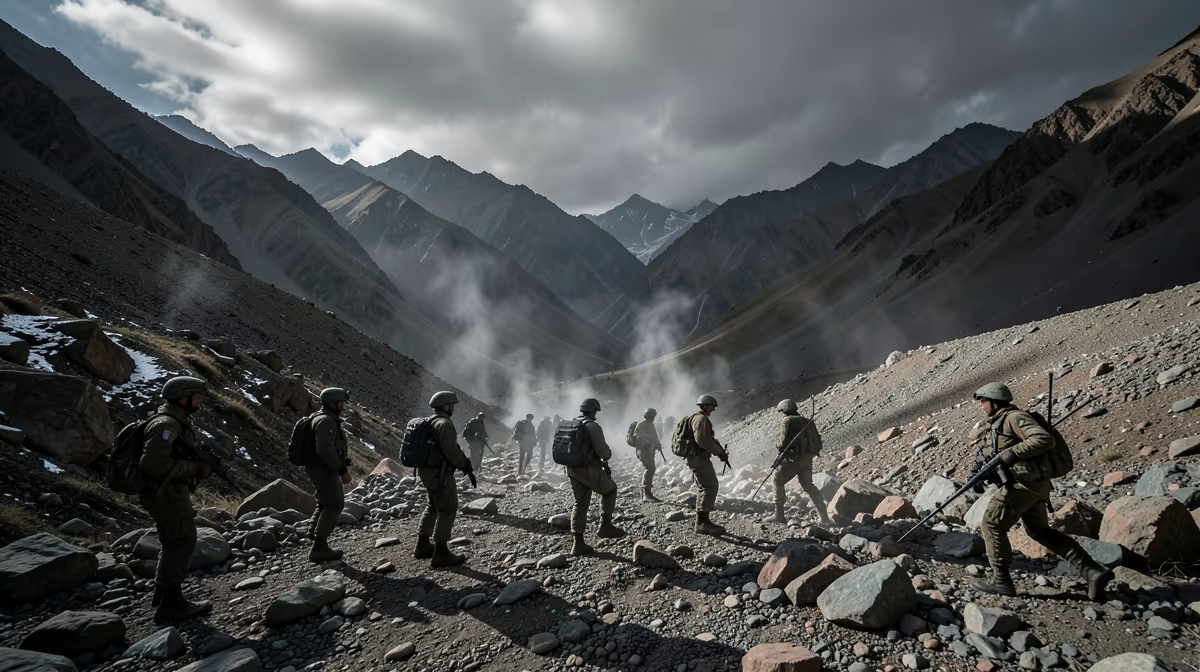
The Ministry of Home Affairs has authorized the immediate CRPF deployment in Ladakh to maintain law and order following recent regional developments. This security decision comes roughly a year after protests over statehood demands turned violent in the area, prompting heightened administrative vigilance across the Union Territory.
Background of the MHA Ladakh Order
The Ministry of Home Affairs ordered the deployment of 12 Central Reserve Police Force companies to the region of Ladakh following previous civil unrest. This security update comes roughly a year after protests over statehood demands turned violent in the area, creating a tense atmosphere between local populations and federal authorities.
Ladakh became a separate Union Territory of India in 2019 following the revocation of Article 370. Since then, various local groups and leaders have periodically organized protests and demonstrations demanding full statehood and constitutional protections for the region's land and culture. Local leaders and activists, including prominent figures like Sonam Wangchuk, have been calling for transparency and accountability regarding the previous year's events, where demonstrators faced severe clashes with security personnel.
The introduction of additional security forces aims to maintain peace and manage administrative stability in the Union Territory. Activist Sonam Wangchuk has publicly sought inquiry reports and accountability regarding the 2025 Ladakh violence, specifically highlighting instances where individuals faced severe injuries during past demonstrations. Meanwhile, reports of social media abuse and tensions following protests have highlighted ongoing local sensitivities, including incidents where individuals faced online abuse after confronting security personnel.
Security Measures and Regional Friction
The deployment of federal paramilitary forces in a sensitive border and high-altitude region like Ladakh directly impacts regional security, civil liberties, and the ongoing dialogue between local populations and the central government regarding statehood and governance. The regional administration continues to manage various developmental and social initiatives alongside security reinforcement, reflecting a complex operational environment.
Recent administrative updates from the region detail several concurrent civil programs, even as security measures are reinforced.
- High-level panel planning a national sea buckthorn research hub
- Educational initiatives like STEM on Wheels by DIET Leh inspiring young minds at Taru Middle School
- The two-day PM Vishwakarma Artisans Showcase organized by the SLPMU under the Star Hotel Initiative
Despite these developmental efforts, the political climate remains heavily influenced by the aftermath of previous unrest. The central government faces mounting pressure from regional leadership, activists like Sonam Wangchuk, and local populations demanding democratic representation and inquiry reports into past statehood protest violence, prompting a strong security response from the Ministry of Home Affairs.
Impact on Regional Stability
As a sensitive border union territory adjacent to disputed international boundaries, internal stability and heavy paramilitary presence in Ladakh are prioritized by New Delhi to maintain strategic control and deter external opportunistic provocations. Political instability and security crackdowns in the strategically vital border region risk disrupting local developmental initiatives, tourism, and federal economic investments like agricultural research hubs, raising uncertainty for commercial growth.
The reliance on central paramilitary forces rather than localized political dialogue suggests the Centre may be prioritizing absolute security containment over immediate concessions on statehood, potentially deepening the alienation of the local populace. This dynamic mirrors past administrative integration measures and the deployment of central paramilitary forces to manage restive border regions with distinct regional identity movements.
The Ministry of Home Affairs has ordered the deployment of 12 CRPF companies in Ladakh a year after violence erupted during statehood protests, underlining New Delhi's focus on maintaining public order in the sensitive border region.
Outlook and Future Security Assessment
Security agencies are expected to maintain a heightened posture in Ladakh to deter potential unrest, especially given the sensitivity surrounding statehood protests and the anniversary of previous violence. Continued local discussion and administrative updates are anticipated following the Ministry of Home Affairs' order, alongside ongoing reactions to Sonam Wangchuk's calls for an inquiry report into past violence.
Potential security adjustments on the ground will likely take place as the newly ordered CRPF deployment gets underway, with regional stakeholders monitoring law and order and civil society responses. The best-case scenario envisions the deployment proceeding smoothly without incident, reinforcing public safety and helping to maintain calm amidst ongoing political and social discussions. Conversely, the worst-case scenario involves increased security measures leading to heightened tensions or friction between local populations and security forces, aggravating existing grievances regarding statehood and governance.
Frequently Asked Questions
Why did the MHA order the deployment of CRPF companies in Ladakh?
The Ministry of Home Affairs ordered the deployment of 12 Central Reserve Police Force (CRPF) companies to Ladakh following previous civil unrest. This move comes roughly a year after violent clashes erupted during statehood protests in the region.
What background context surrounds the recent CRPF deployment in Ladakh?
The security reinforcement follows significant public protests and violence concerning statehood demands in Ladakh. Figures like Sonam Wangchuk have actively sought official inquiry reports regarding past incidents where demonstrators faced severe clashes with security personnel.
Who is affected by the MHA's decision to send CRPF forces to Ladakh?
The deployment directly impacts local residents, activists, and regional administrative authorities in Ladakh. It aims to maintain public order and security amidst ongoing political tensions and demands for constitutional safeguards.
What specific detail is noted about the size of the recent CRPF deployment?
According to reports, the Ministry of Home Affairs specifically ordered the deployment of 12 CRPF companies to the Union Territory. This reinforcement arrives approximately a year after the unrest during statehood demonstrations.
How does the latest security measure impact future governance and protests in Ladakh?
The increased presence of central paramilitary forces is expected to tighten security and heavily regulate public demonstrations moving forward. Authorities will likely maintain heightened vigilance to prevent any recurrence of the violence witnessed during previous statehood agitations.
Why is the current security situation in Ladakh drawing national attention?
The region remains a focal point due to ongoing demands for statehood and local governance rights, highlighted by prominent local voices calling for accountability regarding past violence. National media outlets continue to monitor these developments closely as security measures are reinforced.
Conclusion
The Ministry of Home Affairs has formally ordered the deployment of 12 CRPF companies to Ladakh, marking a significant security reinforcement one year after statehood protests turned violent. While regional authorities continue to oversee developmental initiatives such as research hubs and educational programs, the heavy paramilitary presence underscores New Delhi's priority on maintaining public order in the sensitive border territory. Local civil society leaders, including activist Sonam Wangchuk, continue to press for accountability and inquiry reports into past casualties, keeping political friction active. Regional stakeholders will closely monitor security adjustments and civil society responses as the newly ordered troop deployments take effect on the ground.
Sources
- Woman who shouted at security personnel in Ladakh faces body-shaming, abuse on social media — ThePrint
- Boost for Ladakh: High-level panel to plan national sea buckthorn research hub — The Economic Times
- STEM on Wheels: DIET Leh Inspires Young Minds at Taru Middle School Leh, Ladakh, 24th Aug,2026. — Administration of Union Territory of Ladakh
- The two-day PM Vishwakarma Artisans Showcase under the Star Hotel Initiative was organised by the SLPMU. — Administration of Union Territory of Ladakh
- MHA orders deployment of 12 CRPF companies in Ladakh a year after violence during statehood protest — ThePrint
- 'People Were Shot In The Head': Sonam Wangchuk Seeks Inquiry Report Into 2025 Ladakh Violence — The Times of India


.webp)
