
Strait of Hormuz Tanker Attack Triggers Fresh Global Energy Panic
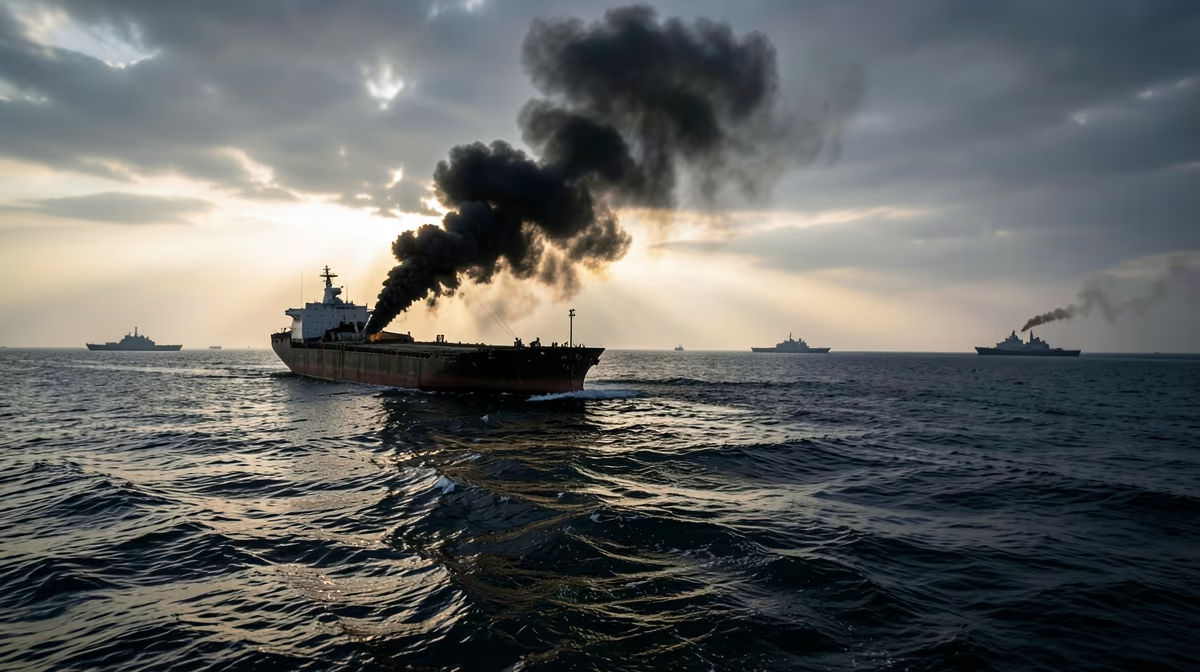
An oil tanker attacked in the strategic Strait of Hormuz has sent shockwaves through global energy markets, occurring just as Iran claims it has a concrete plan to shoulder renewed Trump sanctions. Tensions in the Middle East have escalated sharply following this incident in the vital maritime chokepoint, coming at a volatile time as the United States and Iran remain locked in a high-stakes standoff over economic sanctions and regional security.
Escalating Tensions and the Strait of Hormuz Tanker Attack
An oil tanker was attacked in the strategically vital Strait of Hormuz amid escalating regional tensions. The incident highlights heightened security risks in one of the world's most vital energy transit choke points. Concurrently, discussions surrounding renewed U.S. sanctions policy have intensified, with Donald Trump warning Tehran and claiming that the U.S. Navy has demined parts of Hormuz.
The identity of the attackers, the extent of damage to the oil tanker, and the specific details of Iran's sanctions-mitigation plan remain under observation. International observers and shipping authorities continue to monitor the situation closely to ensure maritime security and stability in the region as diplomatic and economic pressures mount.
Iran Strategy to Bypass New Trump Administration Sanctions
Simultaneously, Iranian officials have publicly claimed they have a concrete plan to withstand and bypass the renewed maximum-pressure sanctions pushed by the Trump administration. Despite facing economic pressure, Tehran continues to project resilience against American maximum pressure policies.
The escalation of tensions in the Strait of Hormuz is driven by the tightening enforcement of U.S. sanctions against Iran, prompting asymmetric security responses and maritime disruptions. Beneath the overt military friction lies a subtle economic adaptation by sanctioned states, exploring decentralized trade networks and alternative financial mechanisms to permanently bypass Western enforcement. Analysts and experts note that after years of aggressive economic measures, the U.S. faces practical limits on what more can be added to its maximum pressure campaign, as finding fresh, impactful economic targets has become increasingly challenging for policymakers.
Security Assessment and US Naval Operations
The United States has maintained an active security posture in the region, with reports indicating that the U.S. Navy has been active in demining operations within the Hormuz region. President Trump has also issued direct warnings to Tehran as naval forces monitor and respond to the escalating security situation.
Domestic and international pressures are forcing leadership in both Washington and Tehran into rigid stances, where diplomatic off-ramps are increasingly constrained by hardline political rhetoric. Regional stability is severely compromised as naval escalations draw international actors into a high-stakes standoff over freedom of navigation and sanctions compliance, echoing historical parallels like the 1980s Tanker War during the Iran-Iraq conflict where commercial vessels navigating the Persian Gulf became targets amid escalating regional hostilities.
Economic Ramifications for Global Energy Markets
Energy markets face renewed volatility as vital maritime chokepoints become militarized, directly threatening global crude supply chains and inflating risk premiums for shipping. The Strait of Hormuz connects the Persian Gulf with the Gulf of Oman and the Arabian Sea, serving as the transit route for a massive portion of the world's petroleum.
Any military conflict or security disruption in this narrow waterway can instantly trigger spikes in global oil prices and international shipping lanes. Global consumers, international shipping companies, energy markets, and nations heavily reliant on Middle Eastern oil imports are directly affected by these developments, while international media outlets including Fox News, Al Jazeera, and The New York Times actively cover the unfolding situation.
The Strait of Hormuz remains one of the world's most critical energy transit choke points, where any security disruption immediately threatens global crude supplies and international shipping lanes.
Future Outlook and Market Projections
Over the next 24 hours, continuous monitoring of the Strait of Hormuz is expected following the reported oil tanker attack, with diplomatic and military officials assessing the security situation and navigating renewed tensions over US sanctions and Iranian countermeasures. Over the next 72 hours, analysts anticipate potential escalation of rhetoric between Washington and Tehran, further assessments of maritime security and demining operations in the Gulf region, and market reactions to potential supply disruptions.
Key players involved in these dynamics include the Trump administration, the Iranian government, the U.S. Navy, and regional maritime operators, impacting global oil markets, Middle East maritime security, and U.S.-Iran diplomatic relations. In a best-case scenario, diplomatic backchannels help de-escalate maritime tensions in the Strait of Hormuz, preventing further kinetic incidents and stabilizing energy markets. Conversely, a worst-case scenario involves miscalculation in the heavily militarized Strait of Hormuz leading to further attacks on shipping vessels, triggering a broader military confrontation and severe spikes in oil prices.
Frequently Asked Questions
What happened to the oil tanker in the Strait of Hormuz?
An oil tanker was attacked in the strategically vital Strait of Hormuz amid escalating regional tensions. The incident occurred as Iran asserted it has plans in place to shoulder upcoming sanctions imposed by the Trump administration.
Why is the Strait of Hormuz significant in this conflict?
The Strait of Hormuz is a critical global chokepoint for the transit of petroleum, making any military activity or attacks in the area an immediate threat to international energy supplies. Tensions in this maritime corridor often trigger rapid responses from global superpowers.
What role is the United States playing in the Strait of Hormuz?
Reports indicate that the U.S. Navy has been active in demining operations within the Hormuz region. President Trump has also issued direct warnings to Tehran as naval forces monitor and respond to the escalating security situation.
How is Iran responding to U.S. sanctions?
Iran has claimed it has developed strategies and plans to shoulder and withstand renewed sanctions from the Trump administration. Despite facing economic pressure, Tehran continues to project resilience against American maximum pressure policies.
What limits does the U.S. face regarding further sanctions on Iran?
Experts and analysts note that after years of aggressive economic measures, the U.S. faces practical limits on what more can be added to its maximum pressure campaign. Finding fresh, impactful economic targets has become increasingly challenging for policymakers.
What happens next in the Iran-U.S. standoff?
The situation remains highly volatile as military maneuvering and economic sanctions continue to clash in the Persian Gulf region. Observers are closely watching for further diplomatic or military escalations following the tanker attack.
Conclusion
An oil tanker has been attacked in the Strait of Hormuz while Iran claims it has a plan to shoulder incoming U.S. sanctions, prompting warnings from President Trump and active naval responses in the region. Verified developments confirm ongoing maritime security concerns, diplomatic standoffs, and economic pressures surrounding maximum pressure policies. Stakeholders continue to monitor the evolving situation as military and economic friction persists across the Persian Gulf.


.webp)
