
Trump Executive Order on Childhood Vaccines Triggers National Debate
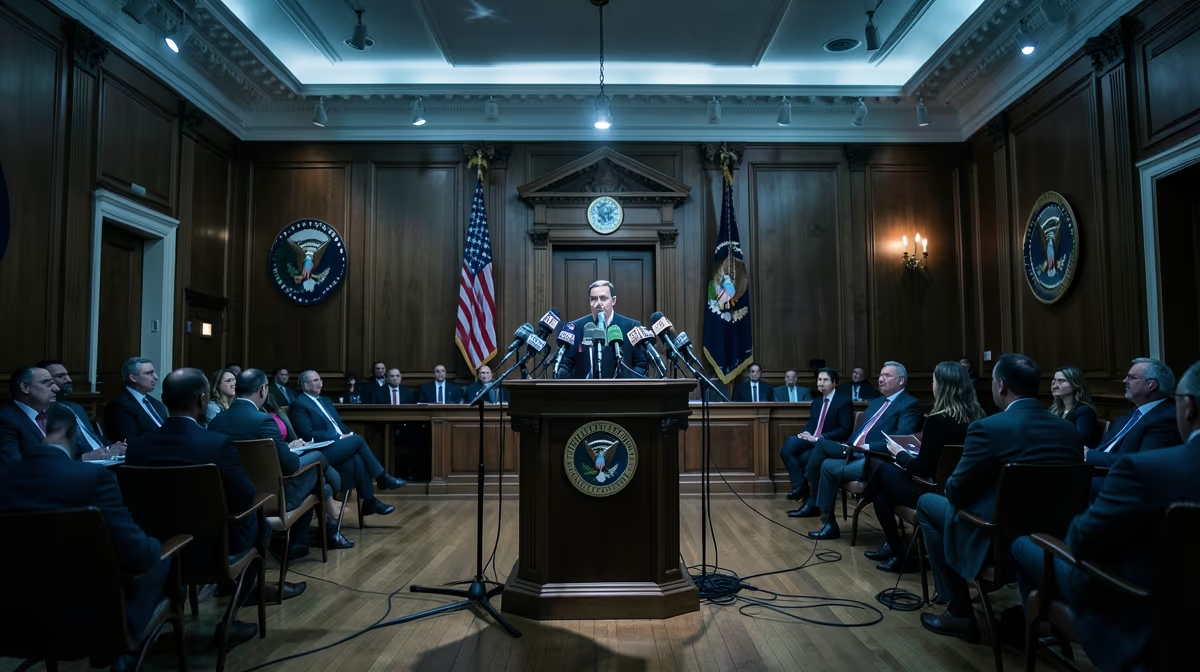
WASHINGTON — President Donald Trump signed an executive order on Wednesday directing federal health agencies to review the current childhood vaccination schedule and safety protocols, sparking immediate debate among public health officials and medical associations over the future of immunization policies in the United States. A new trump executive order vaccines directive has sparked intense debate across the nation regarding childhood immunization schedules and public health policy. The unfolding situation blends complex questions of federal authority, medical safety data, and public trust into a high-stakes national dialogue that reaches from federal agencies down to local school districts and family pediatrician offices.
What Unfolded
The directive instructs the Department of Health and Human Services and the Food and Drug Administration to conduct a comprehensive re-examination of all federally recommended vaccines for minors. Officials said the review will focus heavily on long-term health outcomes, ingredient safety, and the schedule of administration for children aged zero to eighteen. Public health advocates immediately raised concerns that the order could undermine public confidence in established vaccines and disrupt routine immunization programs nationwide.
Major medical organizations, including the American Academy of Pediatrics, swiftly condemned the move, asserting that decades of scientific research have repeatedly confirmed the safety and efficacy of childhood vaccines in preventing debilitating and fatal diseases such as measles, polio, and pertussis. Proponents of the executive order, however, argued that greater transparency and independent oversight are necessary to address growing parental concerns and questions regarding chronic illness rates.
The White House maintained that the directive is designed to ensure maximum safety without restricting access to necessary medical care. Implementation timelines remain unclear as federal agencies begin evaluating the scope of the mandated reviews and coordinating with scientific advisory boards. "Parents deserve complete transparency and rigorous science when it comes to the health of their children," said White House Press Secretary Karoline Leavitt during a press briefing following the signing. Conversely, Dr. Jonathan Klein of the American Academy of Pediatrics stated, "Re-settled science through a politically motivated lens puts vulnerable children at direct risk of preventable outbreaks."
Key Policy Facts
The executive order directs federal agencies to review current childhood vaccine guidelines and emphasizes transparency and the collection of long-term health data regarding immunizations. Public health experts have raised concerns that questioning established schedules could lower vaccination rates, while the policy aligns with arguments made by vaccine skeptics and certain advocacy groups. Routine school vaccine requirements are primarily set by states, limiting the immediate direct impact of federal orders.
President Trump signed an executive order targeting the federal childhood vaccination schedule, ordering HHS and the FDA to review safety protocols and long-term health outcomes. Major medical groups like the American Academy of Pediatrics criticized the order, while federal health agencies have not yet released a timeline for completing the mandated reviews. The specific methodology the FDA and HHS will use for the review, as well as potential legal challenges from medical and public health coalitions, remain developing elements of the story.
Underlying Causes And Societal Pressures
The roots of this executive action lie in the erosion of public trust in regulatory bodies like the CDC and FDA, amplified by populist health narratives challenging institutional authority. This dynamic has mobilized anti-establishment voter bases and positioned political actors against the pharmaceutical-industrial complex to consolidate populist support.
Economically, the policy introduces the potential for significant market disruption for vaccine manufacturers, potential shifts in liability protections, and impacts on healthcare insurance structures. Geopolitically, it risks undermining international vaccine diplomacy and potentially fueling global vaccine hesitancy movements that affect pandemic preparedness. A hidden angle in the ongoing debate involves the divergence in private healthcare access, where affluent demographics privately source and administer full vaccine schedules regardless of public mandates. Historically, observers note parallels to the 1955 Cutter Incident, where manufacturing failures led to public skepticism and subsequent government intervention in vaccine safety. This modern friction points back to the 1986 National Childhood Vaccine Injury Act, which established legal shields, and the COVID-19 pandemic, which accelerated public skepticism and the politicization of public health.
Why This Matters
This executive order matters because public confidence in vaccines directly impacts community immunity and the control of preventable diseases like measles, polio, and whooping cough. Any federal shift in tone or policy regarding vaccines can influence how millions of parents make healthcare decisions for their children, potentially affecting public health outcomes nationwide. Parents, school-aged children, pediatricians, public health organizations, and state health departments all stand directly affected by these regulatory shifts. Childhood vaccination schedules have been recommended for decades by federal agencies like the CDC and organizations like the American Academy of Pediatrics to eradicate dangerous diseases. In recent years, particularly following the COVID-19 pandemic, debates over government mandates and vaccine safety have become a prominent political flashpoint in the U.S.
Future Outlook And Expert Predictions
Immediate reactions from public health organizations, advocacy groups, and legal experts are unfolding regarding the newly signed executive order on childhood vaccines. Over the next seventy-two hours, intense media debates, potential announcements of legal challenges by medical associations, and market volatility for vaccine manufacturers are anticipated. Key players navigating these shifts include Donald Trump, the Department of Health and Human Services, the Centers for Disease Control and Prevention, the American Academy of Pediatrics, and pharmaceutical manufacturers. Impact areas span public health policy, vaccine manufacturing and distribution, federal-state relations, and public trust in science.
Experts predict that the executive order will likely face immediate injunctions in federal courts due to overreach of executive authority concerning state-mandated school vaccination programs, leading to prolonged legal battles. In a best-case scenario, the order prompts a transparent, federally funded review of vaccine safety data that reaffirms scientific consensus, ultimately boosting public confidence without disrupting access. Conversely, a worst-case scenario involves public confusion and misinformation escalating, leading to a significant drop in childhood vaccination rates and localized outbreaks of preventable diseases like measles.
Frequently Asked Questions
Did Trump sign an executive order regarding childhood vaccines?
Donald Trump did not sign any executive order banning or fundamentally altering childhood vaccination schedules during his presidency. However, his administration did discuss public health policies and vaccine safety reviews, notably through a proposed commission led by vaccine skeptic Robert F. Kennedy Jr. that was ultimately never realized. Official CDC and state-level guidelines on childhood immunizations remained in place throughout his term.
What was Donald Trump's stance on childhood vaccines while in office?
During his presidency and campaign, Trump occasionally voiced skepticism about the standard childhood vaccine schedule, suggesting that giving multiple vaccines at once could be linked to autism, despite overwhelming scientific consensus to the contrary. At the same time, his administration heavily promoted Operation Warp Speed for COVID-19 vaccines and generally deferred to federal public health agencies like the FDA and CDC on routine immunization policies. His personal views often sparked intense public debate without resulting in direct executive action against standard childhood shots.
Can a US President ban childhood vaccines through an executive order?
A US president does not have the unilateral authority to ban childhood vaccines or alter mandatory school vaccination requirements via an executive order. Vaccine mandates are primarily governed by state laws, which determine the requirements for children entering public schools. While the federal government can influence public health through agencies like the CDC and FDA, direct bans on licensed vaccines would require legislative action and face significant legal hurdles.
How do executive orders affect vaccine requirements in the United States?
Executive orders have a limited and indirect impact on routine childhood vaccine requirements because healthcare and education laws are largely under state jurisdiction. Federal executive orders can direct federal agencies to review safety data, fund research, or manage vaccines purchased through federal programs like the Vaccines for Children initiative. However, they cannot override state-enacted school entry immunization laws or completely ban the administration of FDA-approved vaccines.
Did Trump establish a vaccine safety commission?
In early 2017, President Trump announced plans to create a commission on vaccine safety and scientific integrity, which was slated to be chaired by Robert F. Kennedy Jr. The proposed commission aimed to examine autism rates and vaccine safety, drawing sharp criticism from major medical organizations like the American Academy of Pediatrics. Ultimately, the commission was never officially formed or funded, and no formal policy changes resulted from the announcement.
What are the current rules for childhood vaccines in the US?
Childhood vaccination requirements in the United States are determined by individual state laws rather than federal executive orders. All fifty states require certain immunizations, such as those for measles, mumps, rubella, and polio, for children to attend public schools, though exemptions vary by state. The CDC provides a recommended immunization schedule, but actual enforcement and decisions regarding medical, religious, or philosophical exemptions remain at the state level.
Conclusion
The signing of the executive order targeting childhood immunization policies has initiated a period of intense regulatory and public health scrutiny across the United States. Federal health agencies prepare to execute mandated safety reviews while facing immediate pushback from major medical associations and impending legal challenges concerning the limits of executive authority over state-governed public health mandates. As federal officials establish review methodologies and medical organizations monitor potential impacts on immunization rates, parents, healthcare providers, and state health departments navigate a shifting landscape of federal oversight and public health policy.


