
US Housing Market Faces Severe Disruption As Prices Defy Gravity
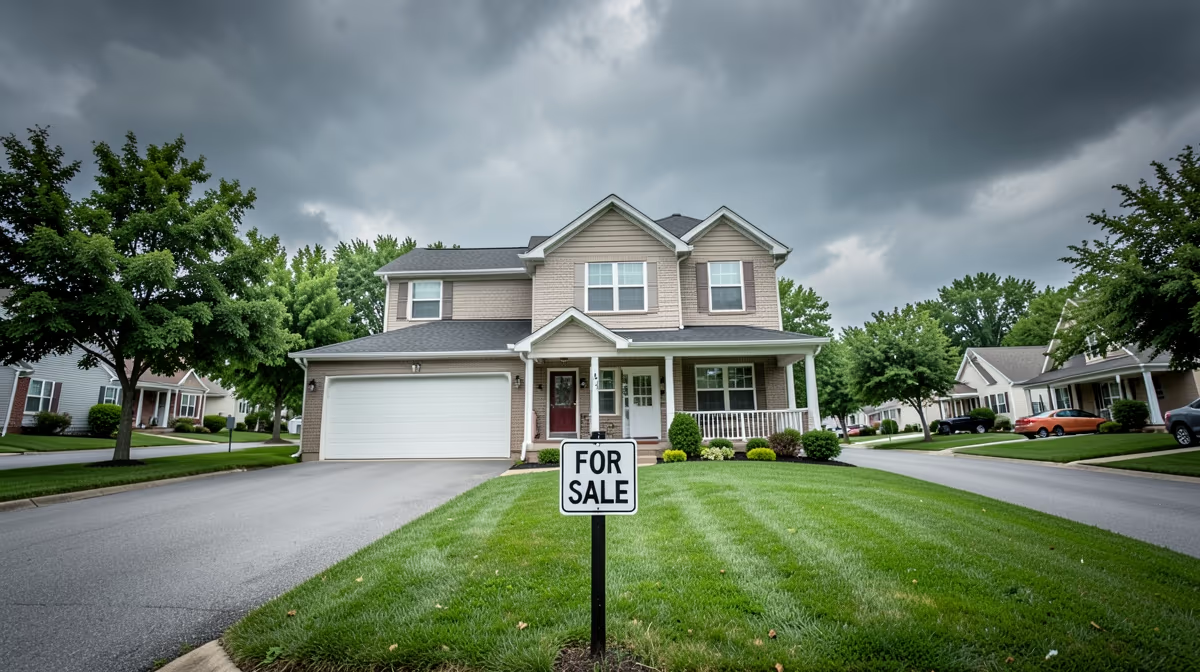
housing prices continue to dominate economic discussions across the United States as buyers and sellers navigate an unpredictable market. U.S. home sales dropped to their lowest level in nearly a decade this past October, as persistently high mortgage rates and soaring property prices forced prospective buyers to the sidelines. This standoff highlights a profound friction within the American real estate landscape, where stubborn macroeconomic policies clash directly with the fundamental needs of everyday citizens. Even as borrowing costs remain elevated, home values refuse to retreat in most regions, creating a complex web of financial strain for first-time buyers, investors, and macroeconomics observers alike.
What Unfolded
According to data released Thursday by the National Association of Realtors, existing-home sales fell 3.4% from the previous month to a seasonally adjusted annual rate of 3.79 million units. This represents the slowest sales pace since July 2010, excluding the brief pandemic-induced freeze in 2020. Economists note that the combination of mortgage rates hovering near 7% and a severe shortage of housing inventory has created an affordability crisis for first-time buyers.
At the same time, home prices continued to defy gravity due to the lack of supply. The national median existing-home price rose 3.4% from a year ago to $391,800, marking the fourth consecutive month of year-over-year price increases. Sellers remain reluctant to list their properties because many are locked into mortgage rates significantly lower than current market levels, a phenomenon market analysts refer to as the lock-in effect.
Regional variations highlight the uneven nature of the current downturn. The Midwest and South experienced the steepest declines in sales activity, while the Northeast saw modest gains driven by localized demand and slightly better inventory levels. Industry experts warn that until mortgage rates drop sustainably or new construction significantly ramps up, the market is likely to remain frozen. In the immediate term, market participants can expect minor mortgage rate fluctuations following Treasury yield adjustments, with steady listing activity, followed by pending home sales data releases triggering localized bidding reactions in affordable suburban submarkets.
Key Facts And Market Realities
The current real estate environment is defined by several critical, verified economic factors. Mortgage rates remain significantly higher than the historic lows seen during the pandemic, hovering near the 7% threshold throughout the autumn selling season. Concurrently, home inventory is critically low because current owners do not want to give up their low mortgage rates, restricting buyer options and keeping housing inventory near historic lows.
Despite these severe affordability challenges, home prices have remained resilient and near record highs. National existing-home sales have decreased for consecutive months, yet median prices continue to rise. First-time homebuyers are making up a smaller percentage of the market due to these high costs, while rental markets are also feeling the pressure as would-be buyers are forced to keep renting. Lawrence Yun, Chief Economist for the National Association of Realtors, noted that prospective buyers face a double-whammy of high rates and high prices, stating that until inventory improves significantly, affordability will remain out of reach for many Americans.
Economic Fallout And Structural Roots
The roots of this crisis extend far deeper than recent monetary policy adjustments. Decades of systemic underbuilding have been compounded by municipal zoning restrictions, the financialization of residential assets, and a demographic surge of millennials reaching peak homeownership age colliding with institutional investor capital accumulation. Following the 2008 housing crash, homebuilding lagged for a decade, creating an underlying shortage. When the COVID-19 pandemic hit, mortgage rates plummeted to historic lows around 3%, sparking a massive buying frenzy and driving prices up rapidly. When inflation surged in 2022 and 2023, the Federal Reserve raised interest rates to cool the economy, causing mortgage rates to more than double and freezing the housing market in its current standoff.
This dynamic has triggered extreme asset inflation driven by suppressed supply and historical low-interest rate policies, resulting in severe affordability crises, record wealth inequality, and a systemic economic drag as consumer spending is cannibalized by housing costs. Furthermore, the loss of domestic geographic mobility reduces labor market fluidity, stifles US productivity growth, and makes the American economy more vulnerable to systemic financial shocks tied to institutional landlord portfolios and mortgage-backed securities.
Social And Political Dimensions
This housing market squeeze directly impacts the American dream of homeownership, pushing it further out of reach for younger and lower-income families. Furthermore, because housing is a massive driver of household wealth and consumer spending, a frozen market slows down related industries like construction, moving, and home goods retail, while keeping the cost of living uncomfortably high for millions. First-time homebuyers, millennials, renters looking to buy, real estate agents, mortgage brokers, and current homeowners who feel locked in and unable to relocate for new jobs or growing families bear the brunt of this pressure.
Politically, this manifests as a profound generational and class divide where the property-owning electorate pressures local politicians to maintain exclusionary zoning and artificially inflate home equity, disenfranchising younger renters and cementing feudalistic wealth concentration. Behind the scenes, suburban neighborhoods experience a quiet transformation into corporate rental fiefdoms, where private equity firms effectively privatize the American dream of homeownership, extracting permanent tribute from the working class.
Future Outlook And Expert Forecasts
Looking ahead, experts predict that the US housing market will experience a protracted plateau phase as stubborn interest rates constrain both buyer affordability and seller mobility. The future path of the Federal Reserve on interest rates and how broader macroeconomic trends will impact the market heading into the spring buying season remain the primary variables for market observers.
In a best-case scenario, inflation cools faster than expected, prompting quicker Federal Reserve rate cuts that rapidly unlock pent-up housing inventory and buyer demand. Conversely, a worst-case scenario involves persistent inflation forcing the central bank to keep rates elevated longer, causing a sharp freeze in transactions and moderate price corrections in overvalued Sunbelt markets.
Frequently Asked Questions
Will the US housing market crash soon?
Most economists and real estate experts do not predict a total housing market crash like the one seen in 2008. While home price growth has slowed and inventory remains tight, strong underlying demand and stricter lending standards continue to support the market.
Is it a good time to buy a house in the US?
Whether it is a good time to buy depends largely on your personal financial situation and local market conditions rather than national trends. High mortgage rates and elevated home prices mean buyers must carefully weigh their monthly budget against long-term housing goals.
When are mortgage rates expected to drop?
Mortgage rates are heavily influenced by inflation data and Federal Reserve monetary policy decisions. While experts anticipate gradual declines over the coming year, rates are unlikely to return to the historic lows seen during the pandemic.
Why are US home prices still so high?
Home prices remain elevated primarily due to a persistent nationwide housing shortage. Years of underbuilding, combined with many current homeowners locked into low interest rates refusing to sell, have kept housing inventory exceptionally low.
How can I find out if my local housing market is cooling?
You can determine if your local market is cooling by looking at key indicators such as increasing days on market, a rise in active inventory, and a growing number of price reductions. Consulting a local real estate agent can also provide valuable neighborhood-specific insights.
What is a buyers market vs a sellers market in real estate?
A sellers market occurs when buyer demand exceeds the available housing supply, often resulting in multiple offers and bidding wars. Conversely, a buyers market features more inventory than active buyers, giving purchasers more negotiating power and time to make decisions.
Conclusion
The American real estate landscape remains locked in a tense standoff between high borrowing costs and resilient property values, driven by decades of underbuilding and macroeconomic policy shifts. With existing-home sales reaching multi-year lows and median prices continuing to climb, buyers and sellers navigate a profoundly restricted market environment. As the Federal Reserve weighs future monetary decisions and market participants monitor inventory levels, affordability challenges will persist across suburban and regional submarkets heading into the upcoming buying season.


