
Ajit Doval Shapes New Defense Strategy Amid Rising Border Threats
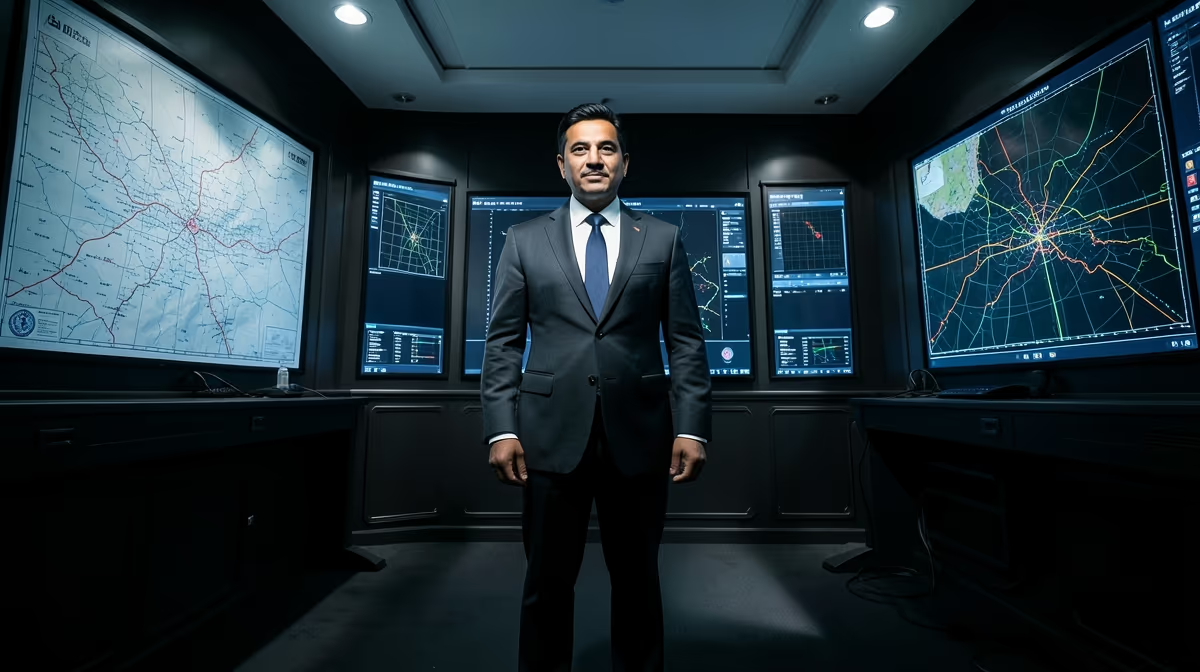
National Security Advisor ajit doval continues to play a pivotal role in shaping India's defense strategy amidst evolving geopolitical challenges. National Security Advisor Ajit Doval reviewed India's strategic preparedness and regional security dynamics during high-level inter-ministerial meetings in New Delhi this week, emphasizing robust intelligence coordination amid evolving geopolitical challenges. The security reviews focused heavily on India's contiguous borders, internal security apparatus, and counter-terrorism measures. Doval engaged with senior military commanders, intelligence chiefs, and civilian leadership to assess threat perceptions and operational readiness, signaling a firm grip on national defense priorities under the leadership of Prime Minister Narendra Modi.
The Evolution of India Defense Strategy Under Ajit Doval
Discussions during the New Delhi meetings encompassed regional stability, particularly regarding ongoing developments in South Asia and the broader Indo-Pacific region. Officials analyzed intelligence inputs concerning cross-border infiltration bids and maritime security, formulating preemptive strategies to safeguard national interests. In addition to traditional defense matters, the deliberations addressed emerging non-traditional security threats, including cyber warfare, critical infrastructure protection, and economic security measures coordinated across multiple government agencies. According to senior government officials speaking on condition of anonymity, the national security architecture remains fully attuned to dynamic regional shifts, ensuring seamless synergy between intelligence and operational forces to neutralize potential threats before manifestation.
Key Security Initiatives Led by the National Security Advisor
Ajit Doval serves as India's National Security Advisor under Prime Minister Narendra Modi, holding cabinet rank. As a former Indian Police Service officer and veteran of the Intelligence Bureau, he has played a key role in strategic military operations and cross-border counter-terrorism planning throughout his tenure. Often acting as a special envoy for secret or high-level diplomatic missions abroad, Doval holds immense influence over India's foreign policy and defense strategies. His decisions directly affect India's national defense, peace along its borders, and its diplomatic standing globally, dictating how the country responds to external threats and internal unrest, making his role vital for the safety and stability of over 1.4 billion citizens. Every citizen of India is affected by his security policies, as well as military personnel, law enforcement agencies, and neighboring nations involved in diplomatic relations with India.
Institutional Roots and Political Consolidation
The root cause of this administrative posture lies in the institutional centralization of the national security apparatus under a single, highly trusted executive figure to counter asymmetric warfare and cross-border terrorism. This has resulted in the consolidation of executive authority within the Prime Minister's Office, bypassing traditional bureaucratic and ministerial bottlenecks, thereby shifting strategic decision-making to a technocratic-security axis. Economically, these policies aim at securing critical trade corridors, protecting domestic investments from economic espionage, and leveraging intelligence infrastructure to insulate India's macroeconomic growth from regional instability. Geopolitically, the framework projects assertive regional deterrence, shifting India's strategic posture from strategic restraint to proactive defense, and managing complex multi-aligned relationships with superpowers. Historically, this mirrors the consolidation of intelligence under the Office of Strategic Services during World War II, elevating covert operators to chief architects of grand strategy. Doval's timeline spans from joining the Indian Police Service in the Kerala cadre in 1968, playing a pivotal negotiation and intelligence role during the IC 814 hijacking crisis in Kandahar in 1999, retiring as Director of the Intelligence Bureau in 2005, and being appointed as India's fifth National Security Advisor in 2014, where he continues to operate as the chief strategist for India's multi-domain foreign policy, internal security, and regional hegemony.
Operational Outlook and Tactical Focus
Over the next twenty-four hours, security intelligence reports will be reviewed and coordinated with domestic and international intelligence agencies regarding border stability and counter-terrorism measures. Looking ahead to the next seventy-two hours, the agenda includes briefing cabinet leadership on strategic geopolitical developments and overseeing ongoing internal security operations. Expert predictions indicate that Doval will likely maintain a strong focus on proactive intelligence gathering and strengthening strategic partnerships to counter emerging regional threats. The best-case scenario involves the successful preemption of security threats and the strengthening of diplomatic and intelligence ties with key regional allies, while the worst-case scenario entails an unforeseen escalation in cross-border tensions or a security breach requiring immediate crisis management. Key players involved in these ongoing operations alongside Doval include Prime Minister Narendra Modi, Home Minister Amit Shah, and External Affairs Minister S. Jaishankar, focusing on national security, foreign policy, border management, and intelligence operations.
Frequently Asked Questions
Who is Ajit Doval?
Ajit Doval is the current National Security Advisor to the Prime Minister of India, appointed in 2014. He is a retired Indian Police Service officer and a former intelligence official who has played a crucial role in shaping India's internal and external security policies.
What is Ajit Doval's current role?
He serves as the National Security Advisor of India, holding cabinet rank. In this capacity, he acts as the primary advisor to the Prime Minister on strategic and geopolitical matters, overseeing national security and intelligence coordination.
What is Ajit Doval's background and early career?
Ajit Doval served as an IPS officer in the Kerala cadre starting in 1968 and spent a major part of his career in the Intelligence Bureau. He is well-known for his undercover work in Pakistan and his involvement in handling insurgencies in Mizoram, Punjab, and Jammu and Kashmir.
What are some major achievements of Ajit Doval?
Key achievements attributed to his tenure include the 2016 cross-border surgical strikes, the 2019 Balakot airstrikes, and the strategic handling of the Doklam standoff. He is also recognized for his contributions to framing India's assertive national security and counter-terrorism doctrines.
Why is Ajit Doval called the 'James Bond of India'?
He earned this moniker due to his daring undercover missions during his intelligence career, including spending years operating covertly in Pakistan. His reputation for decisive action and strategic planning in high-stakes situations has cemented this popular perception.
What awards has Ajit Doval received?
He is the youngest police officer to be awarded the prestigious Kirti Chakra, India's second-highest peacetime gallantry award, which he received in 1988 for his bravery in counter-insurgency operations. He has also been honored with the Police Medal and the President's Police Medal.
Conclusion
National Security Advisor Ajit Doval has directed high-level inter-ministerial security reviews in New Delhi to assess threat perceptions, regional stability, and operational readiness across India's borders. Verified developments confirm that ongoing consultations with military commanders, intelligence chiefs, and civilian leadership remain focused on cross-border infiltration bids, maritime security, and non-traditional threats such as cyber warfare. Realistic next steps involve the continuous review of security intelligence reports, coordination with domestic and international agencies, and ongoing briefings to cabinet leadership regarding border stability and counter-terrorism measures.


