
US and Iran Strikes Trigger Major Escalation Across Middle East
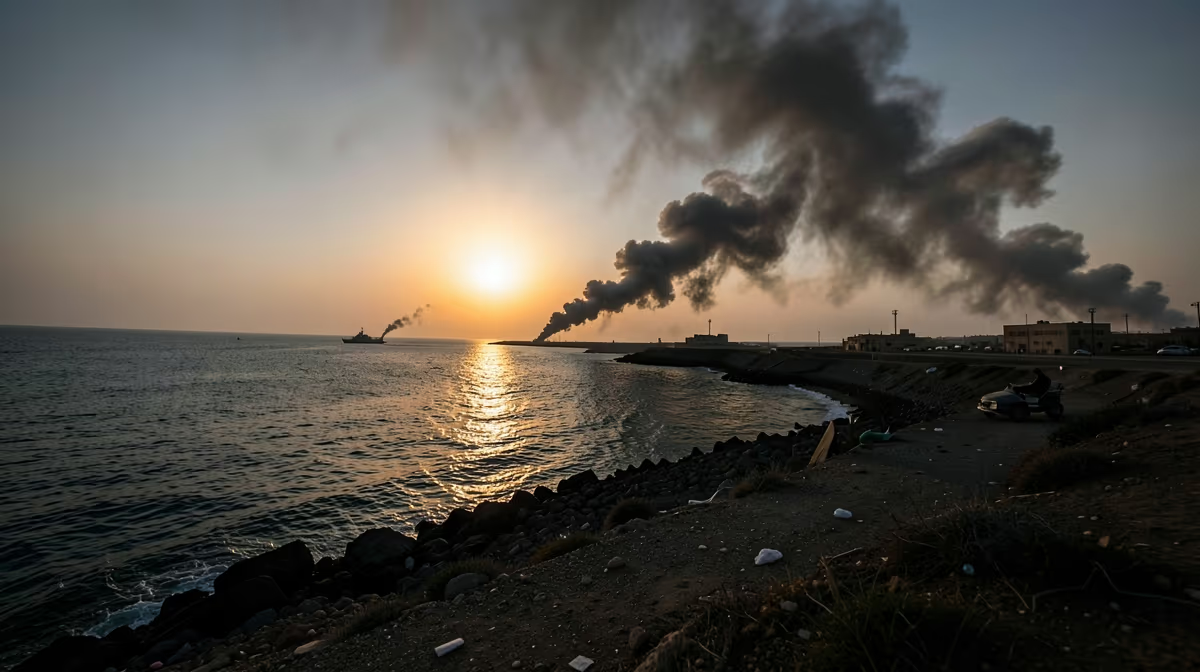
As tensions reach a boiling point, the US and Iran trade strikes across the Middle East, threatening global stability and energy markets. The United States and Iran have traded military strikes in the region, with US attacks resulting in casualties and prompting Iranian-claimed retaliatory attacks on bases across Bahrain, Jordan, and Iraq as tensions escalate over control of the Strait of Hormuz.
The ongoing military exchanges between the United States and Iran raise immediate concerns about a broader regional war in the Middle East, which could destabilize global energy markets, disrupt international shipping lanes, and threaten the safety of personnel across multiple countries.
Escalation of Hostilities Between Washington and Tehran
Recent military developments have seen the United States carry out large and powerful strikes in Iran, which local reports indicate have left at least 11 people dead. In response to the US operations, Tehran has claimed responsibility for a series of attacks targeting American bases in neighboring countries including Bahrain, Jordan, and Iraq.
The confrontations mark a significant intensification of the ongoing conflict for dominance and control in the vital shipping lanes of the Strait of Hormuz. US leadership, including Donald Trump, has addressed the situation amidst the resuming regional clashes, dismissing the scale of the ongoing exchanges even as military actions expand geographically. Trump has dismissed the events as a 'little war' while Mideast clashes resume.
International observers and regional governments are closely monitoring the situation as retaliatory strikes threaten to draw more nations into the widening escalation. The tactical moves by both Washington and Tehran signal a deepening crisis with few immediate diplomatic off-ramps in sight.
Global Economic Impact of the Strait of Hormuz Tensions
Disruptions to regional stability directly threaten global energy corridors, shipping lanes, and markets tied to the Strait of Hormuz. The ongoing conflict is fundamentally driven by strategic friction and competition for dominance and control over critical maritime chokepoints like the Strait of Hormuz.
The historical context of these events parallels the 1980s Tanker War phase of the Iran-Iraq War, characterized by skirmishes and strikes over control of vital Persian Gulf shipping routes. Today, the rapid expansion of kinetic exchanges to multiple regional host countries signals a fracturing of local diplomatic assurances and a growing vulnerability of allied infrastructure hosting foreign assets.
- U.S. strikes kill 11, triggering regional escalation
- Iran claims retaliatory attacks on U.S. bases in Bahrain, Jordan, and Iraq
- U.S. carries out new large-scale military strikes as officials trade warnings over regional control
Security Assessment and Regional Impact
Military personnel stationed in the Middle East, civilians living near targeted areas in countries such as Bahrain, Jordan, Iraq, and Iran, and global consumers may be impacted by disruptions to international shipping and energy markets. The immediate security assessment points to a dangerous tit-for-tat escalation involving direct U.S. strikes and Iranian retaliatory claims spanning multiple regional hubs.
Tensions between the United States and Iran have persisted for decades, frequently centering around geopolitical influence, nuclear ambitions, and control over crucial maritime oil transit routes like the Strait of Hormuz. Direct military exchanges between the two nations carry a high risk of wider regional instability.
Political Dimension and Expert Perspective
Domestic positioning by leaders like Trump, who dismisses the escalating confrontations as a 'little war' while managing the political fallout of rising casualties and military deployments, shapes the political dimension of this conflict. Analysts would likely expect the cycle of retaliatory strikes to maintain high volatility in the region, keeping diplomatic off-ramps constrained while military postures remain elevated.
- Continued exchange of military strikes between U.S. and Iranian forces following recent casualties, with heightened operational tempo around the Strait of Hormuz
- Potential for further regional escalation involving allied bases across Bahrain, Jordan, and Iraq as rhetoric and retaliatory measures persist
Frequently Asked Questions
What triggered the recent escalation between the United States and Iran?
The recent escalation was triggered by U.S. military strikes that killed 11 individuals, which was followed by Iranian retaliatory claims of attacks on U.S. bases in Bahrain, Jordan, and Iraq amid a fight for control of the Strait of Hormuz.
How have U.S. leaders characterized the conflict?
U.S. leadership, including Donald Trump, has publicly dismissed the conflict as a 'little war' while simultaneously carrying out large and powerful military strikes in the region.
Which regional locations have been targeted in the retaliatory claims?
Iran has claimed responsibility for retaliatory attacks targeting U.S. bases located in Bahrain, Jordan, and Iraq.
Conclusion
The United States and Iran have engaged in direct kinetic exchanges, with U.S. strikes resulting in 11 deaths and prompting Iranian claims of retaliatory attacks on bases in Bahrain, Jordan, and Iraq. While political leadership has dismissed the severity of the clashes as a 'little war', the military actions continue to expand around the critical maritime chokepoints of the Strait of Hormuz. Expected next steps include a continued high operational tempo and potential further regional escalation as retaliatory measures persist and diplomatic off-ramps remain constrained.
Sources
- Iran war live: Tehran claims attacks on US bases in Bahrain, Jordan, Iraq — Al Jazeera
- Trump Dismisses ‘Little War’ With Iran as Mideast Clashes Resume — Bloomberg.com
- Iran claims attacks on Bahrain, Jordan, Iraq after US strikes kill 11 — Al Jazeera
- U.S. carries out new military strikes in Iran — The Washington Post
- U.S. has launched ‘large and powerful’ strikes on Iran, Trump says — NBC News
- U.S. and Iran Trade Strikes in Latest Fight for Control of Hormuz — WSJ


