
US Strikes Iran Tankers Following Unprovoked Warship Attacks
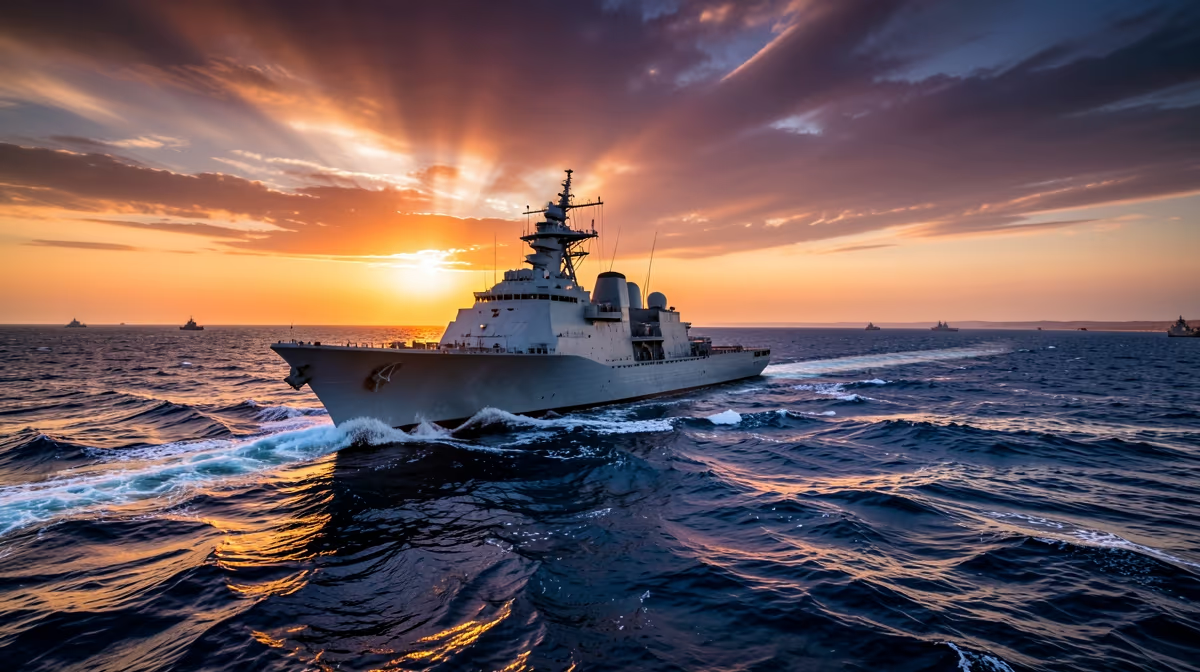
Recent developments show that US strikes Iran tankers have dramatically increased geopolitical tensions in the region. The United States military has struck three Iranian oil tankers in retaliation for what it described as unprovoked missile attacks targeting U.S. warships in the region.
Background on the US strikes against Iranian oil tankers
The United States military launched retaliatory strikes against three Iranian crude oil carriers in response to what officials described as unprovoked attempts by Iran to target two U.S. warships. According to U.S. Central Command, the military action targeted three Iranian crude oil carriers following incidents where American warships were reportedly targeted. The strikes form part of a newly enacted policy framework by the U.S. regarding maritime security engagements in the region.
These military escalations follow days of heightened tensions that saw intense exchanges of fire between U.S. and Iranian forces. The latest series of strikes highlights a growing volatility in maritime corridors where military vessels and commercial oil carriers operate. Defense officials and international observers are closely monitoring the situation as the implementation of the new policy risks further exacerbating regional instability. The strikes represent one of the more direct responses by U.S. forces against Iranian maritime assets in recent weeks.
This aggressive move follows a new U.S. policy regarding maritime security and comes just days after both nations engaged in some of the most intense exchanges of fire seen in weeks. The situation continues to develop as tensions rise significantly between the two countries in vital global shipping lanes. Tensions between the United States and Iran have frequently flared up over maritime security, freedom of navigation, and military presence in vital waterways like the Persian Gulf and surrounding regions, often leading to naval standoffs and retaliatory actions.
Implications of the Middle East escalation for global markets
The implementation of a de facto tanker-for-tanker policy directly threatens critical crude oil transit lanes, elevating energy market volatility, spiking freight insurance premiums, and stoking fears of broader supply chain disruptions. This escalation raises the risk of a broader military conflict in the Middle East and threatens stability in critical global trade and energy shipping routes, potentially impacting oil prices and international commerce worldwide.
The direct targeting of Iranian oil infrastructure significantly raises the ceiling of escalation between Washington and Tehran, threatening to draw regional proxies further into the conflict and altering the calculus of deterrence in the Persian Gulf. Governments and military forces in the Middle East, international shipping companies, global consumers of petroleum products, and diplomatic bodies working to maintain regional peace are directly affected by these developments.
Strategic Analysis of the Maritime Conflict
Escalating maritime friction in the Middle East follows reported Iranian missile attacks targeting United States Navy warships, prompting Washington to operationalize a robust retaliatory deterrence doctrine. The administration faces immense pressure to project strength and protect military assets in the region without tumbling into an all-out conventional war, utilizing calibrated kinetic retaliation to satisfy domestic security expectations.
These tit-for-tat maritime strikes may serve as a testing ground for automated naval engagement rules and unmanned defense systems, potentially redefining how modern superpowers safeguard strategic choke points against asymmetrical drone and missile threats. This mirrors historical parallels such as the 1987-1988 Operation Earnest Will during the Iran-Iraq War, where the US military escorted reflagged Kuwaiti oil tankers through the Persian Gulf and engaged Iranian forces in skirmishes.
| Timeline Event | Description |
|---|---|
| Early September 2026 | The United States initiates its new tanker-for-tanker policy amid mounting regional skirmishes. |
| Mid-September 2026 | US warships report targeted missile attempts by Iranian forces in contested waters. |
| September 5, 2026 | US Central Command strikes and hits three Iranian crude oil carriers in direct retaliation. |
Future Outlook and Regional Projections
Tensions are expected to remain elevated following the US military strikes on three Iranian oil tankers in retaliation for reported targeting of US warships, with regional monitoring for potential responses. Diplomatic channels and military postures will likely see heightened activity under the new tanker-for-tanker policy, as markets and international observers assess the fallout on shipping and regional stability.
Analysts would likely expect continued friction in maritime zones as the implementation of the new tanker-for-tanker policy sets a precedent for retaliatory engagements.
Best-case scenarios involve the retaliatory strikes remaining isolated incidents, prompting renewed back-channel diplomatic efforts to de-escalate naval confrontations and secure shipping lanes. Conversely, worst-case projections suggest the exchange of fire could escalate into a sustained cycle of retaliatory attacks against regional shipping and military assets, severely disrupting oil supplies and regional security.
The U.S. military operation against three Iranian oil carriers under the new tanker-for-tanker policy marks a critical escalation in maritime security dynamics and regional conflict.
Frequently Asked Questions
Why did the US strike three Iranian oil tankers?
The US military launched retaliatory strikes against three Iranian crude oil carriers in response to what officials described as unprovoked attempts by Iran to target two US warships. The military action followed an intense exchange of fire between the two sides.
What is the US 'tanker for tanker' policy?
The recent military actions reflect a strategic shift under a new tanker-for-tanker policy implemented by the US. This policy dictates direct responses against Iranian maritime assets following hostile engagements in the region.
How many Iranian oil tankers were hit in the latest US strikes?
According to reports from Central Command, the US military successfully struck three Iranian oil tankers during the operation. These strikes were explicitly carried out in retaliation for missile and attack attempts directed at US Navy warships.
Who is affected by the escalation between the US and Iran?
The military escalation directly impacts regional stability, commercial shipping lanes in the Middle East, and global oil markets. Continued hostilities between US forces and Iranian assets raise concerns about wider disruptions in the region.
What happens next following the US retaliatory strikes?
As tensions remain high following some of the most intense fire exchanged in weeks, observers are closely monitoring for potential further escalations or counter-responses from Iran. Both nations maintain a heightened military posture in the area.
Which military branch confirmed the strikes on the Iranian oil carriers?
United States Central Command confirmed the execution of the strikes against the three Iranian crude oil carriers. Major news organizations including Reuters, BBC, and CNN verified the operation based on statements from military officials.
Conclusion
The United States military has confirmed the execution of retaliatory strikes hitting three Iranian oil tankers following reported attempts to target U.S. warships in the Middle East. Operating under a newly enacted policy framework, these developments follow intense exchanges of fire between U.S. and Iranian forces. Key military and international reporting agencies continue to track regional stability, maritime security corridors, and the broader implications for global energy transport.
Sources
- US hits three Iranian oil tankers after saying its warships were targeted — BBC
- U.S. strikes Iran tankers under new "tanker for tanker" policy — Axios
- Three Iranian tankers struck in retaliation for missile attacks, US military says — CNN
- US military strikes three Iranian crude oil carriers, Central Command says — Reuters
- Breaking News: The U.S. said it struck three Iranian oil tankers in retaliation for what it said were unprovoked attempts by Iran to attack two U.S. warships. The strikes came days after the two sides exchanged some of their most intense fire in weeks. — facebook.com
- US launches retaliatory strikes on 3 Iranian oil carriers in response to attacks against Navy warships — The Hill


