
Fitbit Edge Launch By Google Sparks Massive Shift In Wearable Health Tech
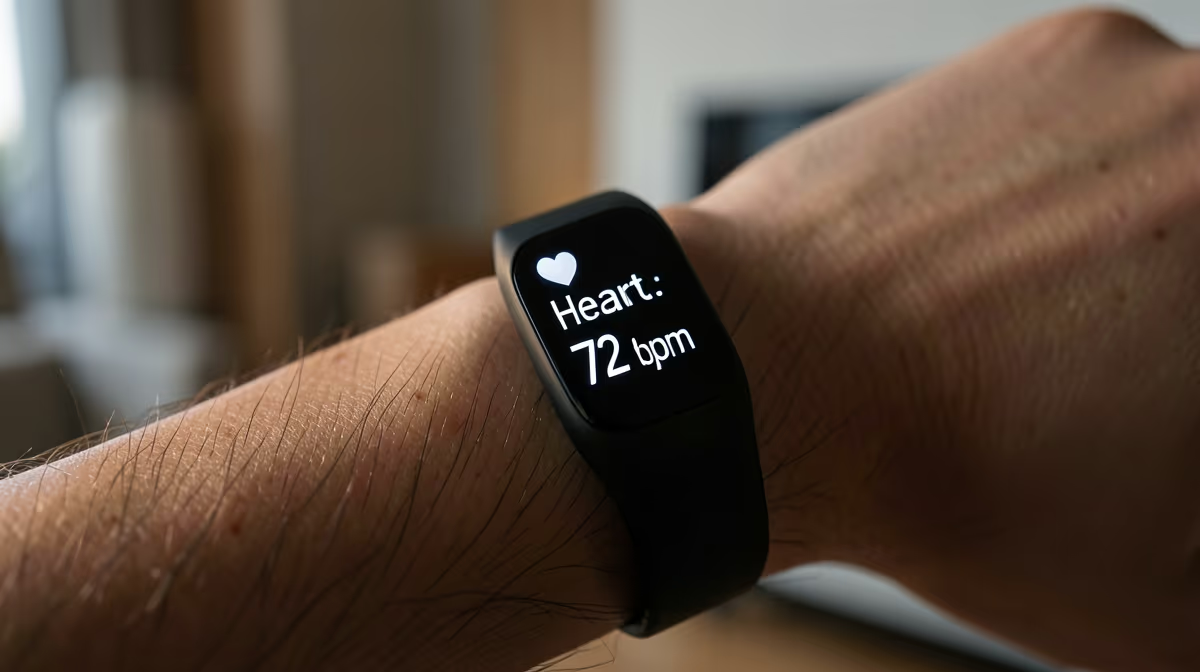
The line between clinical-grade medical instruments and consumer electronics has officially blurred into a single, high-resolution wrist-worn display. Tech giant Google launches Fitbit Edge today, expanding its ecosystem of health hardware and smart wearable devices to a point where advanced biometric monitoring is now accessible to the average consumer.
The Fitbit Edge introduces medical-grade ECG and built-in GPS at a competitive $179 price point, signaling Google's aggressive push to dominate the mid-tier health-monitoring market.
The New Standard in Biometric Tracking
The arrival of the Fitbit Edge marks a significant milestone in Google's hardware journey, specifically within its health and wellness division. Described by the company as its "smartest fitness tracker ever," the device is engineered to provide more than just basic activity metrics. It serves as a comprehensive health hub, integrating features that were once reserved for high-end smartwatches or specialized medical equipment.
At the core of the Fitbit Edge is its advanced sensor suite. For the first time in this specific hardware lineage, Google has integrated a dedicated electrocardiogram (ECG) sensor. This allows users to monitor heart rhythms and detect potential irregularities directly from their wrist. This feature is paired with built-in GPS, enabling fitness enthusiasts to track outdoor routes, pace, and distance with precision, independent of a tethered smartphone.
Display and Battery Longevity
Beyond the internal sensors, the physical design of the Fitbit Edge prioritizes both visibility and endurance. The device features a vibrant integrated display designed for real-time workout tracking and notification management. Perhaps most notably, Google has addressed a primary pain point for wearable users: charging frequency. The Fitbit Edge offers a 7-day battery life on a single charge. This longevity ensures that users can utilize the device’s comprehensive sleep tracking and heart rate monitoring capabilities throughout the week without the interruption of a nightly charging cycle.
Strategic Integration and the Data Ecosystem
The launch of the Fitbit Edge is not merely a hardware update; it is a calculated move to deepen Google’s ecosystem lock-in. By providing a high-value entry point at $179 to $180, Google is securing its footprint in the personal health data sector. Analysts suggest that the primary root cause of this aggressive launch is the strategic imperative to expand the collection of health data amidst intensifying global competition.
The Subscription Model and Economic Moats
From an economic perspective, the Fitbit Edge serves as a vital hardware gateway. While the device itself is priced competitively to capture market share from rivals like Apple and specialized fitness brands, its long-term value lies in recurring revenue. The hardware acts as a platform for subscription-based health services, where deeper data insights and personalized coaching are locked behind a monthly fee. This strategy protects Google’s market share by creating a high-switching-cost environment for users who become accustomed to the Fitbit-Google health interface.
The Fitbit Edge serves as a hardware entry point to recurring subscription health services, protecting Google's market share in wearable tech.
Navigating the Regulatory and Privacy Labyrinth
As Google pushes deeper into personal health and wellness, it faces a complex landscape of regulatory scrutiny. The integration of advanced health technology places consumer biometric data at the center of global debates regarding big tech’s role in sensitive information management.
Geopolitical and Privacy Implications
The launch of standardized health tracking hardware like the Fitbit Edge creates a uniform data infrastructure across various international borders. This tests the limits of cross-border data transfer compliance and forces Google to balance its feature rollouts with impending regulatory demands. There is a "hidden angle" to this expansion: the emphasis on ECG and prolonged battery life may be a precursor to a longer-term push. By aggregating clinical-grade datasets, Google could potentially develop proprietary artificial intelligence health diagnostic models, further shifting the device from a lifestyle novelty into a primary health monitoring node.
Historical Evolution: From Pedometers to Health Hubs
To understand the impact of the Fitbit Edge, one must look at the historical parallel of the early 2010s. During that era, smartphone-integrated health ecosystems began to expand, gradually shifting consumer expectations. What began as simple step-counters have evolved into sophisticated biometric tools.
| Milestone | Development |
|---|---|
| Acquisition | Google acquires Fitbit to secure hardware and health data infrastructure |
| Integration | Fitbit brand is folded into Google's broader hardware and AI initiatives |
| Launch | Fitbit Edge debuts with GPS, ECG, and 7-day battery at $179 |
This evolution has been punctuated by Google’s strategic acquisition of Fitbit, which provided the necessary hardware foundation and data infrastructure to compete in the modern wearables market. The Fitbit Edge represents the culmination of this integration, offering a refined balance of Fitbit’s fitness heritage and Google’s technological scale.
Market Adoption and Expert Forecasts
The immediate future of the Fitbit Edge will be determined by its reception in a crowded market. Industry experts and health tech analysts are closely watching how the device competes in the mid-tier segment, particularly against smartwatches that often cost twice as much.
The Next 24 to 72 Hours
- Next 24 Hours: Preorders for the Fitbit Edge will continue to roll out globally. Tech reviewers and early adopters will begin dissecting the $179 price point and the practical utility of its ECG and GPS features.
- Next 72 Hours: Initial unboxing videos and early consumer reception data will emerge. These early insights will provide a clearer picture of how the Fitbit Edge positions Google against established wearable competitors.
Predicting the Best and Worst Case Scenarios
Analysts have outlined two distinct paths for the new tracker. In the best-case scenario, the Fitbit Edge receives widespread critical acclaim for its battery life and tracking accuracy. This would drive strong holiday preorders and solidify Google’s footprint in the wearables sector. Conversely, the worst-case scenario involves potential supply chain constraints or software bugs that could temper the initial excitement. Furthermore, intense competition from lower-priced fitness bands could dampen the expected sales volume if consumers do not perceive the ECG and GPS as essential upgrades.
The Human Impact: Who is Affected?
The release of the Fitbit Edge directly impacts three primary groups: fitness enthusiasts, everyday consumers, and the broader tech-buying public. For fitness enthusiasts, the built-in GPS and workout display provide a more streamlined experience for training. For everyday consumers, the access to medical-grade insights like ECG provides a tool for proactive health management without the need for a full-fledged, expensive smartwatch.
As tech giants continue to push into the wellness space, devices like the Fitbit Edge make advanced monitoring more accessible. This democratization of health data allows individuals to manage their fitness goals with a level of precision that was previously unavailable at a sub-$200 price point. The launch ultimately underscores Google's ongoing strategy: integrating deep health monitoring tools into accessible, everyday consumer hardware.
Frequently Asked Questions
What is the Google Fitbit Edge tracker?
The Google Fitbit Edge is an all-new fitness tracker announced by Google as their smartest fitness tracker yet. It comes packed with advanced health monitoring features to expand the tech giant's footprint in wearable wellness technology.
How much does the Fitbit Edge cost?
The Fitbit Edge tracker is priced at $179 (or $180 depending on the report) and is positioned as a competitive option in the health tracking market. Preorders have gone live following its official launch.
What are the key features of the Fitbit Edge?
The new Fitbit Edge tracker includes built-in GPS, an integrated display, an ECG feature for heart health monitoring, and an impressive 7-day battery life.
Why does the Fitbit Edge launch matter?
This launch signifies Google's continued health push and expanding ambitions in health monitoring technology. By introducing a device with advanced capabilities like ECG and GPS at a sub-$200 price point, Google is scaling up its ecosystem to better compete in the smart wearable space.
Who is affected by the Fitbit Edge release?
Fitness enthusiasts, existing Fitbit users, and consumers looking for comprehensive health tracking options are directly impacted. It offers a fresh alternative with advanced medical-grade insights without the need for a full smartwatch.
What happens next for the Fitbit Edge?
Following the live preorders, the Fitbit Edge is rolling out to consumers worldwide. Tech analysts will monitor market adoption to see if it boosts Fitbit's market share.
Conclusion
The launch of the Fitbit Edge marks a definitive step in Google’s strategy to dominate the personal health technology sector. By combining advanced features like ECG and built-in GPS with a robust 7-day battery life at a $179 price point, Google is challenging the traditional boundaries of the fitness tracker market. While the hardware itself is impressive, its true significance lies in its role as a data-collection node and a gateway to Google’s broader health ecosystem. As preorders roll out globally, the tech industry will soon see if this "smartest tracker ever" can successfully capture the interest of health-conscious consumers and withstand the pressures of a highly competitive and regulated market.
Sources
- Google Fitbit Edge: Our all-new smartest fitness tracker ever — blog.google
- Fitbit Edge launch: Price, specs, live preorders, where to buy — Mashable
- Google announces $179 Fitbit Edge tracker with display, GPS — 9to5Google
- Google unveils new Fitbit Edge tracker as tech giant expands health monitoring ambitions — Fierce Healthcare
- Google launches Fitbit Edge with 7-day battery and ECG, says it is company’s ‘smartest fitness tracker ev — The Times of India
- Google Debuts $180 Fitbit Edge Tracker in Continued Health Push — Bloomberg.com


.webp)
