
Jantar Mantar Protest Venue De-notified by Delhi Authorities
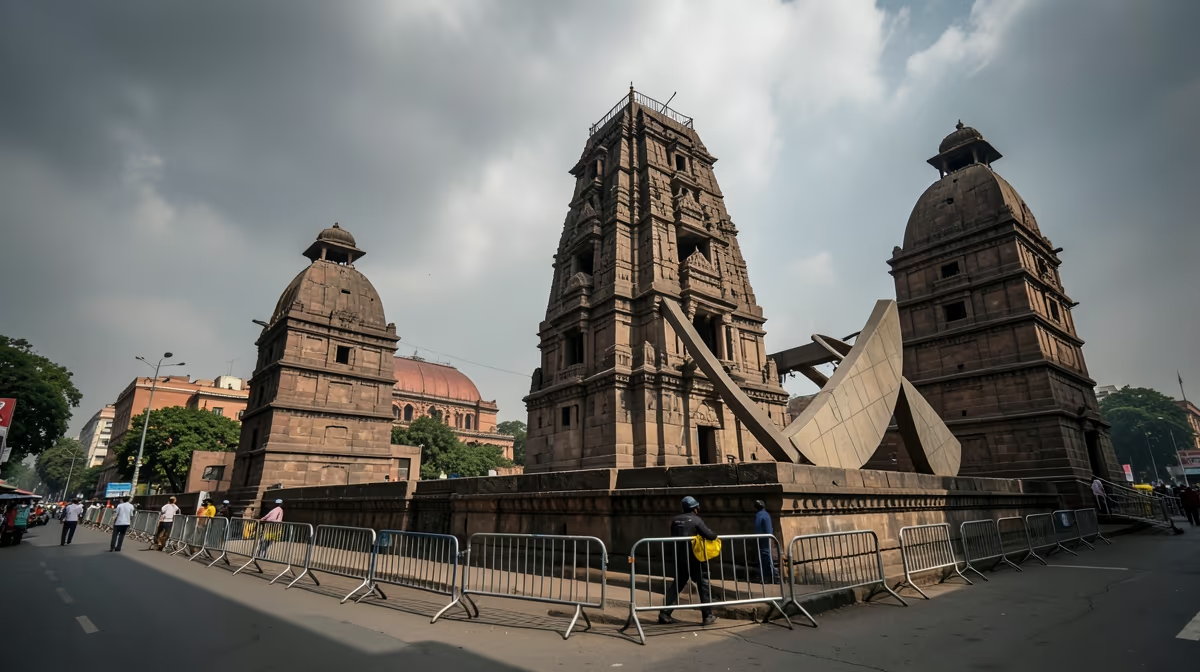
The narrow corridor of Parliament Street has long echoed with the chants of those seeking to catch the ear of power, but those echoes are set to fade into the historical record. With a sudden administrative stroke, the geography of dissent in India’s capital has been fundamentally redrawn, moving the epicenter of public agitation away from the seats of federal authority. The historic Jantar Mantar protest venue de-notified status has sparked widespread debate across the capital, altering how public demonstrations are managed and where the voices of the citizenry will now be permitted to congregate. This decision by the Delhi Police and local authorities signifies a major shift in the urban administration of New Delhi, prioritizing traffic management and security over the long-standing tradition of central public assembly.
The de-notification of Jantar Mantar as a designated protest site shifts the focus of public assembly to Ramlila Maidan, Burari Ground, and CBD Grounds, effectively moving large-scale demonstrations away from the heart of the national capital.
A Significant Administrative Shift
In a move that has caught the attention of policy analysts and activists alike, the Delhi Police has officially stripped Jantar Mantar of its status as a permitted venue for public gatherings, dharnas, and protests. For decades, this site, located near the 18th-century astronomical observatory, served as the primary hub for labor unions, social activists, and political groups. Its proximity to Parliament House and various ministry offices made it a strategically vital location for those wishing to ensure their grievances reached the highest levels of government.
The official notification ends the era of Jantar Mantar as a symbolic landmark for landmark public movements. According to reports from the Delhi Police, the site is no longer a permitted venue, and any attempt to organize demonstrations there will now likely invite regulatory action or immediate restrictions from law enforcement. This change is not merely a local zoning adjustment but a significant alteration in the administrative protocols governing public assembly in one of the world's most politically active cities.
Mapping the New Designated Protest Sites
To fill the vacuum left by the de-notification, authorities have designated three alternative venues located across different parts of the city. These sites have been chosen to accommodate large crowds while mitigating the impact on the central administrative district.
- Ramlila Maidan: Traditionally a venue for massive political rallies and religious festivals, this ground remains a central, albeit more contained, option for major demonstrations.
- Burari Ground: Located on the outskirts of the city, this expansive area is designed to handle very large gatherings that would otherwise paralyze the city center.
- CBD Grounds: This site provides an alternative location for urban gatherings, further diversifying the zones where public expression is officially sanctioned.
| Venue | Previous Status | Current Status |
|---|---|---|
| Jantar Mantar | Designated Protest Site | De-notified / Permitted Venue Revoked |
| Ramlila Maidan | Multi-use Rally Ground | Officially Designated Protest Site |
| Burari Ground | Public Assembly Space | Officially Designated Protest Site |
| CBD Grounds | Public Assembly Space | Officially Designated Protest Site |
Root Causes and Administrative Rationale
The decision to de-notify Jantar Mantar is rooted in increasing administrative and security pressures within the national capital. Managing continuous civil unrest and large-scale public demonstrations near core government installations has become a logistical challenge for the Delhi Police. The persistent presence of protesters has frequently led to severe traffic congestion and security alerts in areas that house high-profile government officials and international diplomats.
Urban administration experts note that the shift is a response to the need for better traffic management and the preservation of public order. By moving demonstrations to more peripheral or contained locations, authorities aim to ensure that the daily functioning of the capital—including the movement of commuters and the operation of government offices—is not hindered by the very visibility that protesters seek.
Economic and Tourism Considerations
The commercial and tourism landscape surrounding the historical Jantar Mantar site is also expected to experience a shift. Historically, frequent blockades and heavy police presence have disrupted the flow of tourists visiting the monument and impacted local businesses. The relocation of protesters may provide relief to these sectors, potentially revitalizing the area as a heritage zone rather than a site of constant agitation. However, this relief comes at the cost of the site's role as a "speakers' corner" for the nation.
The Politics of Relocation and Visibility
The relocation of Delhi’s primary protest venue is not without political controversy. Analysts suggest that moving demonstrations away from central landmarks like Jantar Mantar changes the optics of dissent. By placing protesters in venues like the Burari Ground, which is significantly further from the seats of federal power, the immediate public and political pressure on the ruling authorities may be buffered.
Fragmentation of Collective Movements
A "hidden angle" identified by social observers is the potential fragmentation of collective labor and activist movements. When protests are dispersed across three separate, less central venues, the ability of different groups to coordinate and maintain a high-visibility media impact is reduced. Proximity to the "seats of power" has always been a key tool for activists; without it, the symbolic weight of a demonstration may be diminished.
International Scrutiny
While primarily a domestic administrative decision, the restriction of high-visibility protests in a capital city often draws scrutiny from international human rights monitors. Global observers frequently evaluate how democratic spaces and civic freedoms are maintained in metropolitan hubs. The systematic relocation of traditional protest sites to the outskirts is a phenomenon that has been observed in other global capitals during periods of heightened administrative sensitivity, and Delhi’s move is being viewed through this historical parallel.
Impact on Activists and Daily Commuters
The stakeholders most directly affected by this notification include labor unions, political organizations, and individual citizens planning public demonstrations. They must now navigate a new set of rules and geographical restrictions.
- Activists: Must now shift their organizational efforts to venues that are less central, potentially requiring more resources to attract media attention and public participation.
- Daily Commuters: May experience a decrease in traffic disruptions in central Delhi, though new congestion patterns could emerge around Ramlila Maidan and Burari Ground during large events.
- Law Enforcement: Faces the task of enforcing the de-notification at Jantar Mantar while managing the logistics and security of three separate, spread-out venues.
Moving demonstrations away from central landmarks like Jantar Mantar can impact the visibility of protests and alter traffic, security, and urban management across the capital.
What Comes Next: The 72-Hour Outlook
In the immediate 24 to 72 hours following the notification, authorities are expected to clarify operational guidelines for the newly designated sites. This includes the process for seeking permissions and the specific boundaries within which demonstrations must be contained.
Public discussions and potential legal or administrative challenges are anticipated. Activist groups and political stakeholders are likely to weigh in on the accessibility of the new venues, particularly the Burari Ground, which some may argue is too remote for effective civic engagement. The best-case scenario involves a smooth transition with clear communication from the Delhi Police, minimizing disruption to public order while preserving the fundamental right to peaceful assembly. However, there is a risk of heightened tensions if groups attempt to defy the ban at Jantar Mantar, leading to unauthorized demonstrations or legal disputes over freedom of assembly rights.
Expert Prediction
Analysts expect increased friction between protest organizers and local enforcement agencies in the coming weeks. As groups navigate the new geographical restrictions, the struggle to maintain visibility in the shadow of power will likely transition into a debate over the adequacy and accessibility of the new relocated venues.
Frequently Asked Questions
Why has Jantar Mantar been de-notified in Delhi?
Jantar Mantar has been officially de-notified as a designated protest site by the authorities, meaning demonstrations and agitations are no longer permitted at this historic location. The decision shifts the official zones for public gatherings to other parts of the city to manage security and traffic pressures.
What are the new designated protest sites in Delhi?
Following the de-notification of Jantar Mantar, Delhi Police have named three alternative venues for public demonstrations: Ramlila Maidan, Burari Ground, and CBD Grounds. These locations are now officially designated to handle protests and large gatherings.
Who is affected by the de-notification of Jantar Mantar?
Political activists, labor unions, social groups, and citizens who routinely rely on central locations for demonstrations are directly impacted. They must now shift their organizational efforts to the newly assigned venues. Daily commuters in central Delhi may also see changes in traffic patterns.
What happens next for groups wanting to protest in Delhi?
Groups planning demonstrations must now seek permissions and organize their events at the newly notified alternative venues such as Ramlila Maidan, Burari Ground, or CBD Grounds. Protesting at Jantar Mantar will likely invite regulatory action from law enforcement.
What is the background of Jantar Mantar as a protest venue?
Jantar Mantar had long served as Delhi's most iconic hub for civil society groups and opposition parties due to its proximity to Parliament and key government offices. It became synonymous with freedom of expression and landmark public movements in the capital.
How many alternative venues were named by Delhi Police to replace Jantar Mantar?
Delhi Police officially designated exactly three alternative venues to replace Jantar Mantar: Ramlila Maidan, Burari Ground, and CBD Grounds.
Conclusion
The de-notification of Jantar Mantar marks a definitive end to the site's long-standing role as the central stage for Indian democracy's most vocal expressions. By designating Ramlila Maidan, Burari Ground, and the CBD Grounds as the new permitted venues, the Delhi Police have fundamentally altered the logistics of dissent. While this move is presented as a necessary step for urban administration, security, and traffic management, it raises significant questions regarding the visibility of civic protests and the fragmentation of social movements. As activists and political groups begin to navigate these new geographical boundaries, the coming days will determine how the right to assembly adapts to a landscape where the "speakers' corner" has been moved away from the seats of power. The transition remains a developing situation, with the efficiency of the new venues and the response of civil society serving as the next critical indicators of the capital's civic health.
Sources
- Jantar Mantar No Longer A Protest Venue, Delhi Gets 3 New Designated Sites — NDTV
- Jantar Mantar is no longer a protest site: 3 new venues named in Delhi — Open Magazine
- Jantar Mantar de-notified as designated protest site, three alternative venues named — The New Indian Express
- Jantar Mantar off limits, these 3 venues are now designated sites of Delhi | India News — Hindustan Times
- Jantar Mantar no longer a designated protest site: Delhi Police names Ramlila Maidan, Burari Ground and C — The Times of India
- Not Jantar Mantar But Ramlila Maidan, Burari Ground and CBD Grounds are New Protest Sites: Delhi Police Notifies — GujaratSamachar English


.webp)
