
Super Duper El Nino Warning India Sparks Major Winter Concerns
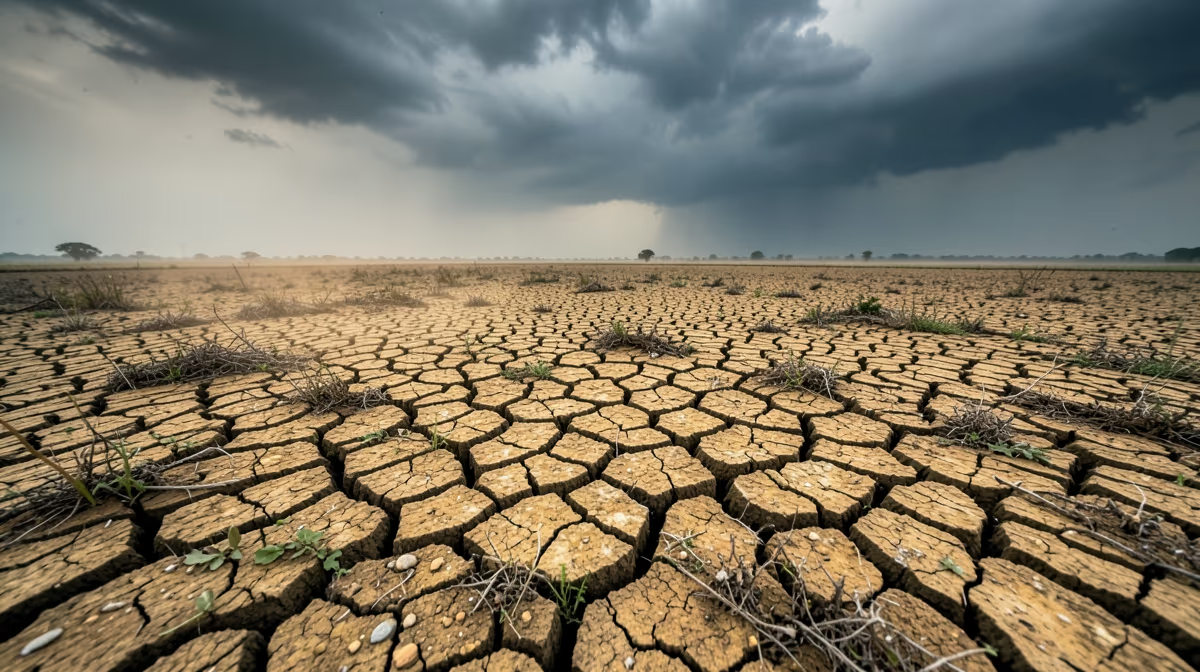
The traditional bite of the Indian winter faces an unprecedented challenge as oceanic temperature anomalies rewrite the seasonal script. As meteorologists raise a Super Duper El Nino Warning India, experts predict significant shifts in seasonal weather patterns across the subcontinent that could alter the landscape of rural livelihoods. The warming of surface waters in the eastern tropical Pacific Ocean is no longer a distant climatic abstraction but a direct threat to the predictable rhythm of the Indian December. Recent alerts from meteorological departments have intensified concerns that the standard winter chill could be missing or significantly delayed across large swaths of the country.
The looming super-duper El Nino phenomenon threatens to suppress the winter chill and disrupt regional agricultural cycles, potentially forcing a total re-evaluation of traditional Rabi crop management and rural economic planning.
The Mechanics of the Super Duper El Nino
The phenomenon known as El Nino describes the unusual warming of surface waters in the eastern tropical Pacific. While a standard El Nino can disrupt global weather, the current projections for a "Super-Duper" event indicate an intensity that could fundamentally uproot traditional climate cycles. This large-scale oceanic pattern influences atmospheric circulation, often leading to warmer-than-usual conditions and unusual deviations in seasonal coolness.
According to meteorological reports, these shifting patterns are not occurring in isolation. In the coming months, the interaction between these broad oceanic trends and localized atmospheric pressures will determine the severity of the temperature shifts. Weather monitoring agencies are currently tracking low-pressure systems in the Bay of Bengal and their potential to exacerbate the instability already introduced by El Nino.
Shifting Temperature Baselines
Historical data suggests that such large-scale climate anomalies do not merely delay the cold; they can cause it to vanish entirely for periods during the peak winter months. The primary concerns include:
- A significant reduction in the intensity of the December chill across North and Central India.
- Higher-than-average minimum temperatures during the night, preventing the cooling necessary for certain biological cycles.
- Unseasonal warmth that mirrors late-spring conditions rather than the early-winter baseline.
The Agrarian Crisis and Rural Impact
The most immediate and severe impact of the Super Duper El Nino Warning India is felt within the agricultural sector. Farmers across the country, particularly in states like Maharashtra and the Vidarbha region, are bracing for a season where the climate no longer aligns with the sowing calendar. The Rabi crop cycle is heavily dependent on a steady drop in temperature, and the absence of this chill can lead to stunted growth and reduced yields.
Regional weather updates have already highlighted how shifting monsoon arrivals and unseasonal rains—such as those witnessed at the start of the year in Navi Mumbai—have left farmers in a state of growing anxiety. The uncertainty regarding crop growth necessitates a shift toward adaptive farming techniques. Some agriculturalists are already exploring natural or organic methods, such as go-based natural farming, to mitigate the stress induced by climate volatility.
Economic and Political Pressures
The economic ramifications of a warm winter extend beyond the farm gate. A reduction in Rabi yields directly threatens to trigger inflation in food prices, which in turn impacts the broader consumer demand in rural markets. State governments and federal policymakers are facing mounting pressure from agrarian communities whose livelihoods are tied to the predictability of the seasons.
The political dimension of these climate shifts is becoming increasingly prominent. As erratic weather warnings and unseasonal precipitation become the new norm, there is a heightened demand for robust disaster management and more accurate, localized meteorological data. The failure of traditional winter patterns could also accelerate distress urbanization, as rural labor migrates toward industrial hubs in search of stability when the land can no longer provide a reliable harvest.
| Timeline | Climatic Event | Impact Area |
|---|---|---|
| Late 2025 - Early 2026 | Unseasonal winter rains | Regional harvest disruption |
| Mid 2026 | Monsoon onset variations | High-alert disaster management |
| Late 2026 and Beyond | Super El Nino realization | Winter climate anomalies and policy shifts |
Geopolitical and Environmental Context
On a broader scale, the volatility of the South Asian climate tests regional food security and bilateral cooperation. Shared meteorological data and disaster preparedness become essential when large-scale phenomena like El Nino affect multiple nations simultaneously. The historical parallel often cited is the severe 2015-2016 El Nino event, which resulted in widespread agricultural stress, severe droughts, and significant economic fallout across rural India.
Unseasonal weather shocks may permanently alter traditional migration patterns of rural labor and accelerate distress urbanization toward regional industrial hubs.
Current observations indicate that the intensity of the upcoming anomalies will depend on how the El Nino indicators evolve. Climate researchers are closely tracking sea surface temperatures to determine the exact magnitude of the variations. If the worst-case scenario unfolds, the near-total absence of the anticipated winter chill could lead to a catastrophic failure of the seasonal crop cycle.
Predictive Analysis: The Next 72 Hours and Beyond
The immediate outlook suggests a period of intensive monitoring by both regional authorities and the agricultural sector. The following projections outline the expected trajectory of this weather event:
Immediate Forecast (24-72 Hours)
- Meteorological departments will continue to monitor atmospheric conditions and update warnings regarding the Super-Duper El Nino.
- Regional agencies and agricultural communities are expected to review weather advisories as new data on temperature anomalies emerges.
- Authorities will likely issue updates on any developing low-pressure areas, particularly in the Bay of Bengal, which could trigger unseasonal precipitation.
Long-term Expert Predictions
Analysts expect that climate researchers will focus on the interaction between El Nino and local weather drivers. In the best-case scenario, the impacts remain mild, allowing for manageable temperature shifts that do not severely disrupt winter crop cycles. However, the worst-case scenario involves severe unseasonal weather that completely disrupts agricultural planning and regional farming livelihoods.
The persistent threat of high-alert weather events, including heavy rainfall alerts and shifting monsoon dates, means that citizens and farmers must remain vigilant. Official IMD bulletins will be the primary source of guidance as the country navigates this transition into a potentially warm December.
Frequently Asked Questions
What is the Super Duper El Nino warning for India's winter?
Reports and meteorological warnings suggest that a powerful El Nino event could significantly impact winter weather patterns, potentially leading to warmer temperatures or unusual dry spells during the colder months. This phenomenon alters global atmospheric circulation, which directly influences regional weather across India.
Will winter disappear in India in December due to El Nino?
Meteorological department warnings have raised concerns that El Nino could cause temperatures to remain unusually high, making December feel unseasonably warm in parts of the country. Such anomalies threaten to diminish the expected chill, leading to concerns about vanishing winter weather.
How does an El Nino event affect Indian agriculture and farming?
Climate shifts driven by El Nino can severely impact seasonal rainfall, crop cycles, and overall agricultural productivity, leaving farmers vulnerable to unpredicted weather shifts. Changing patterns often necessitate adaptive farming techniques, such as natural or organic methods, to mitigate climate-induced stress on crops.
Who is most affected by these extreme winter weather anomalies in India?
Farmers, rural communities, and urban populations alike are affected by shifting winter temperatures and erratic precipitation patterns caused by large-scale climate phenomena. Agriculturalists face heightened uncertainty regarding crop growth, while city dwellers experience unusual weather fluctuations during the transition into the new year.
What happens next regarding winter forecasts and IMD alerts?
Meteorological agencies like the IMD will continue monitoring oceanic and atmospheric conditions to provide updated advisories on temperature trends and rainfall distribution. Citizens and agricultural sectors should stay tuned to official forecasts for timely alerts regarding extreme weather developments.
How do low pressure systems and El Nino interact during the cooler months?
While El Nino generally alters broad seasonal trends, localized occurrences like Bay of Bengal low-pressure systems can still trigger unexpected unseasonal rains or storms during winter months. These overlapping weather drivers often result in a volatile mix of temperature anomalies and sudden precipitation events.
Conclusion
The Super Duper El Nino Warning India signals a transformative period for the country's seasonal climate. With confirmed reports of significant oceanic warming and potential disruptions to the December chill, the focus now shifts to mitigation and adaptation. Verified meteorological data indicates that while broad atmospheric shifts are underway, the precise intensity of the winter anomalies will depend on ongoing developments in the Pacific and the Bay of Bengal. For the agricultural sector and rural communities, the priority remains staying informed through official IMD bulletins and preparing for a winter that may look and feel very different from those of the past. Realistic next steps involve regional authorities refining disaster management protocols and farmers adopting resilient sowing strategies to counter the unpredictability of a warming planet.
Sources
- Super-Duper El Nino Warning | डिसेंबरमध्ये भारतात थंडी गायब होणार? हवामान विभागाचा मोठा इशारा? — News18 Marathi
- Bay of Bengal Low Pressure Area : बंगालच्या उपसागरात कमी दाबाचा पट्टा, पश्चिम महाराष्ट्र, विदर्भाला पाऊस; हवामान विभागाचा अंदाज — Esakal
- Maharashtra Weather Alert: 3 विभागात अतिवृष्टीचा इशारा, 30-31 July 2026 साठी IMD Issues High Alert — Maharashtra Times
- Monsoon Arrival Maharashtra : मॉन्सून आगमनाची तारीख बदलली, ८ ते १० जूनदरम्यान महाराष्ट्रात पाऊस; शेतकऱ्यांची अस्वस्थता वाढणार — Esakal
- हवामान बदलामुळे शेतीवर होणारे परिणाम🌾🌴 गोआधारित नैसर्गिक शेतीचे फायदे 🌻 #naturalfarming #organic — YouTube
- थंडीवर पावसाची भर; नववर्षाचा पहिला दिवस पावसात गेला आधीच जाणवणाऱ्या थंडीमध्ये पावसाने आणखी भर घातली. नव्या वर्षाच्या पहिल्याच दिवशी नवी मुंबईत पावसाच्या सरी कोसळल्याने नागरिकांन — Instagram


.webp)
