
September Wholesale Prices Surge Past Expectations in New Inflation Test
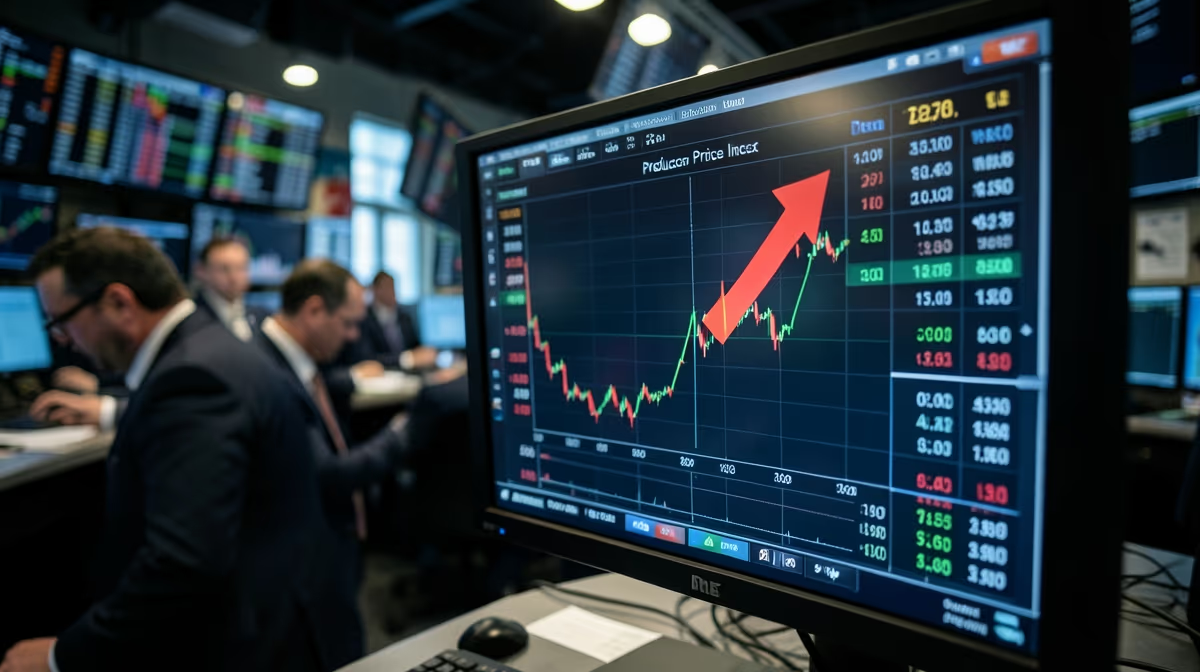
The landscape of American monetary policy shifted abruptly this morning as the industrial engines of the economy signaled a stubborn resistance to cooling. September wholesale prices unexpectedly accelerated last month, driven by rising costs across several key sectors, bringing fresh challenges for the Federal Reserve. This sharp turn in data suggests that the "last mile" of the inflation fight may be far more arduous than market optimists had priced in, effectively ending a brief period of complacency regarding interest rate trajectories.
Financial markets reacted with immediate friction to the Producer Price Index (PPI) report, which serves as a critical leading indicator for the consumer-facing costs that define the American cost of living. As the figures surpassed consensus forecasts, the narrative of a smooth disinflationary path was replaced by renewed anxiety over persistent structural pressures within the US economy. This development does more than just move tickers on a screen; it recalibrates the expectations of every participant in the global financial system, from institutional investors to average borrowers.
The unexpected surge in the September Producer Price Index has reignited fears of persistent inflation, forcing a market-wide reevaluation of the Federal Reserve's ability to implement planned rate cuts while maintaining economic stability.
The Mechanics of the September Surge
The September PPI report revealed that inflation jumped past consensus forecasts, catching economists and analysts off guard. This rise in wholesale prices—the costs businesses pay to each other before products reach the end consumer—indicates that the inflationary fire is still being fueled at the source. The data suggests that despite months of restrictive monetary policy, input costs in several key sectors have begun to climb again, creating a bottleneck that could eventually squeeze retail prices.
The root cause of this acceleration appears to be persistent structural inflationary pressures within wholesale supply chains. Rather than a localized spike, the data reflects resilient demand coupled with sector-specific input cost increases that have exceeded earlier market expectations. This suggests that the disinflationary trend seen in prior months may have been more fragile than previously understood.
Market Reaction and the Tech Sector Rout
The immediate fallout was most visible in the equity futures market. Nasdaq futures plunged as the PPI data was released, coinciding with an ongoing rout in the Artificial Intelligence and broader technology sectors. The convergence of hotter inflation data and a tech sell-off created a compounding effect on market sentiment, as investors realized that higher-for-longer interest rates would disproportionately affect high-growth companies.
- Nasdaq futures experienced sharp downward pressure following the release.
- Broader market sentiment soured as investors reassessed the likelihood of aggressive rate cuts.
- Technology and AI shares led the decline, reflecting sensitivity to Treasury yields.
- Market participants are now closely monitoring retail sales data as the next potential risk factor.
Pressure on the Federal Reserve
For the Federal Reserve, the September wholesale prices report represents a significant complication. Central bank officials have been navigating a delicate balance, attempting to cool the economy without triggering a recession. However, when wholesale costs increase unexpectedly, it limits the Fed's room to maneuver. If the central bank cuts rates too soon, it risks letting inflation entrench itself; if it stays too aggressive, it risks economic stagnation.
The hotter-than-forecast PPI inflation data has triggered renewed concerns across financial markets about the future of any Federal Reserve rate cut. Analysts who had anticipated a steady series of reductions through the end of the year are now forced to consider a "pause" or a more conservative approach. This puts the Fed under intense scrutiny, as every statement from officials will now be parsed for signs of a hawkish shift in response to the persistent price pressures.
The Producer Price Index serves as an important leading indicator for consumer inflation because cost pressures experienced by wholesalers and manufacturers are typically transmitted to retail buyers over time.
Economic and Political Dimensions
The implications of the PPI surge extend beyond the trading floor and into the halls of government. There is an increasing political angle to this data, as the Federal Reserve’s monetary stance faces heightened scrutiny. This puts significant pressure on central bank independence, as debates over economic management intensify ahead of upcoming policy decisions. The struggle to contain inflation while maintaining a "soft landing" has become a central theme in the broader discourse on national economic health.
From an economic perspective, the surging PPI figures challenge the market's expectation of a smooth path forward. This volatility in tech and equity futures is a direct response to the threat of higher-for-longer interest rates. There is also a hidden angle to consider: a potential structural shift in corporate pricing power. Wholesale producers appear to be successfully passing escalating operational and regulatory costs directly down the supply chain, despite broader fears of an economic slowdown. This suggests that businesses are still finding ways to maintain margins by raising prices, even as borrowing costs remain elevated.
A Global and Historical Context
The impact of US inflation is rarely contained within its borders. Global supply chain sensitivities and macroeconomic cross-currents amplify domestic US price shocks, impacting foreign investor sentiment and international capital flows. As the US PPI rises, it strengthens the argument for a stronger dollar and higher yields, which can draw capital away from emerging markets and affect global trade balances.
Historians and analysts have pointed to a sobering historical parallel: the persistent inflation surprises of the 1970s and early 1980s. During that era, inflation proved to be "sticky," repeatedly defying expectations of a cooldown. This eventually forced central banks to maintain aggressive tightening cycles for much longer than the markets had anticipated. The current surge in September wholesale prices suggests we may be entering a similar period of "inflationary persistence" that requires a more sustained policy response.
Timeline of the Inflation Rebound
| Phase | Market Condition | Fed Outlook |
|---|---|---|
| Prior Months | Tentative signs of cooling inflation | High optimism for aggressive easing |
| September Report | PPI unexpectedly surges past consensus | Immediate market reaction and volatility |
| Current State | Heightened pressure on Fed officials | Reassessment of the rate cut trajectory |
Future Outlook and Market Predictions
In the immediate term, the next 24 hours are expected to see markets continue digesting the stronger-than-expected September PPI report. This will likely keep pressure on technology shares and equity futures as the "hot" data remains the primary focus of trading desks. Analysts expect that the scrutiny on upcoming central bank policy meetings will only increase as these persistent inflation pressures complicate the interest rate outlook.
Over the next 72 hours, the focus will shift to subsequent economic indicators and any commentary from Federal Reserve officials. Investors will be looking for signs of how the Fed intends to weight this specific PPI report against other labor market and retail data.
- Best-case scenario: Markets stabilize as investors process the wholesale inflation data as a temporary bump, and the Federal Reserve maintains a balanced approach.
- Worst-case scenario: Persistent inflation concerns trigger a broader sell-off across equity markets, leading to increased pressure on the Fed to adopt a more aggressive stance.
- Expert Prediction: Continued market volatility is likely, with increased scrutiny on upcoming central bank policy meetings as inflation pressures remain stubborn.
Frequently Asked Questions
What happened with the September wholesale prices report?
The Producer Price Index (PPI) report for September showed that wholesale prices rose faster than expected, exceeding consensus forecasts. This unexpected jump has triggered fresh inflation concerns across financial markets.
Why does the higher-than-expected September PPI matter for the Fed?
The faster-than-anticipated rise in wholesale inflation puts new pressure on the Federal Reserve regarding its monetary policy decisions. As wholesale prices feed into consumer inflation over time, it complicates the central bank's path forward on interest rates.
How did the stock market react to the September PPI data?
Following the release of the hotter-than-expected inflation data, markets experienced noticeable turbulence, including sharp drops in Nasdaq futures amid a broader tech rout. Investors are closely monitoring how economic data and remarks from officials will impact trading conditions.
Who is affected by rising wholesale inflation?
Businesses, investors, and everyday consumers are all impacted by surging wholesale prices. Companies face higher production costs which they may pass on to consumers, while investors navigate increased volatility across stock and bond markets.
What is the background of the Producer Price Index (PPI) in this report?
The PPI measures the average changes in prices received by domestic producers for their output. September's data came in higher than analysts had predicted, signaling that underlying inflationary pressures in the economy remain stubborn.
What happens next for the markets and the economy following the PPI report?
Markets will continue to analyze upcoming economic releases, such as retail sales data, which pose fresh risks for financial sectors. Experts and policymakers will weigh these inflation signals as they anticipate upcoming Federal Reserve meetings and rate decisions.
Conclusion
The surge in September wholesale prices has fundamentally altered the economic conversation for the remainder of the year. By rising faster than expected, the PPI has injected a fresh dose of uncertainty into the Federal Reserve’s monetary policy path, suggesting that the battle against inflation is far from over. The immediate plunges in Nasdaq futures and the broader tech rout underscore the market's sensitivity to any data that threatens the prospect of lower interest rates. As businesses continue to navigate rising input costs and pass those expenses down the chain, the pressure on both consumers and policymakers will likely intensify. The coming days will be critical as investors look to retail sales figures and Federal Reserve commentary to determine if this September report was an anomaly or the beginning of a challenging new phase of persistent inflation. For now, the narrative of a guaranteed series of rate cuts has been replaced by a cautious, data-dependent reality.
Sources
- PPI report today: September wholesale prices rose faster than expected, putting new pressure on Fed — live updates — MarketWatch
- Nasdaq Futures Plunge as AI Rout Rolls On; U.S. PPI Data and Warsh’s Remarks in Focus — Barchart.com
- PPI surges as inflation concerns grow, exceeding forecasts — Investing.com
- PPI inflation jumps past consensus in September — TradingView
- Experts react to September PPI report — CNBC
- US inflation worries aren't over yet as PPI and retail sales pose fresh risks for markets — investingLive


.webp)