
Ukraine Starlink Restrictions Reveal Deep Vulnerabilities on Front Lines
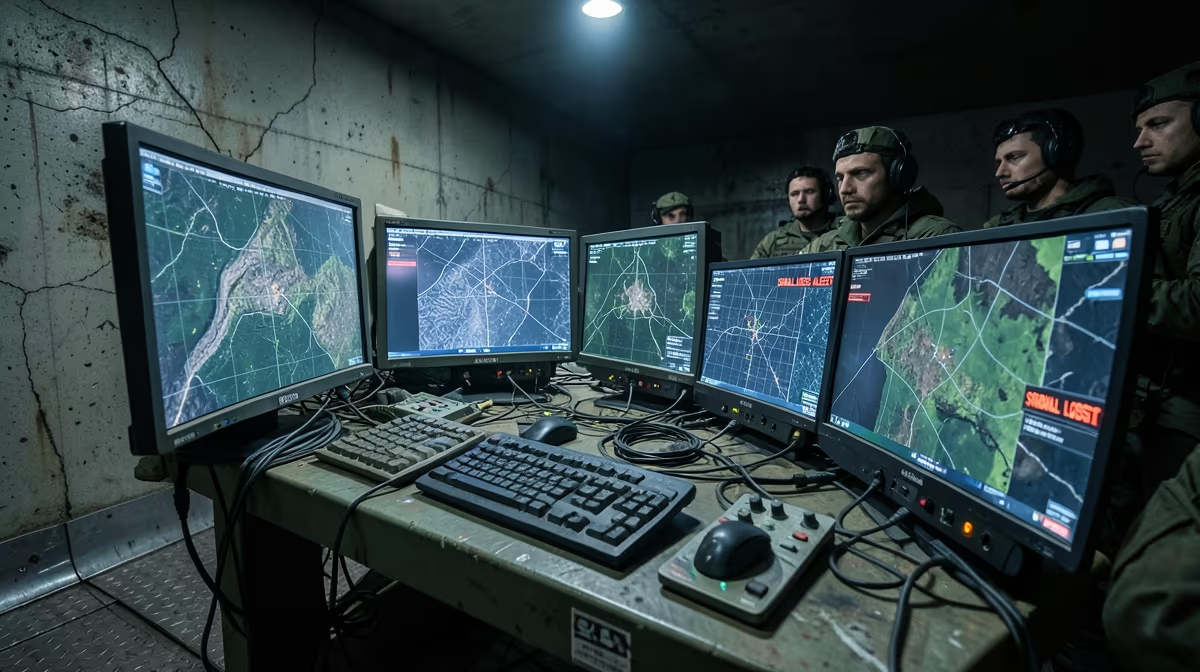
Modern battlefield superiority is increasingly dictated by the invisible flow of data through low-earth orbit. Recent developments regarding Ukraine Starlink restrictions military impact have raised urgent concerns among defense analysts worldwide, highlighting a fragile dependence on private satellite networks during active combat. As technological bottlenecks emerge on the front lines, the intersection of military necessity and high-level political friction has created a precarious environment for Ukrainian forces.
The reported changes to Starlink availability have added significant friction to Ukraine's defense efforts, particularly impacting military drone operations and communications on the front lines. These technical hurdles come at a time when Ukraine is already grappling with broader intelligence gaps and intensifying pressure from intensified Russian attacks on infrastructure. Reliable communication is the backbone of modern military defense, and when these crucial satellite links are restricted or throttled, frontline units struggle to coordinate movements, operate drones, and respond to incoming attacks in real time, effectively shifting the balance on the battlefield.
The intersection of political clashes and critical communication infrastructure throttling will lead to sustained friction in allied strategic coordination and force adjustments on the ground.
The Tactical Toll of Connectivity Limits
The direct operational consequences of the new Starlink restrictions are being felt most acutely in the specialized units responsible for drone warfare and intelligence gathering. Ukrainian military leadership has reported that these technological bottlenecks are disrupting the primary means of communication between decentralized units, leading to significant intelligence gaps during critical maneuvers. Without the low-latency broadband provided by satellite terminals, the ability to transmit real-time video feeds from reconnaissance drones to command centers is severely degraded.
Beyond the immediate loss of drone capabilities, the throttling of these terminals has impacted general tactical coordination. Since the full-scale conflict began, satellite internet systems like Starlink have served as a critical lifeline for Ukraine's military and civilian infrastructure, often replacing destroyed terrestrial communication networks. When these systems are suddenly limited, the vulnerability of sovereign defense capabilities becomes apparent, especially when those capabilities rely on external private entities.
The military impact is compounded by the timing of these restrictions. As Ukrainian forces report Starlink throttling, Russia has continued pounding energy sites in Kyiv and other critical infrastructure. This dual pressure—the physical destruction of energy networks and the digital restriction of communication channels—creates a compounding effect that hinders the ability of emergency services and military units to respond to strikes effectively.
Political Dimension and the Washington Flashpoint
The technological restrictions have not occurred in a vacuum; they coincide with a deepening diplomatic rift involving former U.S. President Donald Trump and the Ukrainian leadership. This situation has sparked political flash points in Washington, drawing reactions from Senate Republicans and highlighting changing dynamics around Donald Trump's stance toward Ukrainian President Volodymyr Zelenskyy.
Inside the halls of power, the dynamic is shifting toward a more suspicious posture. Reports have surfaced regarding a "frantic warning" and internal suspicions within Trump’s circle regarding the turn on Zelenskyy. This friction has transformed commercial technology access into a direct political flashpoint, where the provision of satellite services is no longer seen merely as a logistical matter but as a tool of geopolitical leverage.
The Senate GOP and international observers are now clashing over the implications of corporate communication blackouts on the front lines. Some lawmakers view the reliance on privately managed infrastructure as a strategic risk that complicates U.S. foreign policy and defense aid. As political polarization over aid and technology deepens, the management of these private networks becomes a central point of contention in the debate over continued support for Ukraine’s defense.
| Key Stakeholder | Observed Impact or Stance |
|---|---|
| Ukraine Military | Reporting disruption in drone operations and intelligence gaps |
| Donald Trump | Rising suspicion toward Zelenskyy; focus on intelligence leakers |
| Senate GOP | Seeing Starlink as a new flashpoint in Ukraine aid debates |
| Starlink Operators | Implementing new restrictions and throttling measures |
| Russia | Intensifying strikes on Kyiv energy sites during throttling |
Infrastructure Vulnerability and Commercial Interests
The root cause of this crisis lies at the intersection of commercial satellite communications infrastructure dependence, shifting U.S. political leadership dynamics, and ongoing wartime operational constraints. Modern military forces have become heavily reliant on privately owned commercial infrastructure, exposing deep vulnerabilities related to corporate throttling, regulatory pressure, and the financial costs of satellite data distribution.
Private satellite operators may face expanding regulatory and legal exposure as their networks are increasingly categorized by foreign adversaries and domestic politicians alike as active tools of war. This categorization changes the legal landscape for these companies, as they navigate the fine line between being a service provider and becoming a participant in a conflict.
The Hidden Angle of Regulatory Pressure
There is a historical parallel to be found in the strategic civilian-to-military telecommunications adaptations during the Cold War. During that era, private infrastructure and intelligence sharing became central friction points between state goals and corporate operations. Today, the scale of data and the speed of satellite communications have accelerated these tensions, making the decision to throttle or restrict access a high-stakes geopolitical move.
Economic Fallout and Corporate Throttling
The economic angle cannot be ignored. The financial burden of maintaining a vast satellite constellation during a war, coupled with the pressure from various governments to control the flow of information, puts private entities in a position of immense strategic power. This power allows them to influence the trajectory of a conflict through technical adjustments, such as data caps or geographic restrictions, which can be implemented with minimal public oversight.
Global Repercussions and Regional Security
The impact of Starlink’s role in conflict zones extends beyond the borders of Ukraine. Other nations are closely watching how these private networks are managed and restricted. Iran has recently targeted Starlink, labeling it a tool of war and hinting at further internet curbs within its own borders. This demonstrates a broader global debate over the weaponization and regulation of satellite internet services in conflict zones.
Iran has targeted Starlink as a ‘tool of war’ with hints of more internet curbs, signaling a global shift in how satellite broadband is perceived by sovereign states.
While Iran views the technology as an external threat to its internal control, Russia utilizes the period of Ukrainian technical disruption to advance its kinetic goals. The continued strikes on Kyiv’s energy sites during reported Starlink throttling suggest a coordinated or at least opportunistic exploitation of Ukraine's temporary communication vulnerabilities. The synchronization of technical bottlenecks and physical assaults underscores the multi-domain nature of the current conflict.
The Evolving Strategic Timeline
To understand the current state of the conflict, one must look at the sequence of events that led to the present friction between technology providers and military users.
- Trump's evolving stance on Ukraine and growing suspicion regarding intelligence and communication channels surface in Washington.
- New Starlink restrictions and throttling severely impact Ukrainian military drone operations and intelligence gathering.
- The Senate GOP and international observers clash over the implications of corporate communication blackouts on the front lines.
- Russia intensifies assaults on Kyiv energy sites, capitalizing on the reported degradation of Ukrainian coordination capabilities.
This timeline reveals a pattern where political shifts in the United States directly correlate with technological shifts on the Ukrainian battlefield. The suspicion regarding "leakers" and the evolving posture of U.S. political figures toward President Zelenskyy have created an environment where technical support is no longer guaranteed.
Future Outlook and Expert Predictions
In the next 24 hours, analysts expect continued reporting and diplomatic friction regarding the new Starlink restrictions. The fallout involving Trump and Senate Republicans is likely to dominate the political discourse, while frontline units in Ukraine attempt to adjust their communication protocols to mitigate the impact of throttling.
Looking ahead to the next 72 hours, discussions between international stakeholders and tech infrastructure providers are expected to intensify. These talks will likely center on satellite communication throttling set against the backdrop of ongoing military strikes. Analysts predict that the intersection of political clashes and critical infrastructure management will lead to sustained friction in allied strategic coordination.
Best-Case and Worst-Case Scenarios
The best-case scenario involves a rapid clarification and resolution of communication protocols between providers and military users. This would minimize operational disruption while diplomatic channels address the underlying political tensions. If successful, this could lead to a more stable framework for the use of commercial technology in war zones.
Conversely, the worst-case scenario involves prolonged communication blackouts and further restrictions that severely degrade frontline defense capabilities. Such a development would occur as political polarization over aid deepens, potentially leading to a breakdown in the strategic coordination between Ukraine and its international supporters.
Frequently Asked Questions
How are new Starlink restrictions affecting Ukraine's military?
Recent Starlink restrictions and throttling have directly disrupted Ukrainian military operations, particularly impacting drone capabilities and causing intelligence gaps. These limitations come at a time when Ukraine is also dealing with intense infrastructure attacks from Russian forces.
Why has Starlink become a flash point involving Trump and Ukraine?
Starlink has turned into a major political flash point between Donald Trump, Senate Republicans, and Ukrainian leadership amid escalating tensions. The situation highlights growing concerns over how commercial satellite communication tools are managed during geopolitical conflicts.
What is Trump's stance on Zelensky amid the recent Starlink controversies?
Recent reports outline a shifting dynamic and rising suspicions surrounding Donald Trump's posture toward Ukrainian President Volodymyr Zelensky. This political clash has amplified debates in Washington regarding ongoing support and technological access for Ukraine.
Who else is affected by recent debates over Starlink usage in conflicts?
Beyond Ukraine, nations like Iran have increasingly targeted Starlink, viewing it as a tool of war and introducing stricter internet curbs. This demonstrates a broader global debate over the weaponization and regulation of satellite internet services in conflict zones.
What is the broader background behind the Ukraine Starlink restrictions?
The restrictions emerge against a backdrop of ongoing conflict, where reliable communication networks are vital for military coordination and defense. Disruptions to platforms like Starlink leave Ukrainian forces vulnerable while facing heavy military pressure from Russia.
What happens next regarding Starlink access for Ukraine's military?
Lawmakers and defense analysts are closely monitoring the political fallout between U.S. political figures and Ukrainian leadership over communication access. Future developments will depend on diplomatic talks and potential policy adjustments regarding commercial satellite support in war zones.
Conclusion
The current disruption of Ukrainian military operations due to Starlink restrictions represents a critical juncture where technology, politics, and warfare intersect. The confirmed throttling of satellite terminals has created measurable intelligence gaps and hindered drone operations at a time of increased Russian kinetic pressure. Simultaneously, the political rift in Washington involving Donald Trump and the Senate GOP has turned a vital utility into a geopolitical flashpoint. As the conflict continues, the reliance on private commercial infrastructure remains a significant vulnerability for sovereign defense. The coming days will be decisive in determining whether diplomatic and technical resolutions can restore frontline capabilities or if political friction will lead to further degradation of Ukraine's strategic coordination.
Sources
- Ukraine says new Starlink restrictions disrupt military as it reels from intel gaps and Trump clash — NBC News
- Starlink Suspicions and a Frantic Warning: Inside Trump’s Turn on Zelensky — WSJ
- Trump, Senate GOP see Starlink become latest flash point over Ukraine — The Hill
- Trump says leakers should be shot; Ukraine drones hit by new Starlink restrictions — Yahoo
- Iran targets Starlink as ‘tool of war’ with hints of more internet curbs — Al Jazeera
- Russia pounds Kyiv energy sites as Ukraine reports Starlink throttling — Politico


.webp)