
South Korea KOSPI Plunges as AI Hardware Fears Spark Panic Selling
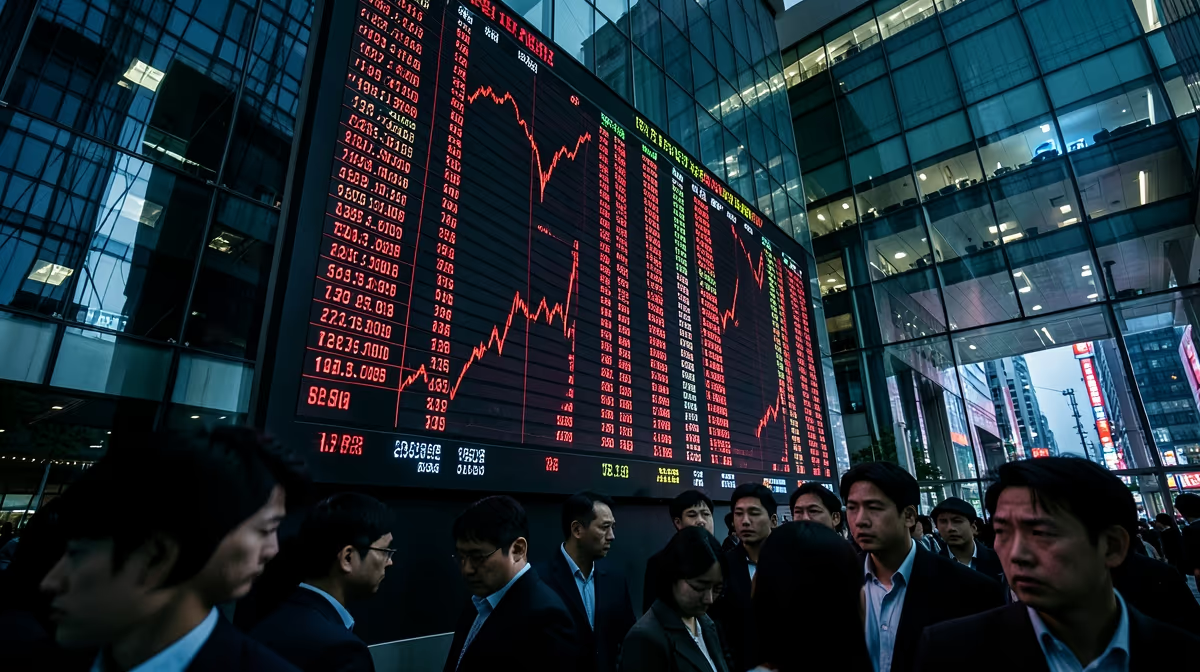
The floor fell out of the Seoul exchange as the South Korea KOSPI plunges sharply today, sending shockwaves through global financial markets as investors react to mounting uncertainties surrounding artificial intelligence investments. This dramatic downturn suggests a fundamental shift in how the world's most sophisticated capital allocators view the trajectory of the AI supercycle, particularly concerning the massive hardware expenditures required to sustain it.
The sudden 7% to 8% drop in the KOSPI index and the resulting trading halts signal a critical re-evaluation of the massive capital expenditures currently fueling the global AI and semiconductor infrastructure.
The Sudden Cascade in Seoul
The trading day in South Korea was marked by high-velocity liquidations that caught many by surprise. The KOSPI index, a benchmark for the nation's economic health, experienced a dramatic plunge, tumbling between 7% and 8% in a single session. This rapid decline was mirrored on the KOSDAQ, which also saw values fall by more than 8%, hitting a six-month low. The severity of the movement was enough to trigger standard regulatory circuit breakers, leading to a temporary halt in stock trading across Korean exchanges.
These emergency halts are designed to prevent total panic selling, yet they often serve as a stark reminder of the underlying volatility in high-tech markets. For South Korea, a critical hub for global semiconductor manufacturing, such a significant disruption ripples across international financial borders. Major chipmakers bore the brunt of the selling pressure, reflecting a broader global wave of caution that is currently affecting technology shares.
| Market Indicator | Reported Impact |
|---|---|
| KOSPI Index Performance | Plunged 7% to 8% |
| KOSDAQ Index Performance | Tumbled over 8% |
| Trading Status | Temporarily Halted |
| Sector Focus | Major Chipmakers Hammered |
| Index Level | 6-Month Low |
The AI Valuation Crisis
At the heart of this market correction is a mounting anxiety regarding the return on investment for artificial intelligence. For months, institutional capital has poured into the technology sector, betting on an AI-driven revolution. However, a root cause of the current sell-off is the growing skepticism over AI infrastructure monetization and the timelines required to see actual profit.
Hardware Exposure and Sentiment
Skepticism Over ROI
A Global Ripple Effect
The instability in South Korea did not happen in a vacuum. The sell-off coincided with a broader global tech sector correction, evidenced by falling S&P 500 futures ahead of critical U.S. economic data. As major chipmakers were heavily hammered internationally, the interconnected nature of global semiconductor supply chains meant that localized market panics in key manufacturing hubs ripple quickly across global futures.
Interestingly, while most Asian markets felt the strain, some regions showed divergent behavior. For example, the Sensex in India jumped 1,100 points despite the negative global cues, highlighting a changing landscape where smallcaps are getting bigger and largecaps are shrinking in specific emerging markets. This contrast underscores the unique vulnerability of South Korea’s stock market, which remains deeply tied to the global tech and semiconductor appetite.
When a major stock index like South Korea's Kospi drops by nearly 8% in a single session, it signals deep uncertainty among global investors regarding the high-flying technology and AI sectors.
Historical Parallels and Hidden Shifts
To understand the current volatility, many analysts look back at the dot-com bubble correction in 2000. During that era, high valuations for foundational infrastructure providers sharply disconnected from near-term software monetization. We are seeing a similar pattern today, where the infrastructure providers—the chipmakers—are being questioned on the same grounds: can the software and services side of AI generate enough revenue to support the costs of the hardware?
- Tech sector sentiment begins showing fragility amid rising skepticism over AI infrastructure monetization.
- Massive sell-offs in global futures and Asian markets cause the Kospi to plunge over 7-8%, forcing emergency trading halts.
- Markets enter a high-volatility holding pattern as investors re-assess the risk exposure of major chipmakers.
This timeline suggests we are in a period of reassessment rather than a simple momentary dip. Governments heavily reliant on semiconductor exports, particularly South Korea, face immediate domestic pressure to reassure markets and protect investor confidence. There is an increasing need for these states to evaluate support mechanisms for high-tech industrial sectors to prevent wider economic contagion.
Assessing the Stakeholders and Fallout
The impact of the KOSPI plunge extends far beyond the trading floors in Seoul. Those affected include:
- Retail and Institutional Investors: Individuals with mutual funds or retirement accounts exposed to international equities are seeing immediate value erosion.
- Technology Firms: Companies relying on high valuations to fund research and development may face tighter capital conditions.
- Semiconductor Manufacturers: The heavy losses sustained by chipmakers may impact their future production expansion plans and innovation cycles.
- Market Regulators: Authorities must now balance the need for market stability with the reality of shifting global sentiment.
Historically, rapid expansions in new technologies often experience these sharp market corrections. While the circuit breakers stopped the immediate bleeding, the long-term confidence of global investors in the South Korea stock market depends on the sector's ability to demonstrate tangible returns from the AI boom.
The Path Forward: Stability or Contagion?
As the financial world looks toward the next 72 hours, South Korean financial markets and regulators will closely monitor for systemic fallout. The immediate focus is on whether the panic selling in chipmakers will stabilize or if it will trigger extended corrections across global equity futures.
Expert predictions suggest continued volatility in Asian and global technology indices. Analysts expect that investors will continue to reassess valuations and growth expectations surrounding artificial intelligence infrastructure. In the best-case scenario, the market quickly absorbs the sell-off as a temporary correction, leading to a stabilization of the KOSPI and renewed investor confidence. However, the worst-case scenario involves persistent worries over AI monetization triggering prolonged panic selling, potentially prompting further emergency trading halts and wider global economic contagion.
The upcoming days will be critical. Market watchers are closely monitoring upcoming economic data and corporate earnings reports from major tech and chip manufacturing giants to gauge future stability. Recovery will likely depend on whether investor confidence in the artificial intelligence sector can stabilize or if the revaluation of the "AI supercycle" has only just begun.
Frequently Asked Questions
Why did South Korea's KOSPI plunge recently?
South Korea's KOSPI plunged significantly, hitting a six-month low and dropping over 7% to 8% in a single session. The severe market downturn was largely driven by a broader tech sell-off and mounting investor worries surrounding chipmakers and artificial intelligence.
What happened to stock trading in South Korea during the crash?
The intense downward pressure caused trading to be temporarily halted on both the Kospi and Kosdaq indexes. Stock values tumbled more than 8%, triggering circuit breakers as panic selling rippled through regional financial markets.
Who is affected by the KOSPI plunge and tech sell-off?
Investors, major technology firms, and semiconductor manufacturers based in South Korea are directly impacted by the slump. Global markets and international stock futures also felt the spillover effects as anxieties grew over the sustainability of the recent AI-driven tech boom.
What are the AI worries impacting chipmakers?
Markets have grown increasingly anxious that the massive capital expenditures poured into artificial intelligence may not yield immediate or expected financial returns. This sentiment has led to heavy profit-taking and a sudden revaluation of major semiconductor and tech stocks.
What happens next for the South Korean stock market?
Market analysts are closely monitoring upcoming economic data and corporate earnings reports from major tech and chip manufacturing giants to gauge future stability. Recovery will likely depend on whether investor confidence in the artificial intelligence sector can stabilize.
How does this market drop relate to broader global economic trends?
The steep decline in South Korea mirrors a wider global tech sell-off and fluctuating futures across major international indices like the S&P 500. Investors worldwide are reassessing risk as high valuations in the technology sector face mounting macroeconomic pressures.
Conclusion
The dramatic plunge of the South Korea KOSPI reflects a pivotal moment for the global technology sector. As the index hit a six-month low and triggered emergency halts, it highlighted the fragile relationship between high-flying AI valuations and the reality of semiconductor demand. While the immediate panic may subside, the underlying skepticism regarding the monetization of artificial intelligence infrastructure suggests that the period of unchecked enthusiasm may be shifting toward a more cautious, evidence-based phase. Regulatory authorities and global investors now remain in a high-volatility holding pattern, waiting to see if this correction is a temporary hurdle or the beginning of a larger structural shift in the global economy.
Sources
- S&P 500 futures fall ahead of more U.S. economic data; South Korea's Kospi plunges 7%: Live updates — CNBC
- Tech sell-off gathers pace as chipmakers hammered — Reuters
- Korean stock trading halted as Kospi, Kosdaq tumble more than 8% — KED Global
- South Korea's KOSPI closes at 6-month low as chipmakers slump on AI worries — Yahoo Finance
- Stock Market LIVE Updates, Sensex Today: Sensex Jumps 1,100 Points Despite Negative Global Cues — NDTV
- Largecaps are shrinking, smallcaps are getting bigger: What is changing in India’s stock market? — The Economic Times


.webp)