
US Considers Mother of All Bombs Against Iran Amid Rising Tensions
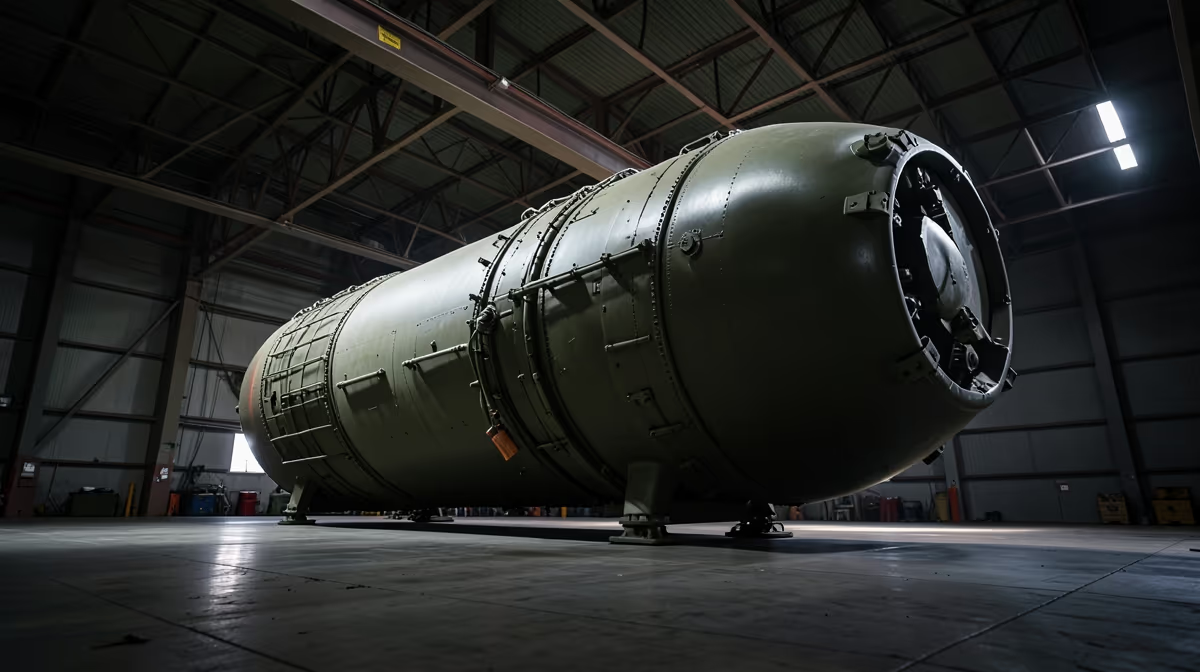
The GBU-43/B Massive Ordnance Air Blast represents a threshold in conventional warfare that military planners rarely cross outside of active, high-intensity conflict. Amid escalating regional tensions, reports indicate that the US considers mother of all bombs against Iran, marking a significant and dangerous escalation in the ongoing Middle East conflict. This deliberation involves the largest non-nuclear weapon in the American inventory, a munition designed not for tactical precision but for overwhelming atmospheric destruction and the penetration of deeply buried infrastructure.
The inclusion of the heavy-ordnance option in potential strike planning reflects the comprehensive scope of military options being weighed by U.S. officials as tensions persist.
The consideration of such extreme measures highlights the gravity of the current strategic evaluations regarding Iran. According to major news organizations including CNN and Reuters, citing insider sources, military planners are reviewing options that involve this massive explosive device to address heavily fortified or underground facilities. While the Pentagon routinely evaluates a wide range of operational contingencies, the specific focus on the GBU-43/B, widely known as the "mother of all bombs" (MOAB), suggests that the challenge posed by Iran’s hardened military and nuclear infrastructure has reached a point where standard munitions are deemed insufficient by some strategists.
Strategic implications of deploying massive ordnance against Iran
The GBU-43/B is a massive, GPS-guided surface bomb that stands as a unique asset within the U.S. military inventory. Its primary function is to destroy deeply buried, underground bunkers and tunnel systems through immense explosive force. By weighing the use of this weapon, the United States is signaling a potential major escalation in military strategy. If acted upon, it would mark a dramatic intensification of conflict, raising profound concerns about regional stability, civilian safety, and the risk of a wider war in the Middle East.
The Technical Capability of the MOAB
Root Cause of Escalation
How regional adversaries are responding to potential US strikes
The reporting of these deliberations has already begun to shift the psychological landscape of the Middle East. Analysts suggest the discussion of the MOAB may serve as a psychological warfare campaign or a deterrence signal designed to force diplomatic concessions or halt specific nuclear enrichment activities without actual deployment. However, the risk remains that public disclosure of strike plans could accelerate regional hostility, leading to retaliatory posturing and an increased risk of direct military confrontation.
- People living in Iran and the broader Middle East are most directly affected by the threat of such heavy-ordnance deployment.
- International shipping and trade networks face immediate risks if military action disrupts the flow of goods through regional waters.
- Global markets are highly sensitive to these developments, with energy prices often reacting to any signal of a potential strike on oil-producing nations.
Discussing the deployment of the largest non-nuclear weapon in the U.S. arsenal against Iran signals a potential major escalation in military strategy.
Geopolitical and Economic Dimensions
The political angle of this development is multifaceted. Domestically and internationally, the signaling of potential extreme military options puts intense psychological pressure on Tehran. Simultaneously, the U.S. administration must manage allied anxieties. Many international partners expressed concern regarding regional escalation and the potential for a wider, uncontrollable conflict that could follow the use of such a massive weapon.
Global Market Volatility
Deterrence vs. Provocation
Historical Parallel: The 2017 MOAB Deployment
To understand the current deliberations, analysts point to the historical parallel of the GBU-43/B’s use in combat. In 2017, the weapon was deployed in Afghanistan to target complex subterranean cave and tunnel systems used by insurgent forces. That deployment confirmed the weapon's effectiveness in collapsing man-made and natural underground structures.
| Factor | 2017 Afghanistan Use | Potential Iran Use (Reported) |
|---|---|---|
| **Primary Target** | Cave and tunnel systems | Hardened nuclear/military facilities |
| **Operational Goal** | Tactical neutralization of insurgents | Strategic deterrence/denial of nuclear capability |
| **Escalation Risk** | Low (non-state actor) | High (state-on-state conflict) |
| **Weapon System** | GBU-43/B MOAB | GBU-43/B MOAB |
The current deliberations over Iran, however, carry significantly higher risks than the 2017 operation. Iran possesses sophisticated defense capabilities and regional proxies, meaning any use of the MOAB would not occur in a vacuum but would likely trigger a complex, multi-front response.
Expert Prediction and Future Outlook
Defense analysts and regional observers are closely monitoring the implications of these reports. The expert prediction suggests that we should expect heightened diplomatic tensions and increased scrutiny on military planning and regional deterrence strategies following these reports.
The Next 24 to 72 Hours
- Tensions escalate over Iran's advancing nuclear program and hardened infrastructure.
- US military planners weigh the utility of massive conventional ordnance like the GBU-43/B.
- Reports emerge detailing deliberations on incorporating the weapon into future strategic strike plans.
- International diplomatic channels react to the potential for significant military escalation.
Best and Worst Case Scenarios
Frequently Asked Questions
What is the US considering using against Iran according to recent reports?
Recent reports indicate that the US military is weighing the potential use of the 'mother of all bombs' in future strikes against Iran. This massive weapon is known as the largest non-nuclear munition in the US arsenal.
Why is the US considering the 'mother of all bombs' for potential Iran strikes?
The contemplation of this massive weapon suggests a strategic focus on targeting deeply buried or heavily fortified structures, such as underground military or nuclear facilities. Utilizing such ordnance would represent a significant escalation in potential tactical capabilities deployed in the region.
Who is affected by the US discussions regarding potential strikes on Iran?
The nations directly involved include the United States and Iran, while regional stability across the Middle East is broadly impacted by these heightened military considerations. Observers and allies globally are closely monitoring these developments for potential geopolitical fallout.
What is the 'mother of all bombs' and what are its capabilities?
Officially designated as the GBU-43/B Massive Ordnance Air Blast (MOAB), it is a massive, GPS-guided surface bomb that stands as the largest non-nuclear weapon in the US military inventory. Its primary function is to destroy deeply buried, underground bunkers and tunnel systems through immense explosive force.
What happens next regarding US military plans concerning Iran?
While military officials and analysts weigh the operational feasibility and strategic implications of deploying such a massive weapon, actual implementation depends on evolving geopolitical tensions and direct policy decisions from leadership. Further developments will likely hinge on ongoing intelligence assessments and diplomatic maneuvers.
Which media outlets reported on the US considering the MOAB against Iran?
Major news organizations, including CNN, Reuters, and The Times of India, broke and covered the reports detailing the US military's evaluation of the weapon. These reports drew on insider sources to highlight the ongoing strategic deliberations.
Conclusion
The reports that the United States is weighing the use of the GBU-43/B Massive Ordnance Air Blast against Iran mark a critical juncture in Middle Eastern security. By considering the largest non-nuclear weapon in its inventory, the U.S. military is highlighting the extreme nature of the current strategic deadlock regarding Iran’s hardened infrastructure. While no final decision has been announced, the deliberations themselves serve as a potent signal of deterrence and a warning of potential major escalation. The international community now looks toward official responses and diplomatic maneuvers to determine whether this reporting will lead to a cooling of tensions or the beginning of a more direct and dangerous military confrontation. Realistic next steps involve intense scrutiny of Pentagon war room strategies and a heightened focus on regional deterrence as the situation continues to evolve.
Sources
- Exclusive: US considering using ‘mother of all bombs’ against Iran, sources say — CNN
- US military weighs use of ‘mother of all bombs’ in potential future strikes on Iran, CNN says — Reuters
- What is the ‘Mother of All Bombs’? The massive US weapon in focus over Iran — The Times of India
- 'Mother of all bombs': US potential Iran strike plans include largest non-nuclear weapon - report — The Jerusalem Post
- US considers using ‘mother of all bombs’ against Iran, report says — Ynetnews
- US considering using ‘mother of all bombs’ against Iran: Report — Anadolu Ajansı


.webp)