
Joshua Kutryk Makes History Welcoming New Life While On The ISS
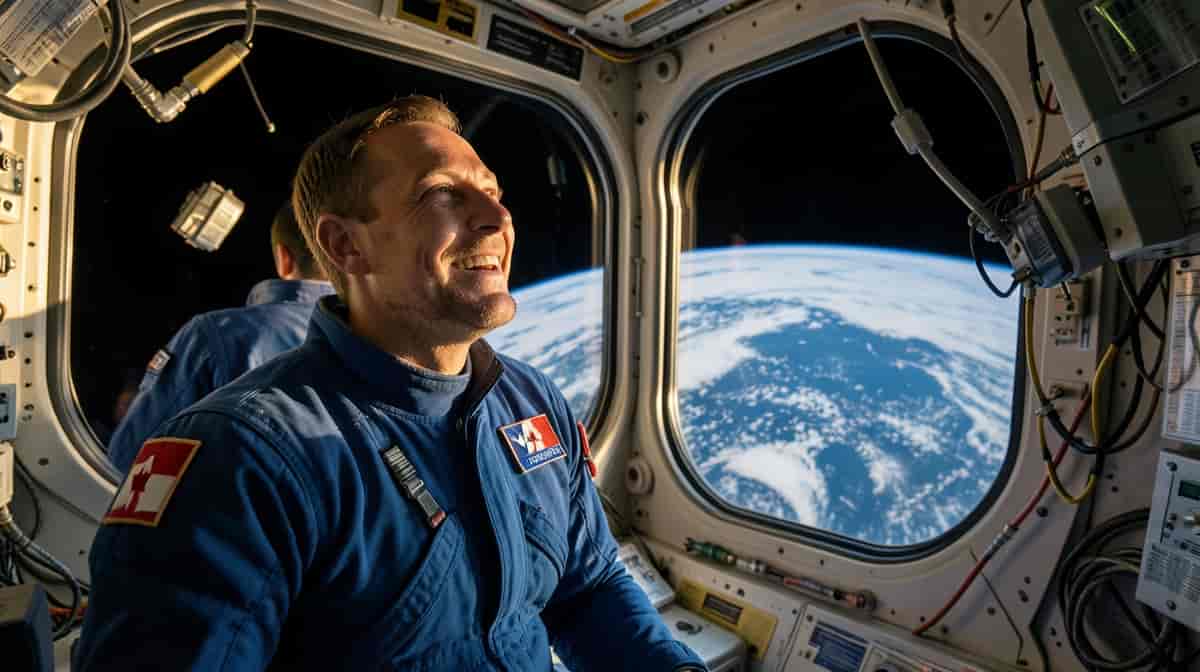
Floating hundreds of miles above the planet’s surface, a father’s gaze remained fixed on a digital screen as he witnessed a miracle unfolding in a hospital room thousands of miles below. This unprecedented connection between the stars and the delivery room defines the astronaut Joshua Kutryk baby space story, capturing a rare moment where the demands of orbit collided with the most intimate of earthly milestones.
The arrival of Joshua Kutryk’s daughter marks a historic convergence of long-duration space exploration and real-time family participation, facilitated by advanced orbital communication technology.
Witnessing a Miracle from 250 Miles Up
While orbiting Earth at approximately 17,500 miles per hour, Canadian astronaut Joshua Kutryk became a father for the third time. On Wednesday, November 25, 2026, reports from major international news outlets confirmed that Kutryk’s wife had given birth to a baby girl back on Earth. Despite being stationed on the International Space Station (ISS) for a long-duration mission, Kutryk was not isolated from the event; modern communication channels allowed him to share in the experience and watch the birth from his vantage point in low Earth orbit.
The event highlights the incredible bridge that communication technology builds between deep space and daily life. As Kutryk participated in the arrival of his third child, the moment served as a testament to the evolving nature of astronaut life, where the physical distance of a mission no longer necessitates a total emotional or visual disconnect from family milestones. The newborn’s name, while keeping with the family's privacy, was specifically chosen to honor Kutryk's ongoing mission, creating a lifelong link between the child’s birth and her father’s time among the stars.
The Logistics of Orbital Fatherhood
Maintaining a connection of this magnitude requires a sophisticated technological infrastructure. The ability for an astronaut to witness a live birth from the ISS is the result of decades of investment in high-bandwidth communication systems. These systems are designed primarily for scientific data transmission and operational safety, but they also serve a critical psychological function: preserving the emotional well-being of the crew.
Key Facts of the Kutryk Family Milestone
- Canadian astronaut Joshua Kutryk welcomed his third child while aboard the International Space Station.
- The newborn is a baby girl, joining a family that now includes three children.
- Kutryk was able to witness the birth of his child in real-time from orbit.
- The baby's name honors his specific mission in space.
- The event was reported by multiple verified sources, including CBC, CBS News, and Global News in November 2026.
Communication in Extreme Environments
The root cause of this unique experience lies at the intersection of long-duration human spaceflight and the necessity of maintaining a normal family life. As missions extend into months and eventually years, space agencies must manage the complex psychological and operational challenges of keeping crew members emotionally focused while they navigate profound domestic events from a distance. The successful integration of these personal moments into the mission schedule is a vital component of modern mission management.
Humanizing the Final Frontier
The story of a father watching his daughter’s birth from space does more than provide a heartwarming headline; it serves a broader purpose for national space programs. Agencies like the Canadian Space Agency (CSA) manage complex public relations narratives that seek to humanize high-tech achievements. By sharing these personal milestones, space exploration is transformed from a cold, technical endeavor into a relatable human journey.
This story highlights how modern communication technology allows astronauts to stay connected with major life events happening with their families back on Earth, bridging a massive physical distance during extraordinary missions.
This humanizing effect is expected to boost public engagement with space programs worldwide. Analysts suggest that such milestones help the general public understand the personal sacrifices made by astronauts and their families. It reinforces the idea that those living aboard the ISS are not just scientists and pilots, but parents and spouses navigating the same life-changing events as those on the ground, albeit under extraordinary circumstances.
A Shifting Landscape for Astronaut Families
The psychological distance of spaceflight has historically been one of the most difficult hurdles for explorers to overcome. In the past, astronauts might only receive news of major family events through delayed audio transmissions or brief text messages. Today, the reality is shifting toward a model of continuous, high-definition connectivity.
| Mission Phase | Event Description |
|---|---|
| Launch and Deployment | Joshua Kutryk launches to the ISS for a long-duration crew rotation. |
| Orbital Mission | Routine research and maintenance duties performed in low Earth orbit. |
| Domestic Milestone | Kutryk's wife gives birth to their third child on Earth. |
| Global Reporting | Major media outlets report on the birth and the baby's mission-inspired name. |
This shift has profound implications for crew readiness. While the ability to stay connected is generally viewed as a positive development, it also introduces new operational variables. Space agencies must ensure that intense media attention or the emotional weight of domestic events does not disrupt the astronaut’s operational focus or the family’s privacy during these sensitive times.
Analyzing the Global and Geopolitical Angle
Beyond the personal joy, the presence of families and personal milestones in space has a geopolitical dimension. International cooperation in low Earth orbit relies on human crews from different nations living and working together for extended periods. In this environment, personal triumphs—like the birth of a child—become shared human experiences that reinforce international solidarity.
These moments transcend terrestrial political tensions, reminding the global community of the shared biological and emotional threads that connect all of humanity, regardless of their location on or off the planet. The Canadian Space Agency’s role in facilitating this event also underscores the importance of national contributions to the social and cultural fabric of the ISS community.
Future Outlook and Expert Predictions
As the story continues to circulate, expert analysts expect the media focus to remain on the unique nature of this birth for the next 72 hours. Discussions will likely expand to cover the broader themes of family life during long-term missions and the specific details regarding the newborn's mission-inspired name.
Short-Term Expectations
- Media coverage will continue to highlight the technological feat of witnessing a birth from orbit.
- Public interest in the Canadian Space Agency's current mission parameters is expected to see a measurable increase.
- Discussions regarding the psychological support systems for astronauts will likely surface in scientific and aerospace communities.
Long-Term Impact
In the best-case scenario, this story serves as a unifying global human-interest piece that inspires a new generation of scientists and explorers. However, there is a risk that intense media scrutiny could briefly impact the family’s privacy. Moving forward, the "Kutryk Birth" will likely be cited as a prime example of how space agencies can successfully navigate the human side of deep-space exploration.
The Psychological Bridge
The ability to maintain a visual and emotional link to Earth is a critical component of mission success. For Joshua Kutryk, the experience of being an "orbital father" provides a unique perspective on the distance between Earth and the ISS. While he is physically separated by the vacuum of space, the emotional proximity afforded by technology ensures that he remains a present member of his family.
This rare and deeply personal experience highlights the unique personal sacrifices demanded by spaceflight. It also emphasizes the resilience of the families who stay behind, managing the complexities of life and childbirth while their loved ones work to expand the boundaries of human knowledge in orbit.
Frequently Asked Questions
How did Canadian astronaut Joshua Kutryk welcome his new baby while in space?
Canadian astronaut Joshua Kutryk welcomed his third child, a baby girl, while currently aboard the International Space Station. Reports indicate he was able to witness or follow the birth milestones from orbit while his wife gave birth on Earth.
What is the background of astronaut Joshua Kutryk's recent mission?
Joshua Kutryk is a Canadian Space Agency astronaut who is stationed on a long-duration mission aboard the International Space Station. His time in space unexpectedly coincided with the arrival of his family's third child.
Who is affected by Joshua Kutryk welcoming a child from the ISS?
The primary individuals affected are Joshua Kutryk, his wife, and their newborn baby girl, along with their other children making up their family of five. It also highlights the unique personal sacrifices and experiences spaceflight demands from astronauts and their loved ones.
Why does this space birth story matter?
This event matters because it captures a rare and deeply human moment bridging deep space exploration with earthly family milestones. It emphasizes the emotional realities of modern space missions where crew members remain connected to life back home.
What specific detail connects the newborn baby to Joshua Kutryk's mission?
Coverage of the birth revealed that the newborn baby girl's name specifically honors his ongoing space mission. This provides a personal and memorable tribute to the unique circumstances surrounding her birth.
What happens next for astronaut Joshua Kutryk and his family?
Joshua Kutryk will continue his scheduled duties aboard the International Space Station before eventually completing his mission and returning to Earth. Upon his return, he will reunite with his wife and their new baby girl to celebrate with his family.
Conclusion
The birth of Joshua Kutryk’s third child while he serves aboard the International Space Station is a landmark moment in the history of human spaceflight. By successfully bridging the immense physical gap between the ISS and a delivery room on Earth, the event showcases the power of modern communication technology to preserve the most essential human connections. As Kutryk continues his mission, his experience serves as a reminder that the future of space exploration is not just about the ships we build or the planets we reach, but about the human lives and families that sustain the journey. The world now looks forward to his safe return and his eventual reunion with his family and the newest addition who already shares a special bond with the stars.
Sources
- Astronaut Joshua Kutryk's wife gives birth while he's aboard the International Space Station — CBC
- Wife of Canadian astronaut aboard International Space Station gives birth to couple's third child — CBS News
- Astronaut Dad Watched His Baby’s Birth From Space. Her Name Honors His Mission — TODAY.com
- Canadian astronaut Joshua Kutryk welcomes third child while in space — Toronto Star
- Canadian astronaut Joshua Kutryk welcomes baby girl while aboard space station — Global News


