
Strait of Hormuz US Strikes Signal a Major Shift in Global Security
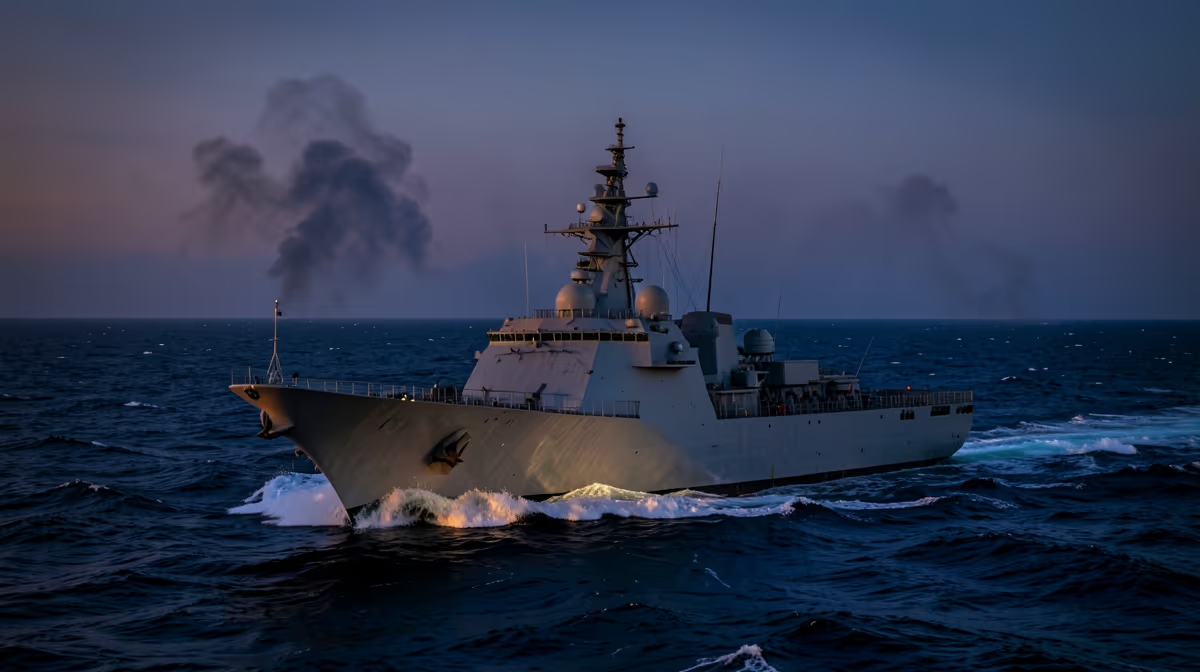
The global energy market is holding its breath as precision military operations have unfolded in one of the world's most critical maritime chokepoints. The geopolitical landscape has shifted significantly following reports of Strait of Hormuz US strikes, signaling a potential escalation in regional hostilities that threatens to disrupt the flow of vital resources to the international community.
The Sequence of Events
U.S. military forces conducted targeted precision strikes against maritime assets in the Strait of Hormuz early Tuesday, citing an urgent need to deter Iranian-backed threats to international shipping lanes. The strikes followed a series of heightened provocations in the region, including alleged attempts by Islamic Revolutionary Guard Corps (IRGC) naval vessels to harass commercial tankers transiting the narrow waterway. U.S. Central Command confirmed that the operation utilized both aerial assets and naval surface support to neutralize what it described as an immediate threat to freedom of navigation. Defense officials have been clear that the mission was strictly defensive in nature, aimed at safeguarding one of the world's most critical energy chokepoints. While the Pentagon maintains that the mission objectives were achieved with minimal collateral damage, regional analysts warn that the kinetic action marks a significant escalation in the ongoing shadow conflict between Washington and Tehran.
Strategic Foundations of the Conflict
The Strait of Hormuz serves as a vital artery for the global economy, as a massive percentage of the world's oil and natural gas supply passes through this narrow passage daily. The structural imperative for the U.S. to ensure global energy flow stability often clashes with the Iranian strategy of asymmetric denial, which seeks to project regional hegemony through the control of maritime corridors. Historically, this dynamic mirrors the 1988 Operation Praying Mantis, where the U.S. Navy conducted retaliatory strikes against Iranian maritime assets during the Tanker War. Over the last several years, the region has shifted from passive containment to active, direct kinetic exchanges. This transition from grey-zone maritime coercion to direct engagement represents a departure in the regional defense strategy, testing the durability of existing security alliances and the commitment of regional Gulf partners to participate in U.S.-led maritime coalitions.
Market and Economic Repercussions
Global energy markets reacted sharply to the news of the military operation, with crude oil prices surging as traders assessed the potential for disruptions to tanker traffic. The economic angle is particularly concerning, as volatility in global oil futures and rising insurance premiums for maritime shipping essentially impose a shadow tax on global trade. This forces shipping companies to consider re-routing through more expensive logistical corridors, further straining supply chains that are already sensitive to inflationary pressures. Regional stakeholders are now bracing for possible retaliatory measures, while diplomatic channels remain active in an attempt to prevent further military escalation in the Gulf. The impact extends beyond just commodity prices, potentially affecting sub-sea data cable infrastructure and satellite communication nodes that underpin the regional digital economy.
Analysis of Security Posture
Pentagon Press Secretary stated that the United States remains committed to protecting its personnel and maritime interests, characterizing the strikes as a direct response to a demonstrated intent to disrupt the flow of commerce. Independent security analyst Dr. Sarah Jenkins noted that this is a calculated gamble, as while it sends a firm message, it leaves very little room for error before a broader regional confrontation becomes inevitable. The Biden-Harris administration is currently performing a delicate balancing act, attempting to meet domestic political pressure for strength against Iranian proxies while simultaneously managing the strategic desire to avoid a high-intensity regional conflict that could worsen election-year inflation metrics. The challenge lies in calibrating the U.S. security umbrella without triggering the worst-case scenario: a kinetic engagement that causes significant damage to infrastructure and a sustained closure of the strait.
Short-Term Projections and Outlook
Over the next 24 hours, experts expect increased naval patrolling and a heightened alert status for U.S. and coalition forces, paired with intense diplomatic backchannel communications to de-escalate rhetoric. As we look toward the 72-hour mark, the implementation of enhanced defensive measures, such as escort missions for commercial tankers, is a strong possibility, likely accompanied by continued market volatility in global energy pricing. The expert consensus suggests a controlled grey zone confrontation is more likely than a full-scale kinetic war, with both sides utilizing proxy posturing and naval maneuvers to assert control. The best-case scenario involves international mediation leading to a temporary moratorium on aggressive maritime conduct, while the worst-case remains a miscalculation during a naval encounter leading to a sustained closure of the waterway.
Frequently Asked Questions
What is the strategic importance of the Strait of Hormuz for the US?
The Strait of Hormuz is a vital maritime chokepoint through which approximately 20% of the world's total petroleum consumption flows. For the US, maintaining freedom of navigation in this area is a critical national security priority to ensure global energy stability and economic security.
Have there been direct US military strikes in the Strait of Hormuz?
While the US military maintains a significant presence in the region to deter aggression, there have been no large-scale, sustained offensive military strikes aimed at closing or controlling the strait itself in recent years. Past naval engagements in the region, such as Operation Praying Mantis in 1988, involved targeted strikes against Iranian assets following attacks on US-flagged vessels.
How would the US respond to an attempt to block the Strait of Hormuz?
The US government has consistently stated that any effort by a hostile actor to close the Strait of Hormuz would be considered an act of aggression that would be met with a decisive military response. US Central Command maintains forward-deployed naval assets capable of neutralizing threats to shipping lanes to ensure they remain open for international commerce.
Why is the Strait of Hormuz considered a global flashpoint?
The strait is the only sea passage from the Persian Gulf to the open ocean, making it a critical vulnerability for global oil supply chains. Tensions between the US and Iran often center on this waterway, as any conflict there could cause immediate, massive spikes in global oil prices.
What is the role of the US Fifth Fleet in the Strait of Hormuz?
Headquartered in Bahrain, the US Fifth Fleet is responsible for naval operations in the Persian Gulf and the Strait of Hormuz. Its primary mission is to conduct maritime security operations, deter regional adversaries, and protect commercial shipping traffic from piracy or state-sponsored harassment.
Could a conflict in the Strait of Hormuz lead to a wider war?
Yes, military experts warn that an escalation or accidental exchange in the Strait of Hormuz has the potential to trigger a broader regional conflict. Because of the strategic nature of the waterway, both the US and regional actors treat any significant naval confrontation as a major geopolitical crisis that could quickly draw in multiple allied nations.
Conclusion
The situation in the Strait of Hormuz remains fluid, with U.S. forces maintaining an active posture to ensure the continued flow of international commerce. While confirmed military strikes have successfully targeted specific threats to maritime security, the potential for retaliatory escalation remains a primary concern for policymakers and global energy traders alike. Moving forward, the focus of the international community will be on whether diplomatic backchannels can effectively de-escalate the current tension or if the region is headed for a prolonged period of naval confrontation. Observers should continue to monitor CENTCOM updates and global oil market fluctuations as the primary indicators of the stability of this critical maritime corridor.


.webp)


.webp)
