
Trump Iran Policies Trigger High-Stakes Congressional Scrutiny
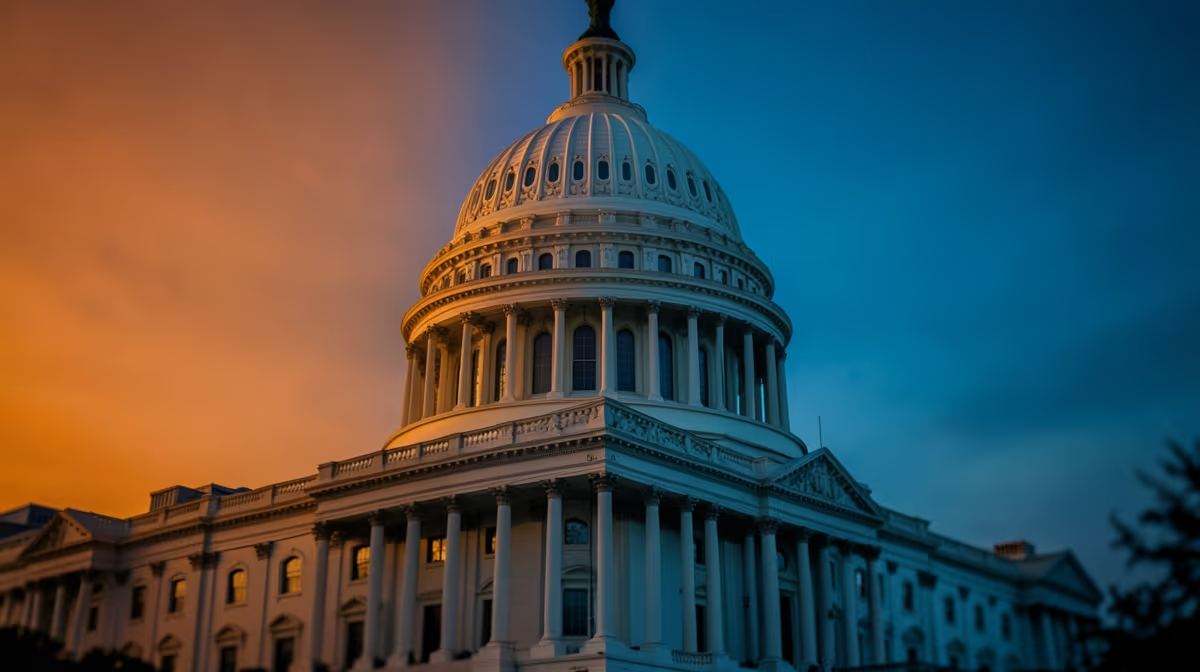
Washington—President Donald Trump announced Friday that the United States has imposed a sweeping package of new economic sanctions targeting Iran's financial sector, escalating tensions following recent regional conflicts and stalled diplomatic negotiations regarding Tehran's nuclear program. Recent developments regarding trump iran relations have sparked intense debate in Washington as lawmakers review executive military powers, raising critical questions about the future stability of the Middle East and the boundaries of presidential authority in foreign affairs.
Economic Fallout
The newly announced measures are designed to further isolate Iran from the global banking system and restrict its access to foreign reserves. Administration officials stated the campaign aims to pressure the Iranian government into halting its support for regional proxy groups and abandoning its uranium enrichment activities. The implementation of maximum pressure sanctions is designed to sever Iran from global energy markets, forcing a choice between economic collapse and capitulation, while subsidizing US shale dominance. International analysts are closely monitoring the potential fallout of these measures, assessing whether they will compel Tehran back to the negotiating table or provoke a retaliatory response in the Middle East. European allies have urged both nations to exercise restraint and pursue a diplomatic resolution to prevent further escalation in the region.
The Root Of The Standoff
The core conflict stems from the structural incompatibility between Donald Trump's transactional America First hegemony and the Iranian regime's ideological survival strategy, which relies on regional asymmetric deterrence. The U.S. and Iran have been adversaries since the 1979 Iranian Revolution, with decades of tension over Iran's nuclear program, regional proxy conflicts, and control of vital shipping lanes. Donald Trump previously pulled the U.S. out of the 2015 Iran nuclear deal, arguing that the agreement was deeply flawed and too lenient on Tehran. Following that withdrawal, the Trump administration imposed heavy economic sanctions on Iran. In January 2020, a U.S. drone strike ordered by President Trump killed powerful Iranian General Qasem Soleimani near Baghdad International Airport. The targeted killing significantly escalated tensions between Washington and Tehran, bringing both nations to the brink of conventional war and leading to retaliatory Iranian missile strikes on U.S. bases in Iraq. Iran has continued to advance its nuclear enrichment program in response, while both nations continue to use warnings and diplomacy to deter each other.
Legislative And Political Scrutiny
As tensions mount abroad, domestic political dynamics in Washington are shifting. Lawmakers are closely reviewing executive military powers, with particular attention directed toward the us house national defense authorization act and related legislative amendments. The political angle involves the weaponization of foreign policy for domestic electoral mobilization, leveraging pro-Israel and hawkish donor bases while maintaining a populist posture against forever wars. Congress is evaluating how to exert greater oversight over potential military engagements, reflecting a broader debate about the limits of executive authority regarding a congress iran war scenario. Policy makers and global intelligence readers are analyzing these legislative maneuvers to determine whether Congress can successfully constrain unilateral executive actions or if the administration will proceed with its aggressive economic and diplomatic posture unchecked.
Geopolitical Realignment
The broader geopolitical implications of these policies extend far beyond the immediate bilateral friction. The confrontation has contributed to the destabilization of the Middle East security architecture, accelerating regional realignments like the Abraham Accords while pushing Tehran closer to a Sino-Russian axis. Intelligence assessments indicate that increased diplomatic posturing and intelligence sharing regarding potential Iranian proxy threats in the Middle East follow recent executive statements. Regional allies remain on high alert as U.S. officials weigh further enforcement measures. Analysts expect a return to maximum pressure tactics without direct military engagement, focusing heavily on economic isolation and deterrence to contain Iranian influence without committing to protracted ground conflicts.
Future Outlook And Market Risks
Looking ahead over the next 24 to 72 hours, observers anticipate potential announcements of tightened economic sanctions or secondary enforcement measures targeting Iranian oil exports by U.S. officials. This situation directly impacts global oil prices, international security, and the risk of a wider war in the Middle East, potentially hitting consumers in the wallet through higher gas prices and increasing threats to U.S. troops and allies stationed abroad. The best case scenario envisions a resumption of indirect back-channel talks leading to a temporary de-escalation of regional tensions and secure shipping lanes. Conversely, the worst case involves a miscalculation by regional proxies leading to kinetic strikes against U.S. assets, prompting a disproportionate military response. Everyday Americans, U.S. military service members stationed overseas, Middle Eastern populations, and global energy consumers remain directly affected by these unfolding events.
Frequently Asked Questions
What was Trump's maximum pressure campaign against Iran?
The maximum pressure campaign was a U.S. strategy initiated by the Trump administration in 2018 after withdrawing from the 2015 Iran nuclear deal. It involved re-imposing severe economic sanctions and implementing new ones designed to cut off Iran's oil exports and isolate its economy.
Why did Trump withdraw from the Iran nuclear deal?
Donald Trump withdrew the United States from the Joint Comprehensive Plan of Action, commonly known as the Iran nuclear deal, because he considered it deeply flawed and too lenient on Tehran. He argued that the agreement failed to curb Iran's regional proxy activities and ballistic missile program.
What was the result of the U.S. strike on Qasem Soleimani?
In January 2020, a U.S. drone strike ordered by President Trump killed powerful Iranian General Qasem Soleimani near Baghdad International Airport. The targeted killing significantly escalated tensions between Washington and Tehran, leading to retaliatory Iranian missile strikes on U.S. bases in Iraq.
How did Iran respond to Trump's policies?
In response to the U.S. withdrawal from the nuclear deal and the reimposition of sanctions, Iran gradually resumed and expanded its nuclear enrichment activities. Tehran also engaged in a series of provocative maritime actions in the Persian Gulf and supported regional proxy groups.
Did Trump want regime change in Iran?
While several key officials in the Trump administration openly advocated for regime change, Trump himself stated that his goal was to force Tehran to renegotiate a more restrictive nuclear agreement. He emphasized that the primary objective was stopping Iran from obtaining a nuclear weapon.
What are Trump's current stances on Iran?
Donald Trump continues to criticize the Biden administration's approach to Iran, arguing that current policies are too weak and have allowed Tehran to regain financial resources. He maintains that his past maximum pressure strategy successfully crippled Iran's economy and constrained its regional influence.
Conclusion
The recent implementation of new Treasury Department sanctions and the ongoing congressional review of executive powers underscore the enduring friction in Washington-Tehran relations. Confirmed developments highlight a steadfast return to economic pressure tactics, backed by comprehensive financial restrictions and heightened security monitoring. As lawmakers debate legislative boundaries and international observers track potential diplomatic and retaliatory responses, the situation remains a critical focal point for global stability and energy markets. Realistic next steps involve continued diplomatic maneuvering, close intelligence tracking of regional proxy activities, and ongoing assessment of enforcement measures by U.S. and international officials.


