
Cuba Electrical Grid Failure Plunges Millions Into Total Darkness
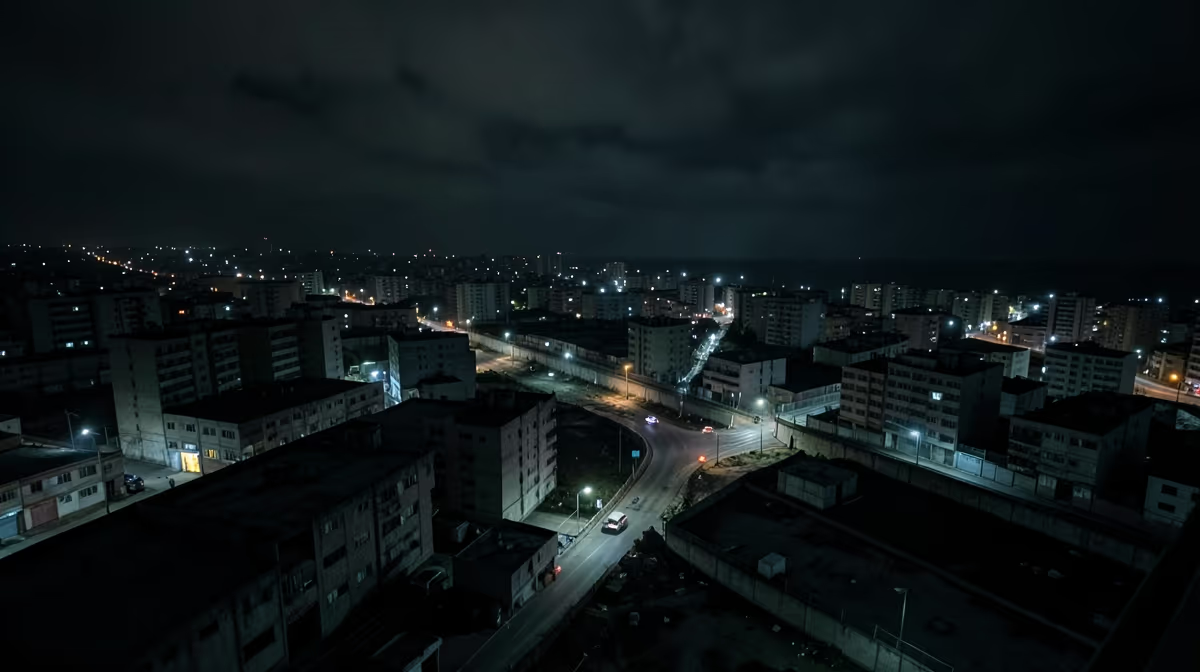
A nationwide electrical grid failure in Cuba has plunged the island nation into darkness, raising urgent concerns about humanitarian conditions and infrastructure collapse. The recent cuba electrical grid failure has left millions of residents without power, amplifying concerns across the United States regarding potential migration surges and humanitarian crises just 90 miles off the Florida coast. Cuba's entire electrical grid has completely collapsed, leaving the island nation in total darkness. The failure began when one of the country's largest power plants shut down unexpectedly, triggering a domino effect that crashed the already fragile national grid. Millions of people are currently without power, disrupting hospitals, water supply systems, and daily life. The Cuban government has declared a state of emergency, suspending non-essential work and schools to conserve as much energy as possible while engineers scramble to restart the system.
What Unfolded
The collapse of Cuba's primary thermoelectric power plant triggered a total blackout of the island's electrical grid, shutting down water pumps, hospitals, and basic municipal services. Cuban authorities have implemented emergency measures, suspending non-essential state work and schools to conserve remaining fuel reserves. In the United States, federal and state officials in Florida are closely monitoring the situation. South Florida lawmakers have expressed deep concern over the deteriorating conditions inside the island nation, which could potentially drive a new wave of maritime migration toward the U.S. coastline as citizens face prolonged scarcity of food, water, and electricity. International humanitarian organizations and energy experts note that the crisis stems from decades of infrastructure neglect, a severe lack of imported fuel, and the crippling impact of U.S. economic sanctions. Repair efforts have been severely hampered by a lack of spare parts and persistent funding shortages within the Cuban energy sector.
Key Facts Of The Outage
Cuba's main power grid suffered a total collapse following the failure of the Antonio Guiteras power plant. The blackout has left over 10 million residents without electricity across the entire island. The Cuban government halted all non-essential state work and classes to save fuel and power. Hospitals and vital services are relying on emergency generators to maintain basic operations. Restoring the grid is expected to take days due to a severe lack of fuel and aging infrastructure. Cuba's electrical grid failure is driven by a combination of severe fuel shortages, outdated infrastructure, and the ongoing lack of maintenance on its aging thermoelectric power plants. Additionally, strict economic sanctions and financial constraints severely limit the island's ability to import necessary crude oil and replacement parts. Decades of underinvestment, inability to access international credit, and the embargo have prevented Cuba from modernizing its centralized power grid. Consequently, the country relies heavily on crumbling Soviet-era power plants that frequently break down and lack sufficient backup fuel reserves.
Root Causes And Background Context
Decades of severe underinvestment, structural maintenance neglect, lack of access to specialized replacement parts due to the US embargo, and dwindling heavy crude imports from strained allies like Venezuela and Mexico have pushed Cuba's centralized, aging thermoelectric plants past the point of total collapse. Cuba's power grid relies on outdated, decades-old Soviet-era power plants and suffers from a chronic shortage of imported fuel and cash, worsened by U.S. sanctions and economic mismanagement, leading to frequent rolling blackouts for years. This historical reality parallels the Special Period in Time of Peace following the 1991 collapse of the Soviet Union, which similarly exposed the island's absolute dependency on external energy sponsors and catalyzed mass societal exhaustion. The lucrative tourism sector, heavily insulated by private-generator micro-grids and foreign-owned management, functions in stark contrast to the pitch-black residential neighborhoods, creating an invisible apartheid economy that deepens domestic resentment against the ruling elite.
Political And Economic Fallout
The regime utilizes the crisis to clamp down on dissent, framing the blackouts as a direct consequence of U.S. economic warfare while weaponizing social control to suppress spontaneous protests, balancing the fear of a Maleconazo-style uprising with superficial blame-shifting toward local bureaucratic incompetence. Complete paralysis of the informal and formal domestic economy, acceleration of currency devaluation, destruction of perishable goods supply chains, and an intensification of the exodus of working-age population further eviscerate the island's labor force and productivity. U.S. officials and energy experts have emphasized the severity of the crisis. Florida Representative Mario Díaz-Balart stated via social media that the regime's mismanagement is responsible for the suffering of the Cuban people, while energy analysts warn that without immediate fuel imports, full grid restoration could take weeks.
Geopolitical Dilemmas And Regional Risks
Washington faces a strategic dilemma: maintaining maximum pressure risks an uncontrollable humanitarian catastrophe and a mass maritime migration wave toward Florida, whereas offering relief undermines the decades-old regime-change calculus, all while opportunistic external actors like Russia and China weigh the costs of financial bailouts. Emergency repairs continue with intermittent localized blackfalls, while US officials monitor humanitarian needs and potential migration ripples. Over the subsequent 72 hours, assessment of diplomatic engagement regarding potential US fuel or technical assistance will unfold alongside heightened border surveillance in Florida. The grid collapse will likely heighten political pressure within the US regarding humanitarian aid policies toward Cuba, while prompting the Coast Guard to prepare for potential maritime migration surges. In the best-case scenario, targeted US humanitarian assistance is coordinated smoothly, averting a major migration crisis and stabilizing the immediate humanitarian situation. In the worst-case scenario, a prolonged total blackout triggers a mass migration exodus via the Florida Straits, straining US border resources and escalating regional political tensions.
Frequently Asked Questions
Why did the Cuba electrical grid fail?
Cuba's electrical grid failure is primarily driven by a combination of severe fuel shortages, outdated infrastructure, and the ongoing lack of maintenance on its aging thermoelectric power plants. Additionally, strict economic sanctions and financial constraints severely limit the island's ability to import necessary crude oil and replacement parts.
When was the major Cuba power blackout?
One of the most catastrophic collapses occurred in October 2024, when the island's main Antonio Guiteras power plant shut down, plunging the entire nation of 10 million people into darkness. This massive failure was further exacerbated by the approach of Hurricane Oscar, which heavily hampered restoration efforts.
Is power currently restored in Cuba?
Power restoration in Cuba is a slow, highly unstable, and recurring process where authorities manage to reconnect parts of the grid only for plants to frequently trip offline again. Because the underlying structural and fuel deficits remain unresolved, rolling blackouts continue to plague daily life across the island.
How does the US get affected by Cuba's grid crisis?
While the physical blackout is confined to the island, the energy crisis has direct humanitarian and geopolitical implications for the United States. It has sparked renewed concerns regarding potential maritime migration waves as desperate citizens attempt to flee worsening living conditions on makeshift rafts.
What caused the collapse of Cuba's energy infrastructure?
Decades of underinvestment, inability to access international credit, and the embargo have prevented Cuba from modernizing its centralized power grid. Consequently, the country relies heavily on crumbling Soviet-era power plants that frequently break down and lack sufficient backup fuel reserves.
How are Cuban citizens surviving the widespread blackouts?
Cubans are heavily relying on small neighborhood generators where available, community solidarity, and alternative cooking methods like charcoal stoves during prolonged outages. The lack of electricity also disrupts refrigeration, water pumping systems, and hospitals, severely straining daily survival efforts.
Conclusion
The nationwide electrical grid failure has resulted in a total blackout across Cuba, leaving millions of residents without reliable power, water, and municipal services while severely straining healthcare facilities. Verified developments confirm that critical thermoelectric infrastructure has suffered catastrophic collapse due to prolonged underinvestment and fuel scarcity, prompting emergency state curtailments. Emergency repairs and localized restoration efforts continue alongside intense monitoring by U.S. and Florida authorities tracking humanitarian conditions and potential migration ripples.


