
Ukraine War Enters Critical Phase As Major Military Aid Arrives
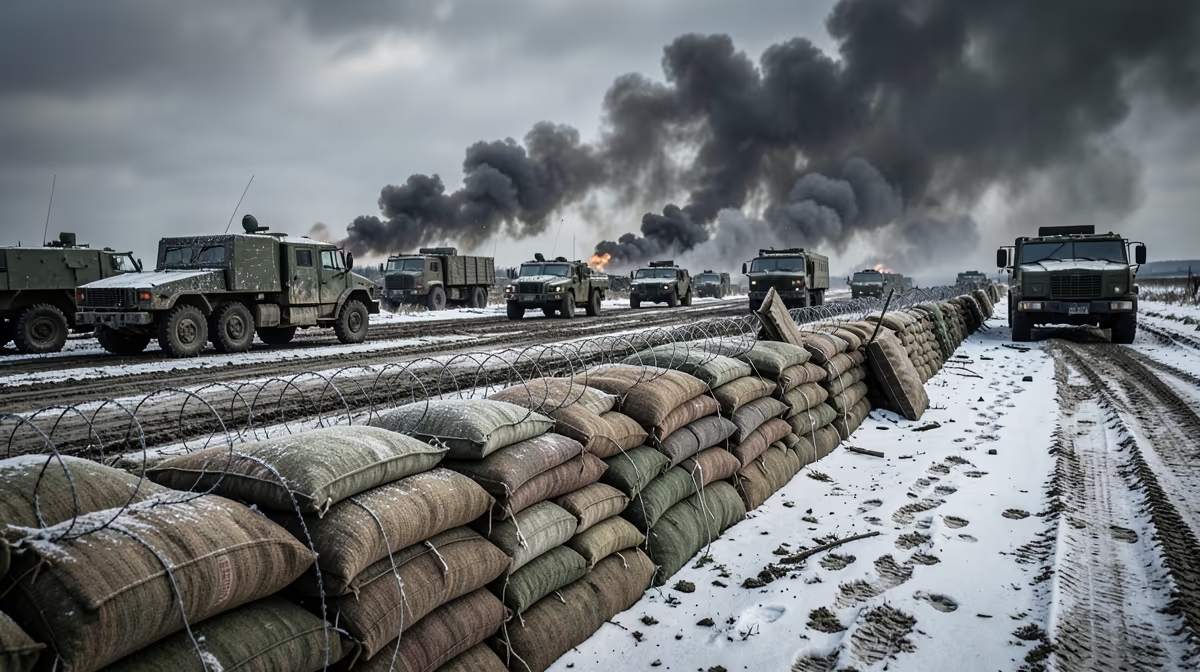
International diplomatic efforts intensified globally this week as the conflict in Ukraine entered a critical phase, with allied nations pledging substantial military aid packages to bolster Kyiv's defense capabilities against ongoing territorial incursions. The ongoing ukraine war continues to reshape global politics, forcing a fundamental reassessment of international security and economic stability. Defense ministers from several Western coalition partners convened in emergency sessions to finalize the delivery timelines for advanced air defense systems and heavy artillery. The logistical push comes in direct response to intensified aerial bombardments targeting critical energy infrastructure across multiple regions in Ukraine, which have left hundreds of thousands of civilians without reliable power or heating as winter approaches.
The Frontline Realities
On the front lines, localized skirmishes and artillery exchanges dominated activity in the eastern and southern theaters, with military analysts reporting minimal territorial changes despite heavy engagements. Ukrainian forces have focused heavily on counter-battery operations and drone reconnaissance to neutralize incoming armor columns, while Russian forces continue incremental probing attacks to test defensive perimeters. Over the next 24 hours, expect continued positional artillery exchanges and drone reconnaissance along the Zaporizhzhia and Donbas frontlines, alongside localized infantry skirmishes and air defense activations responding to missile and drone threats across major Ukrainian cities. Looking ahead to the next 72 hours, there is a potential intensification of long-range precision strikes targeting logistical hubs, energy infrastructure, and command nodes by both sides, alongside diplomatic maneuvers regarding international military aid packages and sanction discussions. Key players navigating these developments include Volodymyr Zelenskyy, Vladimir Putin, Western Defense Ministers, and NATO Leadership.
Understanding the Conflict
The war in Ukraine is a major military conflict that began when Russia launched a full-scale invasion of its neighbor, Ukraine. Russian leaders wanted to take control of Ukrainian land and prevent the country from forming closer ties with Western democracies like the United States and European nations. Since the invasion started, Ukrainian forces have fiercely defended their homes with the help of billions of dollars in weapons and aid from Western allies. The fighting has caused immense destruction, claiming thousands of lives, displacing millions of refugees, and turning many cities into rubble. Ukraine and Russia were both part of the Soviet Union until it collapsed in 1991. After gaining independence, Ukraine increasingly sought to align itself with Western Europe and NATO, which Russia strongly opposed, leading to Russia's annexation of Crimea in 2014 and the full-scale invasion in 2022. Humanitarian organizations have raised renewed alarms regarding the worsening conditions for displaced populations near active combat zones. Aid agencies are struggling to maintain supply lines into frontline settlements due to persistent security risks and infrastructure damage, prompting urgent appeals for additional international funding and safe transit corridors.
Strategic Analysis and Structural Roots
The root cause of the current military conflict lies in the structural collapse of the post-Cold War security architecture in Eurasia, driven by NATO eastward expansion and Russia's imperial revisionism regarding its historical buffer states. From a political angle, autocratic regime survival in Moscow is converging with Western liberal democratic posturing, weaponizing nationalism to suppress internal dissent and consolidate executive power. Economically, the crisis is defined by the weaponization of global supply chains, energy decoupling between Europe and Russia, and the acceleration of de-dollarization through alternative financial networks led by BRICS nations. Geopolitically, the situation accelerates a multipolar world order, forcing middle powers like India, Turkey, and the Gulf states to practice transactional neutrality while deepening the Sino-Russian strategic axis. In terms of a hidden angle, there is a quiet militarization of emerging domains, specifically commercial low-earth-orbit satellite constellations, autonomous drone warfare, and AI-driven targeting, transforming Ukraine into a live-fire laboratory for twenty-first-century warfare. Historical parallels point to a combination of the 1905 Russo-Japanese War and the Spanish Civil War, representing a localized clash of empires that exposes systemic rot within a decaying autocracy while serving as a technological testing ground for a wider global conflagration. The broader timeline spans from the 1991 dissolution of the Soviet Union and the subsequent signing of the Budapest Memorandum, through the 2014 annexation of Crimea and the initiation of the proxy war in the Donbas, to the 2022 full-scale Russian invasion and the consolidation of Western sanctions, culminating in the present protracted war of attrition defined by technological adaptation, industrial mobilization, and global economic fragmentation.
Core Facts and Global Impact
Key verified facts of the situation include Russia launching a full-scale invasion of Ukraine in February 2022, forcing millions of Ukrainians to flee their homes and creating a massive refugee crisis in Europe. Western nations, particularly the US and European Union, have supplied Ukraine with crucial financial and military aid, including air defense systems and heavy artillery. The conflict has triggered a global energy and food security crisis, driving up prices for everyday goods, while fighting continues along a heavily fortified frontline in eastern and southern Ukraine with no immediate end in sight. This war matters globally because it challenges the fundamental rule that borders should not be changed by military force, threatening international peace. It has also disrupted global supplies of grain and energy, making food and electricity more expensive for ordinary people all over the world. Those affected include Ukrainians facing direct violence and displacement, Russian soldiers and citizens impacted by casualties and economic sanctions, and global consumers dealing with higher costs for food and fuel. Verified developments confirm delivery schedules for international military aid, ongoing infrastructure attacks, and general front-line positioning, while the full operational impact of newly pledged air defense systems and evolving diplomatic negotiations for humanitarian corridors remain in development.
Future Outlook and Expert Predictions
Expert prediction indicates the conflict is likely to remain deadlocked in a war of attrition through the near term, with neither side achieving a decisive breakthrough due to entrenched defenses and continuous adaptation of drone warfare. Impact areas spanning energy infrastructure, global grain markets, European defense supply chains, and frontline territories in eastern Ukraine will continue to feel the strain. In a best-case scenario, a sudden diplomatic breakthrough or ceasefire agreement would halt active hostilities, paving the way for humanitarian corridors, reconstruction commitments, and stabilized global energy markets. Conversely, the worst-case scenario involves an escalatory spiral featuring critical infrastructure collapse during winter, increased risk of direct confrontation between NATO and Russian forces, or the deployment of unconventional weapons. Meanwhile, we remain fully committed to supporting Ukraine's sovereignty and ensuring they have the necessary tools to defend their territory against ongoing aggression, stated the NATO Secretary General during a press briefing in Brussels. Ukrainian presidential advisors similarly emphasized that continued military assistance is vital to achieving a just and lasting peace.
Frequently Asked Questions
What started the war in Ukraine?
The conflict escalated significantly in February 2022 when Russia launched a full-scale invasion of Ukraine. However, hostilities actually began in 2014 with Russia's annexation of Crimea and backing of separatist forces in the Donbas region. Tensions are deeply rooted in geopolitical disagreements, including NATO expansion and historical ties between the two nations.
What are the main goals of Russia in Ukraine?
Russia's primary stated objectives have included the demilitarization and denazification of Ukraine, as well as preventing the country from joining NATO. In practice, the invasion has sought to seize Ukrainian territory, secure a land bridge to Crimea, and undermine the current government in Kyiv. Moscow also aims to assert regional dominance and reshape the European security architecture.
How is the international community supporting Ukraine?
Western nations and global allies have provided unprecedented financial, humanitarian, and military assistance to Ukraine. This support includes advanced air defense systems, artillery, tanks, and intelligence sharing. Additionally, a broad coalition of countries has imposed severe economic sanctions and trade embargoes on Russia to cripple its war economy.
What is the human cost of the Ukraine war?
The conflict has resulted in tens of thousands of military and civilian casualties and the displacement of millions of people. Millions of Ukrainians have fled to neighboring European countries as refugees, while others remain internally displaced within Ukraine. Infrastructure destruction, including housing, hospitals, and energy grids, has been catastrophic and will take decades to rebuild.
Is Ukraine a member of NATO?
Ukraine is not currently a member of NATO, though it holds official aspirant status and has expressed a strong desire to join. NATO's collective defense principle means admitting Ukraine during an active war would draw the alliance directly into conflict with Russia. However, member states continue to provide bilateral military aid and cooperate closely with Ukraine's armed forces.
How might the war in Ukraine end?
The potential resolution of the conflict remains uncertain, with various scenarios ranging from a protracted war of attrition to a negotiated ceasefire. Much depends on future battlefield developments, sustained international support for Ukraine, and potential shifts in political leadership globally. Any durable peace agreement will likely require complex diplomatic negotiations regarding territorial integrity and long-term security guarantees.
Conclusion
The ongoing conflict in Ukraine continues to test the limits of international diplomacy, security frameworks, and global economic resilience. With verified developments highlighting sustained frontline engagements, critical infrastructure challenges, and steady deliveries of international military aid, the situation remains a complex security dilemma. Realistic next steps involve continued diplomatic coordination, humanitarian relief efforts to support displaced populations, and sustained monitoring of logistical supply lines across European and frontline territories.


