
Cyber Attacks on Water Systems Threaten Critical US Infrastructure
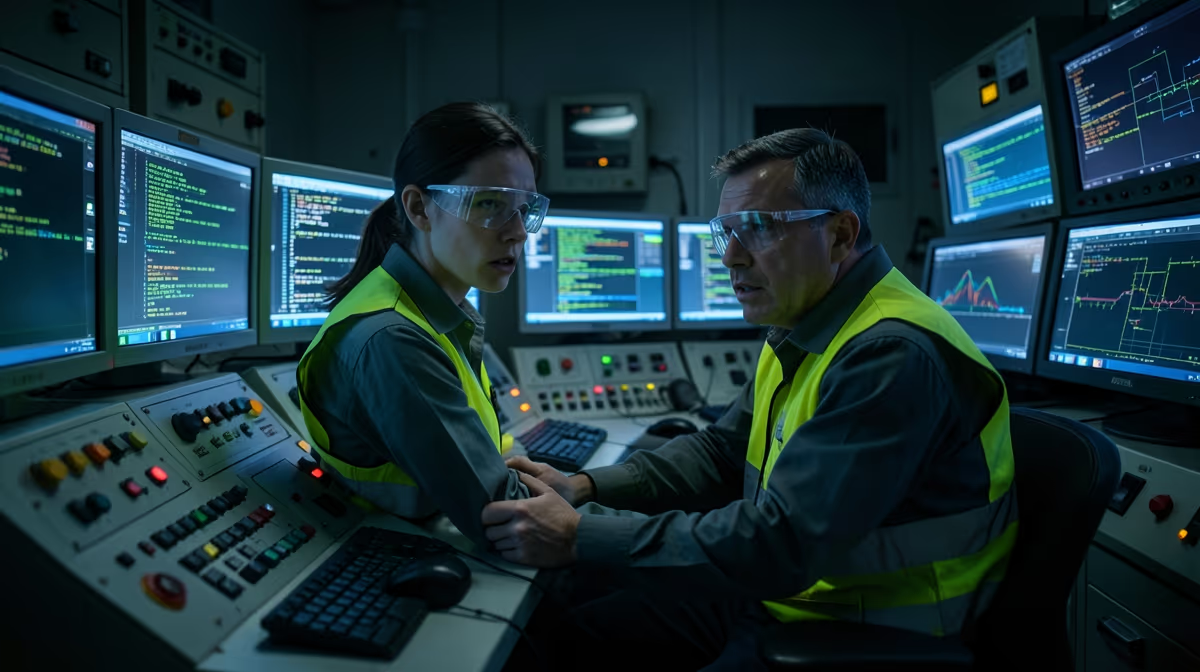
Hidden behind the hum of filtration pumps and chemical feeders, a quiet digital battlefield is reshaping national security across the United States. Recent cyber attacks on water systems have highlighted severe vulnerabilities in municipal utilities across the United States, prompting urgent calls for better defenses as foreign adversaries and criminal networks probe the operational technology keeping municipal taps running. Federal cybersecurity agencies and water authorities across multiple U.S. states are urgently investigating a coordinated wave of cyber attacks targeting operational technology in municipal water and wastewater treatment facilities, heightening national security concerns amid ongoing geopolitical tensions.
A Shifting Landscape
For decades, water treatment facilities operated on closed networks disconnected from the internet, making them relatively safe from hackers. However, the push toward modernization and remote monitoring over the last twenty years integrated these systems into the broader internet, inadvertently creating vulnerabilities that aggressive cyber adversaries now exploit. Decades of deferred infrastructure maintenance, reliance on legacy industrial control systems without inherent security, and acute cybersecurity talent shortages in the municipal utility sector have compounded these risks. The intrusions, which began emerging in late 2023 and have persisted into early 2024, have primarily targeted Programmable Logic Controllers manufactured by foreign entities. In one notable incident in Aliquippa, Pennsylvania, attackers successfully compromised a pump station controller, forcing operators to temporarily switch to manual controls while maintaining safe drinking water delivery. Cybersecurity researchers note that many small and rural water systems lack the robust network segmentation, automated threat detection, and dedicated IT security personnel found in larger metropolitan utilities, making them prime targets for state-sponsored threat actors and opportunistic ransomware gangs.
Federal Response and Geopolitical Pressures
In response to the escalating threat landscape, the Biden administration, alongside the Environmental Protection Agency and the Cybersecurity and Infrastructure Security Agency, issued an emergency directive mandating heightened cybersecurity standards for water infrastructure. Federal officials have specifically called out groups linked to Iran and China for probing American critical infrastructure to map vulnerabilities and potentially position themselves for disruptive sabotage in the event of a broader geopolitical conflict. State-level regulators and industry associations are currently scrambling to distribute remediation guidance, urging utilities to immediately disconnect exposed systems from the public internet, change default manufacturer passwords, and implement multi-factor authentication for remote access. Despite these urgent advisories, cybersecurity experts warn that achieving comprehensive security across the nation's roughly 50,000 community water systems remains a monumental logistical and financial challenge. Jurisdictional friction between federal agencies and local municipal governments further complicates these efforts, where unfunded federal security mandates clash with cash-strapped local tax bases and political resistance to federal overreach.
Why This Matters
Clean water is essential for daily survival, public health, and firefighting. If a cyberattack successfully disables a water treatment plant or manipulates chemical levels, it could lead to widespread water shortages, boil-water advisories, or even toxic water reaching homes, creating a massive public health emergency and shaking public trust in critical infrastructure. Local residents, businesses, schools, and hospitals that rely on municipal water utilities for drinking and sanitation are directly affected, alongside local government budgets that must pay for emergency cybersecurity upgrades. Hackers from foreign countries and criminal groups are attempting to break into the computer networks that control local water treatment plants. While these attacks rarely disrupt the actual flow of water, they target the digital systems that monitor water pressure, chemical levels, and pumps. State-sponsored actors will continue probing US water infrastructure vulnerabilities, focusing on exposed remote management interfaces.
Operational Outlook and Risk Assessment
Increased monitoring and log reviews across municipal water authorities following recent advisory alerts mark the immediate operational focus. Over the next seventy-two hours, agencies expect the implementation of emergency patching for vulnerable systems and mandatory credential resets. In the best-case scenario, proactive scanning identifies exposed systems, allowing agencies to secure them before any exploitation occurs. Conversely, the worst-case scenario involves a successful ransomware attack disrupting water treatment or distribution in a mid-sized U.S. municipality, which would likely prompt sweeping federal mandates. Key players navigating this environment include the EPA, CISA, municipal water authorities, and state cyber analysts, all working within impact areas spanning public health, critical infrastructure, and local government operations.
Frequently Asked Questions
Are US water systems vulnerable to cyber attacks?
Yes, many water and wastewater systems across the United States are increasingly vulnerable to cyber attacks. This vulnerability stems from aging digital infrastructure, limited cybersecurity budgets, and the adoption of internet-connected operational technology. Federal agencies have issued numerous warnings urging utilities to upgrade their security measures.
What are the most common cyber threats to water treatment plants?
The most common cyber threats include ransomware attacks that lock out critical control systems and unauthorized remote access attempts by foreign actors. Hackers also target industrial control systems to manipulate chemical levels or disrupt the distribution of clean drinking water. Insider threats and phishing emails targeting plant operators are additional significant risks.
How do hackers attack water utilities?
Hackers typically breach water utilities by exploiting outdated software, weak passwords, and insecure remote management tools. Once inside the network, they can compromise supervisory control and data acquisition systems. These breaches often begin with phishing campaigns that trick employees into downloading malicious software.
What federal agencies protect US water infrastructure from cyber attacks?
The Environmental Protection Agency is the lead federal agency for the water and wastewater sector's cybersecurity. It works alongside the Cybersecurity and Infrastructure Security Agency to provide guidance, threat intelligence, and technical assistance. Together, they help utilities implement mandatory baseline security assessments and incident response plans.
Have any actual cyber attacks occurred on US water systems?
Yes, several notable incidents have occurred across the United States. For example, in 2021, an attacker attempted to increase sodium hydroxide levels in the water supply of Oldsmar, Florida. More recently, foreign-linked hackers compromised programmable logic controllers at facilities in Pennsylvania and Texas.
What is being done to improve water system cybersecurity in the US?
Federal and state governments are implementing stricter regulatory requirements, providing funding grants, and offering free cybersecurity tools to water utilities. Utilities are actively upgrading their firewalls, conducting regular vulnerability assessments, and separating their IT networks from operational technology networks. Additionally, ongoing training is being mandated to help employees recognize social engineering tactics.
Conclusion
Federal investigations and agency advisories confirm that foreign state-sponsored actors and cybercriminals continue to probe municipal water infrastructure vulnerabilities across the United States. While no widespread contamination of drinking water has occurred, confirmed incidents in Pennsylvania and elsewhere demonstrate the tangible risks posed by exposed programmable logic controllers and legacy operational technology. Realistic next steps involve heightened log reviews, emergency patching, mandatory credential resets, and the decoupling of vulnerable control systems from the public internet. Municipal water authorities, state regulators, and federal agencies must navigate ongoing logistical and financial challenges to secure critical infrastructure against evolving digital threats.


.webp)

