
Egypt Earthquake Strikes Near Coast, Sending Shockwaves Through Cairo
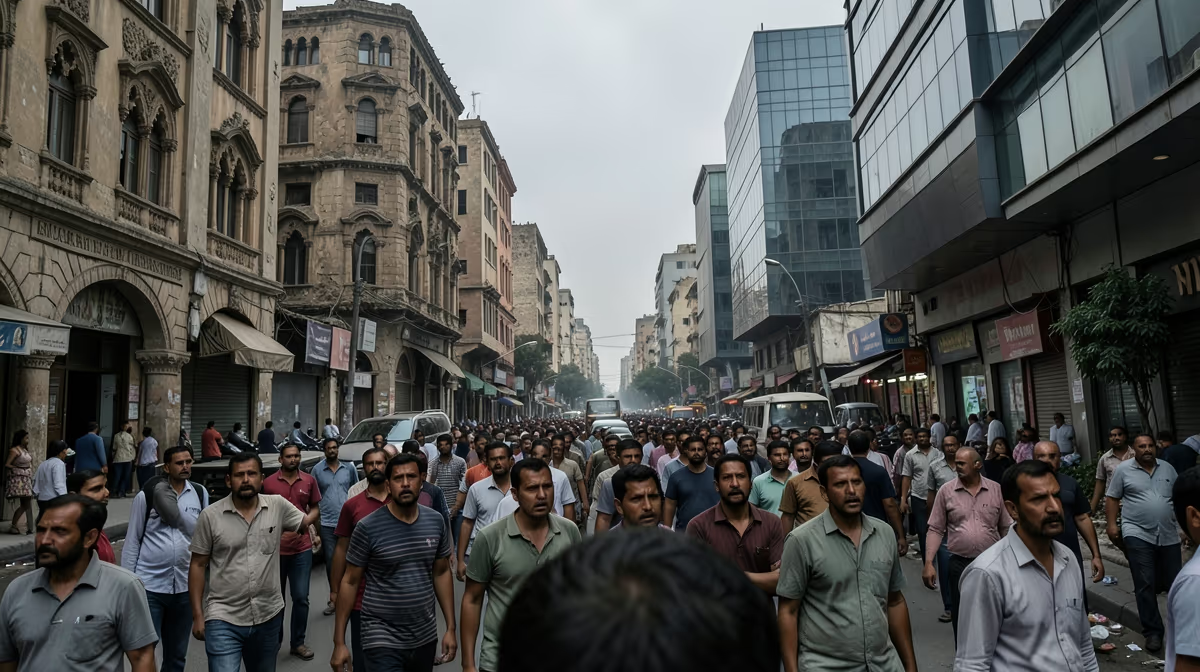
Residents across Cairo felt strong tremors as a sudden egypt earthquake struck the region earlier this morning, according to geological reports. A magnitude 5.6 earthquake struck off Egypt's Mediterranean coast early Monday morning, shaking Cairo and multiple governorates and causing minor structural damage, though no immediate casualties have been officially reported. The tremor occurred at 7:32 a.m. local time, with its epicenter located approximately 65 kilometers north of the coastal city of Damietta at a depth of 25 kilometers, according to the National Research Institute of Astronomy and Geophysics. The strong shaking was widely felt across the Greater Cairo area, Alexandria, and the Nile Delta region, prompting panicked residents to temporarily evacuate apartment buildings into the streets during the morning commute.
What Unfolded
Emergency services were immediately dispatched to inspect critical infrastructure, including the Suez Canal, major bridges, and historical sites. Authorities reported no disruptions to maritime traffic or vital national installations, though telecommunications experienced brief overloads as residents attempted to contact family members. Egypt sits near the active tectonic boundary between the African and Eurasian plates, making seismic activity a known hazard, though earthquakes of this magnitude causing widespread panic in major urban centers are relatively uncommon compared to neighboring regions in the eastern Mediterranean. Dr. Gad El-Qady, head of Egypt's National Research Institute of Astronomy and Geophysics, stated in a televised briefing that the earthquake is considered moderate to strong, but its offshore epicenter significantly mitigated the potential for widespread structural collapse on land. He added that monitoring of aftershocks is ongoing and urged citizens to rely on official updates rather than unverified social media reports.
Geological Realities and Structural Pressures
Tectonic interactions along the African-Arabian plate boundary and the Dead Sea Transform fault system drive the region's seismic profile, a vulnerability exacerbated by rapid, unregulated urban sprawl over vulnerable alluvial soils in the Nile Delta and Greater Cairo. Egypt experiences earthquakes primarily due to complex tectonic interactions between the African, Arabian, and Eurasian plates. The convergence of these plates creates significant stress along regional fault lines, particularly around the Gulf of Suez and the Red Sea rift. While major events are relatively rare, these geological dynamics ensure that seismic activity remains a constant monitoring priority. Egypt experiences numerous micro-earthquakes every year, but the vast majority go completely unnoticed by the public and are only detected by sensitive seismographs. Moderately damaging earthquakes occur much less frequently, typically spanning decades or centuries between major events. The country's seismic network continuously tracks these movements to assess ongoing tectonic shifts. The 1992 Cairo earthquake serves as a critical historical parallel, having caused widespread devastation, exposing similar urban vulnerabilities, galvanizing Islamist social networks in the absence of state support, and prompting long-overdue updates to building regulations that were subsequently poorly enforced.
Socio-Economic and Political Implications
The event exposes state infrastructure vulnerabilities, potentially diverting public scrutiny away from economic mismanagement toward emergency response optics while testing the regime's centralized control and disaster relief mobilization. Economically, potential structural damage to housing, tourism assets, and commercial real estate risks straining state budgets already burdened by high external debt and International Monetary Fund loan conditionality. Geopolitically, any reliance on foreign disaster assistance and humanitarian aid can subtly shift diplomatic leverage, opening avenues for regional powers and international donors to influence Cairo's strategic calculus. Beneath these macro pressures lies the hidden angle of systemic failure in building code enforcement, driven by widespread bureaucratic corruption, state-sanctioned informal housing expansion, and the historical prioritization of mega-projects over municipal seismic retrofitting. Even moderate earthquakes can cause panic, disrupt daily life, and highlight the urgent need for strict building safety codes in densely populated areas to prevent future tragedies.
Immediate Response and Near-Term Outlook
Search and rescue operations continue in affected areas, with initial damage assessments being compiled by national authorities and international seismological agencies. In the next 72 hours, aftershock monitoring remains active, humanitarian aid deployment begins for any displaced populations, and infrastructure integrity checks are conducted on critical national assets like the Aswan Dam and historical monuments. Geologists anticipate minor to moderate aftershocks following the initial seismic event, with minimal structural damage expected due to the depth and location of the epicenter, though older buildings in urban centers require careful inspection. In the best-case scenario, the earthquake results in zero casualties and negligible property damage, allowing normal daily operations and tourism to resume immediately without disruption. Conversely, the worst-case scenario involves a higher-magnitude tremor striking closer to densely populated urban centers or ancient heritage sites, causing localized building collapses, infrastructure disruption, and casualties requiring emergency mobilization. Key players managing the response include the Egyptian National Research Institute of Astronomy and Geophysics, the Egyptian Ministry of Health and Population, the Cabinet of Egypt, and the International Red Cross and Red Crescent Movement, with primary impact areas focused on the Greater Cairo Area, Delta Region, Fayoum, and the Suez Canal Zone.
Frequently Asked Questions
Why does Egypt have earthquakes?
Egypt experiences earthquakes primarily due to the complex tectonic interactions between the African, Arabian, and Eurasian plates. The convergence of these plates creates significant stress along regional fault lines, particularly around the Gulf of Suez and the Red Sea rift. While major events are relatively rare, these geological dynamics ensure that seismic activity remains a constant monitoring priority.
Was there a recent earthquake in Egypt?
Seismic monitoring agencies frequently record minor to moderate tremors in various parts of Egypt. To get real-time information on the exact magnitude, epicenter, and time of any very recent event, it is best to check updates from the National Research Institute of Astronomy and Geophysics or international agencies like the USGS. Most recorded daily tremors are too weak to be felt by residents.
Are earthquakes common in Cairo?
Earthquakes are not an everyday occurrence in Cairo, but the city has historically been impacted by distant or moderately sized regional tremors. The most notable modern event was the destructive 1992 Cairo earthquake, which caused significant damage and casualties despite its moderate magnitude. Because of this history, urban planners and authorities take seismic risk into account for modern infrastructure.
How often do earthquakes happen in Egypt?
Egypt experiences numerous micro-earthquakes every year, but the vast majority of them go completely unnoticed by the public and are only detected by sensitive seismographs. Moderately damaging earthquakes occur much less frequently, typically spanning decades or centuries between major events. The country's seismic network continuously tracks these movements to assess ongoing tectonic shifts.
Was the 1992 Cairo earthquake destructive?
Yes, the October 12, 1992 earthquake was highly destructive despite having a moderate magnitude of 5.8. It resulted in hundreds of fatalities, thousands of injuries, and widespread damage to older buildings and infrastructure throughout Greater Cairo and the Giza Governorate. This tragedy prompted significant updates to Egyptian building codes and emergency response protocols.
Is it safe to travel to Egypt regarding earthquakes?
Traveling to Egypt is generally considered very safe regarding seismic activity, as major destructive earthquakes are historically infrequent. While minor tremors can occasionally occur, they rarely disrupt tourism or daily life. Visitors do not typically need to take special earthquake precautions beyond standard travel awareness.
Conclusion
A magnitude 5.6 earthquake struck Egypt's Mediterranean coast with its epicenter located roughly 65 kilometers north of Damietta at a depth of 25 kilometers, causing strong shaking across Cairo, Alexandria, and the Nile Delta without any immediate confirmed deaths, injuries, or major infrastructure damage. Geological authorities and emergency response teams continue to monitor for minor aftershocks while local municipalities complete full structural safety assessments of older residential buildings in Cairo and Damietta.


