
Iran Crisis Reaches Critical Turning Point As Tensions Escalate
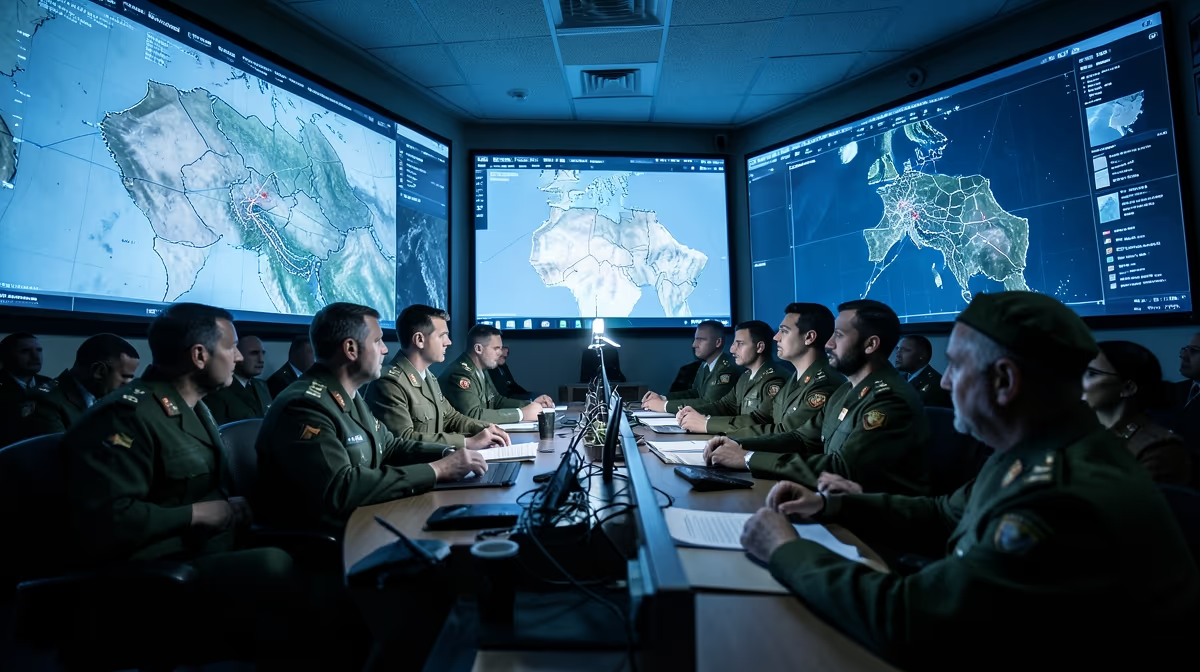
Stay informed with breaking iran news and live analysis as escalating tensions push the middle east to the brink of war. The United States announced sweeping new economic sanctions against Iran's shipping and petroleum sectors on Tuesday, following intelligence reports that Tehran is escalating its cyber operations and advancing its nuclear enrichment program. This sudden escalation brings underlying geopolitical struggles back to the forefront of international diplomacy, leaving policymakers and global markets on high alert as the threat of an iran conflict looms larger over the global stage.
The Treasury Department's Office of Foreign Assets Control designated more than a dozen entities and vessels operating across the Middle East and Asia, accusing them of facilitating illicit petroleum sales that fund Iran's Islamic Revolutionary Guard Corps. According to administration officials, the targeted networks have generated billions of dollars in revenue while evading existing international restrictions. The policy shift comes amid heightened tensions in the region, sparked by recent maritime incidents in the Persian Gulf and stalled diplomatic efforts to revive the 2015 Iran nuclear agreement. Intelligence analysts suggest that Tehran's recent technological advancements in uranium enrichment have significantly shortened its potential breakout time to weapons-grade material, alarming Western governments and regional allies. U.S. lawmakers from both parties have largely welcomed the increased financial pressure, though some national security experts warn that further economic isolation could provoke more aggressive asymmetric retaliation from Iranian proxies throughout the region. The State Department has reiterated its stance that diplomatic channels remain open, provided Iran demonstrates a genuine willingness to curb its destabilizing activities. We remain fully committed to denying the Iranian regime the revenue it uses to fund terrorism and destabilize the Middle East, said a senior Treasury official during a morning press briefing. Meanwhile, Iranian Foreign Ministry spokesperson Nasser Kanaani dismissed the measures in state media as ineffective and hypocritical.
Current Developments In The Iran Crisis
The ongoing middle east crisis stems from structural incompatibilities between Iran's clerical-state ideology and the US-led Western security architecture in the Middle East. This friction has been severely exacerbated by the collapse of the 2015 Joint Comprehensive Plan of Action and unyielding maximum pressure campaigns. On the political front, Iranian hardliners utilize regime survival tactics to consolidate internal control by manufacturing external threats. This approach is mirrored in Washington by a bipartisan hawkish consensus and heavy lobbying by regional allies. Economically, the weaponization of the global financial system through secondary sanctions has forced Iran into an underground economy, accelerating its pivot toward China and Russia while reducing the efficacy of traditional deterrents. Geopolitically, a high-stakes proxy conflict spanning the Axis of Resistance is designed to deter direct US-Israeli military strikes while steadily eroding Western hegemony and maritime security in critical chokepoints like the Strait of Hormuz. Beneath the surface, an intense cybersecurity battleground and silent infrastructure warfare persist, where Iran punches significantly above its weight, alongside internal technocratic dissent regarding resource misallocation toward regional militias rather than domestic welfare. Historical parallels trace back to the 1979-1981 US Embassy hostage crisis and subsequent decade of proxy escalation, which permanently severed diplomatic ties and institutionalized a posture of permanent hostility.
Why This Matters For Global Security
Tensions between the United States and Iran bring immediate concerns about broader conflicts breaking out, potential impacts on the global economy, and the safety of American military personnel stationed abroad. Government officials are closely monitoring the situation to prevent further escalation. The U.S. and Iran have had strained diplomatic relations for decades, particularly since the 1979 Iranian Revolution, when Iran overthrew its U.S.-backed monarch and established an Islamic republic, seizing the U.S. Embassy in Tehran. Since then, economic sanctions imposed by the U.S. have severely impacted Iran's economy, while Iran's nuclear program remains a primary point of international concern and negotiation. When tensions rise between the two nations, it can directly affect everyday citizens through higher gas prices, increased security measures at home, and the risk of drawing U.S. service members into a costly overseas conflict. Those most affected include U.S. military service members and their families, travelers in the Middle East, everyday consumers affected by fluctuating oil and gas prices, and the citizens of Iran who face ongoing economic hardship. Diplomatic efforts by international allies remain ongoing to try and de-escalate the situation before it reaches a kinetic tipping point.
What Experts Say About The Brink Of War Scenario
Intelligence sharing and diplomatic maneuvering between the US State Department, the IRGC, and the Iranian Foreign Ministry are dominating the immediate outlook. Over the next twenty-four hours, diplomatic channels and intelligence assessments regarding Iranian posture will remain active. Within the next seventy-two hours, potential announcements of new targeted economic sanctions and naval positioning in the Middle East are anticipated. Expert consensus predicts that tensions will remain elevated with a preference for deterrence over direct military escalation in the near term. In the best-case scenario, backchannel communications lead to a de-escalation of rhetoric and restraint on proxy activities. However, the worst-case scenario warns that miscalculation in the region could trigger a kinetic response against US assets or shipping lanes, directly impacting oil markets and broader Middle East security.
Frequently Asked Questions
Why is Iran in the news so much in the US?
Iran frequently dominates US news due to its ongoing nuclear program development, geopolitical tensions in the Middle East, and concerns over regional proxy groups. Additionally, human rights issues and US economic sanctions keep the country at the forefront of international diplomacy.
Can US citizens travel to Iran right now?
The US Department of State strongly advises against traveling to Iran due to the high risk of kidnapping and the arbitrary arrest or detention of US citizens. Dual nationals face particularly severe risks, as Iranian authorities do not recognize dual citizenship and may deny consular access.
What kind of government does Iran have?
Iran is an Islamic republic with a unique religious-political system established after the 1979 revolution. The Supreme Leader holds ultimate authority over the country's military, judiciary, and major policies, while an elected president and parliament handle day-to-day administrative governance.
Why are there US sanctions on Iran?
The United States imposes comprehensive economic sanctions on Iran primarily to curb its nuclear ambitions, restrict its support for militant proxy groups, and pressure its government over human rights abuses. These measures severely limit Iran's ability to trade oil and access the global financial system.
What is the official language and currency of Iran?
The official language of Iran is Persian, also known as Farsi, which is spoken by the majority of the population. The official currency is the Iranian rial, though prices and informal transactions are frequently discussed in tomans for everyday convenience.
What is the historical connection between ancient Persia and modern Iran?
Modern Iran occupies the geographical heartland of the ancient Persian Empire, one of the oldest and most influential civilizations in world history. Iranians take great pride in this rich cultural heritage, which spans thousands of years of art, literature, science, and architecture.
Conclusion
Recent developments confirm that the U.S. Treasury Department has implemented new economic sanctions targeting Iran's petroleum and shipping sectors, designating over a dozen entities and vessels accused of facilitating illicit oil sales that fund the Islamic Revolutionary Guard Corps. Alongside these financial measures, international monitors continue to report advancements in Iran's uranium enrichment levels, heightening regional and international concern. As diplomatic channels remain open and intelligence assessments guide strategic posture, regional stability depends on whether backchannel communications can successfully deter further escalation or if maritime and cyber tensions will push the region deeper into crisis.


