
Minnesota Water Utilities Cyberattack Exposes Deep National Security Flaws
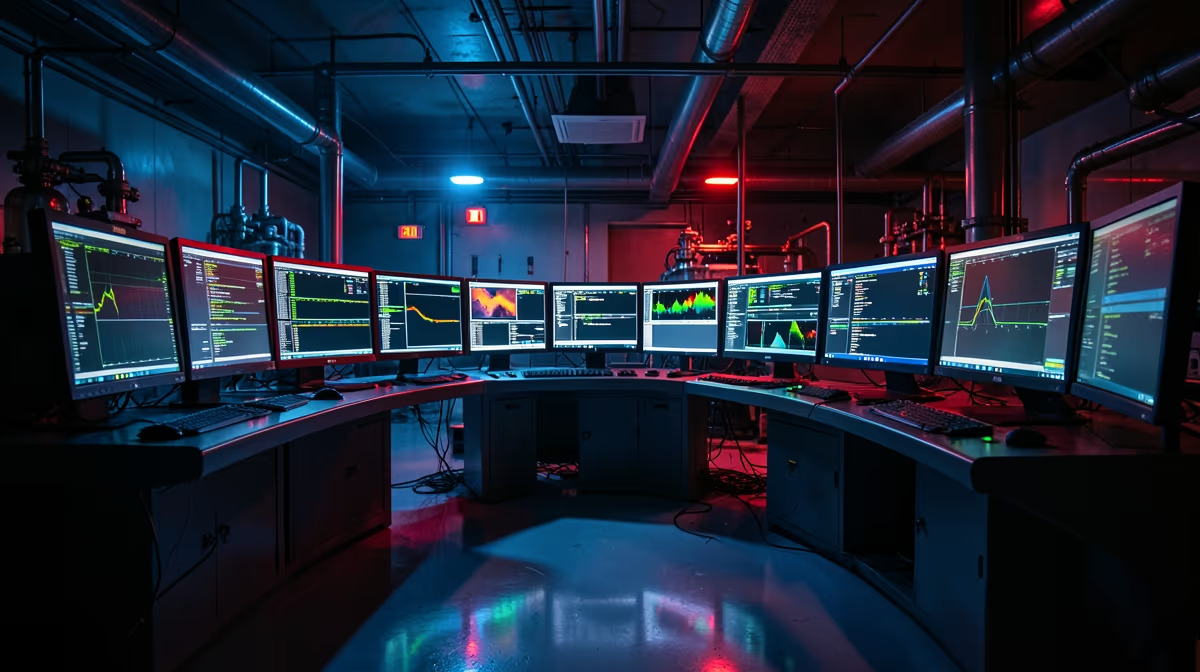
A remote facility belonging to the Municipal Water Authority of Alva in Minnesota was targeted in a cyberattack late last week, prompting federal and state cybersecurity agencies to investigate potential vulnerabilities in critical rural infrastructure. Following the recent minnesota water utilities cyberattack, officials are scrambling to upgrade infrastructure security against escalating threats of cyber warfare. This digital intrusion serves as an urgent reminder of the pervasive risks facing municipal water grids and the critical necessity for systemic defense upgrades across public utility frameworks nationwide.
What Unfolded
The incident, which occurred on Thursday, involved unauthorized access to a computerized system utilized to monitor and regulate water distribution processes. Local officials confirmed that operators quickly detected the breach and switched the affected facility from automated to manual operations, preventing any disruption to the safety and supply of the local drinking water. Cybersecurity experts and state investigators are currently analyzing logs to determine the exact entry point of the intrusion and whether foreign or domestic actors were responsible. While the Alva facility was the only known water system compromised in this specific event, the breach has reignited urgent concerns regarding the cybersecurity posture of smaller municipalities across the United States. In response to the attack, the Minnesota Department of Health and the Federal Bureau of Investigation have issued advisory warnings to other municipal utilities. Authorities are urging operators to immediately review access controls, update firmware, and ensure that remote desktop protocols are adequately secured against unauthorized intrusions. Although there was never a known risk to the drinking water safety, this incident serves as a stark reminder that critical infrastructure remains a prime target for malicious cyber activity, stated Minnesota Governor Tim Walz during an emergency briefing on infrastructure security.
Root Cause And Technical Vulnerabilities
The underlying technical vulnerabilities stem from critical infrastructure legacy systems operating on unpatched, out-of-date proprietary software. Many of these systems are connected to the internet for remote management without adequate multi-factor authentication or network segmentation. Threat actors routinely scan and identify exposed SCADA and HMI interfaces using default or weak credentials. This digital exposure mirrors historical parallels such as the 2021 Oldsmar, Florida water treatment plant cyberattack, where an unauthorized user remotely accessed the system and attempted to dangerously increase sodium hydroxide levels. Furthermore, an over-reliance on third-party vendors and outsourced Managed Service Providers often introduces vulnerabilities by serving as the weakest link in the security supply chain, thereby bypassing internal municipal IT oversight.
Economic And Political Fallout
The economic and political ramifications of the minnesota water utilities cyberattack highlight deep systemic friction across governmental levels. Economically, municipal water authorities face the immense financial burden of modernizing rural and mid-sized municipal IT infrastructure. These costs are frequently coupled with potential insurance premium spikes, regulatory compliance expenses, and the severe economic fallout that service disruptions would impose on local agriculture and industry. Politically, the incident has triggered a high-stakes blame game between state-level municipal authorities and federal cybersecurity agencies regarding funding shortages, unfunded federal mandates, and jurisdictional disputes over who bears ultimate responsibility for local utility defense. Heightened geopolitical anxieties compound these local pressures, as officials weigh the risks of state-sponsored cyber espionage and pre-positioning by hostile actors testing vulnerabilities in United States critical infrastructure as a deterrent or leverage mechanism.
Security Assessment And Immediate Outlook
Federal and state cyber authorities are scheduled to issue joint advisories and technical indicators of compromise related to the Minnesota water utility attack within the next twenty-four hours, while affected facilities isolate systems and transition to manual operations. Over the next seventy-two hours, forensic analysis of the breached systems will determine the specific malware variant and initial vector, prompting neighboring water districts to conduct emergency vulnerability scans and password resets. Key players coordinating the response include the Minnesota Department of Health, the Cybersecurity and Infrastructure Security Agency, the Federal Bureau of Investigation, and the affected municipal water utility. Industry experts predict that the attack will be attributed to a known ransomware or state-sponsored group targeting vulnerable legacy operational technology, leading to intensified calls for mandatory federal cybersecurity standards for water utilities. In the best-case scenario, the intrusion is contained to non-potable control systems with no disruption to water quality or delivery, allowing backups to facilitate rapid restoration. Conversely, the worst-case scenario would involve attackers successfully manipulating chemical dispensing systems or disabling remote monitoring, forcing a prolonged boil-water advisory and extensive infrastructure replacement.
Frequently Asked Questions
What happened in the Minnesota water utilities cyberattack?
Hackers targeted a water treatment facility in a small Minnesota town, exploiting default passwords to manipulate a remote access system. Although the equipment was compromised, local operators quickly switched to manual controls, preventing any disruption to water service or safety. This incident highlighted ongoing vulnerabilities in critical municipal infrastructure across the United States.
Which Minnesota towns were affected by water utility hacks?
The most notable incident involved the city of Oldsmar, though that was in Florida, a similar high-profile threat targeted a water facility in the Municipal Water Authority of Greater New Ulm in Minnesota. State officials and federal agencies have since issued warnings to water systems throughout the region to audit their digital defenses. These alerts emphasize securing remote access points against foreign and domestic cyber threats.
Who was responsible for the Minnesota water facility cyber incident?
Investigators have not publicly attributed the Minnesota-specific water utility intrusion to a definitive state-sponsored group or individual hacker. However, federal cybersecurity agencies have repeatedly warned that foreign adversaries, including groups from Russia and Iran, actively scan U.S. water and wastewater systems for vulnerabilities. The ease of access often points to poor basic cybersecurity hygiene rather than sophisticated zero-day exploits.
How are Minnesota water utilities securing their systems after the cyberattacks?
In the wake of these cyber incidents, Minnesota water utilities are aggressively upgrading their cybersecurity measures with state and federal assistance. Facilities are implementing multi-factor authentication, changing default administrator passwords, and disconnecting critical operational technology from the public internet. Furthermore, the EPA and state agencies are conducting mandatory security audits to ensure compliance.
Are drinking water supplies safe following cyber threats in Minnesota?
Yes, public drinking water supplies in Minnesota remain entirely safe and protected despite recent cyber threats. Water treatment facilities utilize multiple physical and chemical purification barriers that are not solely reliant on automated digital systems. Additionally, strict monitoring and manual override capabilities ensure that operators can immediately halt any unauthorized digital tampering.
What federal regulations apply to Minnesota water utility cybersecurity?
Federal oversight of water utility cybersecurity is coordinated primarily through the Environmental Protection Agency and the Cybersecurity and Infrastructure Security Agency. Recent mandates require state regulatory agencies to evaluate cybersecurity readiness during routine sanitary surveys of public water systems. Utilities that fail to address known vulnerabilities can face federal penalties and increased regulatory scrutiny.
Conclusion
The cyberattack targeting the municipal water authority facility in Alva, Minnesota, has been successfully contained through rapid operator intervention, ensuring that local drinking water supplies remain safe and uninterrupted. Verified developments confirm that unauthorized access occurred on a remote control system, prompting active forensic investigations by the Federal Bureau of Investigation and the Minnesota Department of Health. As federal and state authorities issue joint technical advisories, affected facilities are isolating compromised systems and conducting emergency vulnerability scans. Realistic next steps involve neighboring water districts upgrading their security posture, implementing multi-factor authentication, and transitioning vulnerable legacy networks away from unverified remote access points to safeguard critical public infrastructure against future digital threats.


.webp)

