
Strait of Hormuz Security Escalation Threatens Global Markets
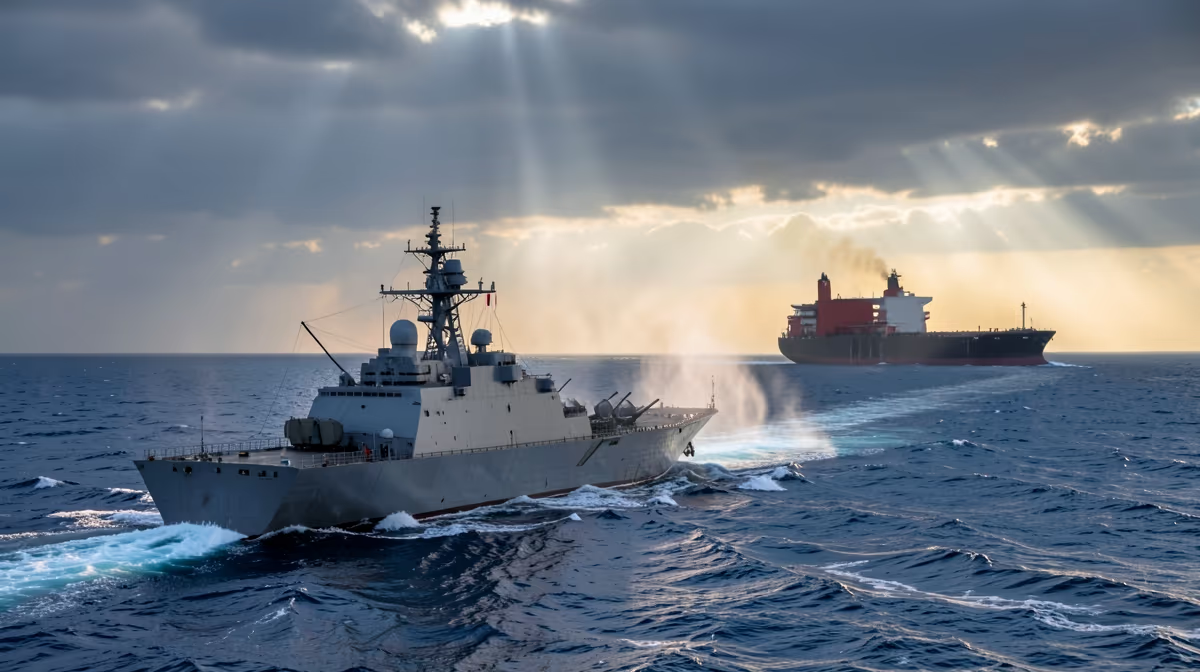
WASHINGTON — The United States military announced increased naval patrols in the Strait of Hormuz on Tuesday following a series of unprovoked Iranian speedboat maneuvers that threatened commercial shipping lanes in the vital oil transit chokepoint. Recent developments in the strait of hormuz continue to impact oil tanker traffic and international maritime security, drawing intense focus from global energy markets, policy makers, and investors. The heightened security posture comes amid renewed geopolitical tensions between Washington and Tehran over regional maritime security. Defense officials confirmed that guided-missile destroyers and Coast Guard cutters have been redirected to the area to ensure the safe passage of international cargo vessels and oil tankers navigating the narrow passage between the Persian Gulf and the Gulf of Oman.
Maritime Security Challenges and International Response
The operational reality on the water involves close-quarters maneuvering and asymmetric friction. The deployment of additional U.S. naval assets to the region runs concurrently with the persistence of Iranian Islamic Revolutionary Guard Corps Navy patrols near commercial shipping corridors. Pentagon press secretary Maj. Gen. Patrick Ryder stated during a briefing that the U.S. remains committed to maintaining freedom of navigation in international waters. He emphasized that while Washington does not seek a military conflict, forces in the region maintain the inherent right of self-defense against hostile actions.
Shipping industry groups have expressed growing concern over potential disruptions in the global energy supply chain. Approximately one-fifth of the world's petroleum passes through the strait, making any escalation in the region an immediate threat to international economic stability and energy markets. Verified facts from the theater confirm that while the U.S. military has increased naval patrols and Iranian fast-attack craft recently engaged in unsafe maneuvering near commercial vessels, no shots were fired and no direct collisions occurred during the recent maritime encounters.
Impact on Oil Tanker Traffic in the Strait of Hormuz
The Strait of Hormuz is a narrow stretch of water located between Oman and Iran that connects the Persian Gulf with the Gulf of Oman and the open ocean. It is essentially a maritime bottleneck that serves as the world's most critical oil transit chokepoint. When tensions rise in this region, the flow of global energy supplies is immediately threatened. Concerns have grown because military actions and political standoffs involving the United States, Iran, and other regional players have heightened the risk of disruptions. If traffic through this waterway is blocked or attacked, it creates immediate panic in global energy markets.
The physical geography of the passage compounds these operational vulnerabilities. The strait is only about 21 miles wide at its narrowest point, with shipping lanes just two miles wide in each direction, separated by a two-mile-wide buffer zone. Iran borders the entire northern coastline of the strait, giving it strategic military leverage. Meanwhile, the U.S. Navy's Fifth Fleet, based in nearby Bahrain, regularly patrols the area to keep shipping lanes open. While alternative pipelines exist across the region, they do not possess the capacity to replace the massive volume of oil moved by tankers through the strait.
Geopolitical Pressures and Structural Realities
The ongoing friction is underpinned by structural dynamics between major global actors. At its root, the situation reflects structural US dependence on maintaining global maritime chokepoints to enforce hegemony, contrasted with Iran's strategic leverage through asymmetric maritime denial in the Persian Gulf. This is mirrored in Washington by a bipartisan consensus regarding the necessity of a forward military posture, weaponized by the executive branch to project global dominance while avoiding protracted land wars.
From an economic perspective, global energy security pricing vulnerability remains a constant factor; any disruption directly impacts petroleum futures, refining margins, and inflation rates, effectively granting Tehran a veto over western economic stability. Geopolitically, the theater operates as a high-stakes chess match between US containment strategy and alternative Eurasian integration projects, specifically involving Chinese and Indian energy supply chains running through the Gulf. This dynamic builds upon deep historical roots, echoing the 1987-1988 Operation Earnest Will during the Iran-Iraq Tanker War, which cemented the US Navy's permanent militarized footprint in the Persian Gulf, and subsequent flashpoints including the 2019 tanker attacks and drone incidents.
Economic Consequences and Global Vulnerability
Any disruption in the Strait of Hormuz directly impacts the global economy by instantly driving up the price of crude oil. For people in the United States and around the world, this translates to significantly higher prices at the gas station, which in turn fuels inflation and increases the cost of everyday goods and transportation. The affected population includes everyday consumers in the United States and globally who buy gasoline, plastics, and goods dependent on shipping, as well as global stock markets, airlines, and shipping companies.
The defense and intelligence apparatus closely monitors these financial tremors, as energy futures react instantly to military movements. Posturing and verbal warnings will continue, but both Washington and Tehran have strong incentives to avoid a direct military kinetic engagement that could choke critical energy supplies. In the best-case scenario, all vessels transit safely without incident as both sides exercise restraint and backchannel diplomacy cools the rhetoric. Conversely, the worst-case scenario entails a miscalculation leading to a brief exchange of fire, resulting in the temporary seizure of a commercial vessel and an immediate spike in global crude oil prices.
Short-Term Outlook and Tactical Projections
Operational developments across the theater follow a rapid timeline over the coming days. In the next 24 hours, observers can expect increased naval patrols and heightened readiness by the US Fifth Fleet following reported Iranian speedboat maneuvers near commercial tankers. Looking toward the next 72 hours, diplomatic messaging via backchannels is anticipated to de-escalate tensions, coupled with minor adjustments to commercial shipping routes as a precaution by major global energy firms, Oman Traffic Control, US Central Command, and the Iranian Islamic Revolutionary Guard Corps Navy.
Expert consensus points toward continued posturing. Posturing and verbal warnings will continue, but both Washington and Tehran have strong incentives to avoid a direct military kinetic engagement that could choke critical energy supplies. Multilateral diplomatic responses and the exact timeline for the enhanced U.S. naval escort operations for commercial tankers passing through the strait remain the key developing variables as the situation unfolds.
Frequently Asked Questions
Where is the Strait of Hormuz located?
The Strait of Hormuz is a crucial waterway situated between Oman and Iran. It connects the Persian Gulf with the Gulf of Oman and the Arabian Sea.
Why is the Strait of Hormuz important to the US and the world?
It is one of the world's most critical oil transit chokepoints. A significant portion of the global petroleum consumed daily passes through this narrow passage, making it vital for international energy markets.
How wide is the Strait of Hormuz?
At its narrowest point, the strait is about 21 miles wide. However, the shipping lanes in both directions are only two miles wide each, separated by a two-mile-wide buffer zone.
Who controls the Strait of Hormuz?
The waters are shared by Iran and Oman under the United Nations Convention on the Law of the Sea. Because of its geographic position, Iran has historically exercised significant influence and control over the area.
Why are US military forces stationed near the Strait of Hormuz?
The United States maintains a naval presence in the region to protect commercial shipping lanes and ensure the free flow of global commerce. Tensions between the US and Iran frequently elevate risks for vessels transiting the strait.
What happens if the Strait of Hormuz is closed?
A closure of the strait would drastically disrupt global oil supplies, leading to an immediate and massive spike in international crude oil prices. This scenario could trigger widespread economic instability and inflation worldwide.
Conclusion
Recent developments confirm that the United States military has increased naval patrols in the Strait of Hormuz following unsafe maneuvering by Iranian fast-attack craft near commercial shipping corridors. With approximately 20 percent of the world's petroleum supply transiting this vital chokepoint, naval assets including guided-missile destroyers and Coast Guard cutters remain deployed to safeguard international commerce. Realistic next steps involve continued naval escort readiness, heightened surveillance by the U.S. Fifth Fleet, and potential backchannel diplomatic messaging aimed at preventing miscalculation while maintaining freedom of navigation in the region.


.webp)

