
New Forest Wildfire Triggers Emergency Response Across Southern England
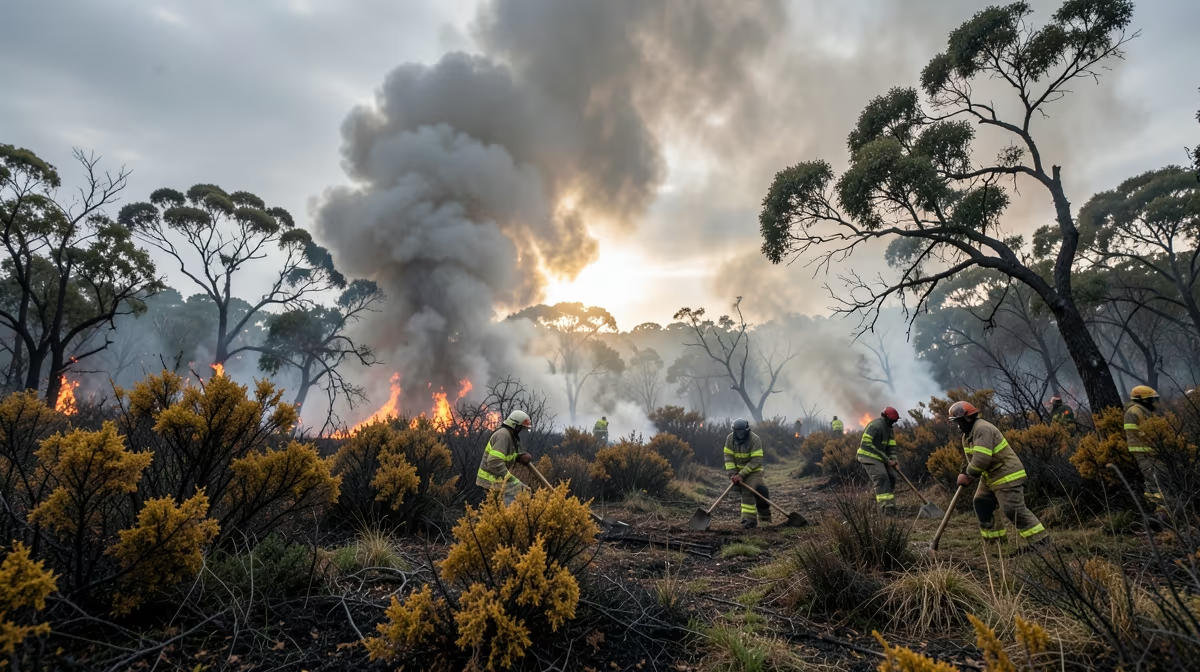
Centuries of accumulated peat and rare lowland habitats faced an immediate test as a fast-moving new forest wildfire broke out near Ringwood, leading to significant smoke and safety concerns across the region. Emergency services are currently tackling the severe blaze, which has generated thick smoke and prompted widespread emergency measures across Southern England. More than 50 firefighters battled the severe wildfire in the New Forest National Park on Tuesday afternoon, threatening rare lowland heath habitats and local properties before emergency services brought the blaze under control. Hampshire and Isle of Wight Fire and Rescue Service received multiple 999 calls just after 13:00 BST reporting heavy smoke near Beaulieu Road. Strong winds fanned the flames across approximately 15 hectares of dry gorse and woodland, prompting the deployment of six fire engines, two water carriers, and specialist off-road vehicles. Residents and motorists in the area were advised to keep windows closed and avoid the B3055 as visibility dropped significantly. Fire crews established perimeter breaks to halt the rapid spread of the fire, which threatened to engulf centuries-old ancient woodlands and local livestock. The New Forest National Park Authority temporarily closed several recreational car parks and walking trails to ensure public safety and allow emergency vehicles unobstructed access to the scene. By early evening, firefighters had surrounded the main seat of the fire and began dampening down hotspots. While the immediate danger has subsided, smoke is expected to linger in the area overnight, and fire investigation teams remain on site to determine the exact cause of the ignition.
What Unfolded
The unfolding emergency required an intense, multi-agency response as conditions threatened to escalate the damage across the protected national park. Hampshire and Isle of Wight Fire and Rescue Service Incident Commander, Group Manager Dave Turner, stated that thanks to the swift and coordinated response of crews on the ground, alongside support from park rangers, teams prevented a rapidly moving fire from causing catastrophic damage to the wider National Park. He urged the public to exercise extreme caution with barbecues and campfires as ground conditions remain exceptionally dry. Verified facts confirm that over 50 firefighters responded to the blaze, addressing approximately 15 hectares of gorse and woodland following the initial emergency call logged just after 13:00 BST on Tuesday. The response involved six fire engines and two water carriers from the Hampshire and Isle of Wight Fire and Rescue Service. Current verified updates confirm that the fire is contained, no injuries have been reported, and local roads previously closed have begun to reopen. The official cause of the wildfire is currently under investigation, and crews are maintaining a presence overnight to monitor for potential flare-ups.
The Mechanics of the Blaze
A simple explanation of the incident clarifies that a fast-moving wildfire broke out in the picturesque New Forest, creating emergency situations across the region. Thick smoke filled the air as local fire crews battled fierce flames fueled by dry conditions and strong winds. Firefighters worked tirelessly on the ground alongside specialist support to bring the blaze under control, while residents and visitors were strongly advised to stay away from affected areas. Key facts establish that a major wildfire started in the New Forest region of Great Britain, with emergency services deploying numerous fire engines and specialist aerial support. Strong winds and dry weather made it difficult to contain the flames, resulting in local road closures and high alert status for nearby residents. While there were no immediate reports of severe injuries, property and nature remained at significant risk. This fire poses an immediate threat to human safety, local homes, and the unique, irreplaceable ecosystem of the New Forest, while also highlighting the growing danger of severe wildfires in the UK due to changing weather patterns. Those affected include local residents, holidaymakers visiting the national park, local wildlife, and commuters facing major road closures in Southern England. The background context notes that the New Forest is one of the largest remaining tracts of unenclosed pasture, heathland, and forest in Southern England, making it historically precious but increasingly vulnerable to dry summer weather and accidental fires.
Analyst View
The root cause of such incidents involves decades of inadequate peatland restoration combined with extreme drought cycles linked to shifting Atlantic climate patterns. Political dimensions involve tensions between local New Forest commoners rights, Forestry England management policies, and central government climate adaptation funding. Economically, the event brings substantial costs for emergency response, loss of ancient timber, long-term disruption to local tourism, and plummeting property values in adjacent buffer zones. Geopolitically, these events amplify domestic scrutiny over the UK preparedness for climate-induced ecological collapse, impacting international climate credibility ahead of COP summits. A hidden angle involves the release of massive carbon stores from centuries-old peat deposits, which severely undermines national net-zero accounting metrics. Historical parallels point to the 1976 UK drought and subsequent wildfires, which exposed structural vulnerabilities in water and forestry management. The timeline spans from centuries of peat accumulation and localized grazing shaping the New Forest ecosystem, to winter and spring precipitation dropping significantly below historical averages, drying out sub-surface peat layers. An unseasonal heatwave then triggers multiple ignition points across vulnerable heathland, rapidly spreading fire that overwhelms local brigades and forces regional emergency declarations, leading to current investigations and ecological damage assessments amid policy debates on wildfire prevention.
Future Outlook
Predictive data outlines what to expect in the immediate aftermath of the incident. Over the next 24 hours, fire services will continue damping down hotspots and monitoring smouldering peat areas amidst dry weather conditions. Looking toward the next 72 hours, full containment is expected, transitioning from active firefighting to damage assessment and investigation into the cause of the blaze. Key players involved in this phase include the Hampshire and Isle of Wight Fire and Rescue Service, Forestry England, and the Met Office, with impact centered on the New Forest National Park heathland, local wildlife habitats, and grazing livestock areas. Expert prediction indicates that the risk will remain elevated due to dry soil conditions, requiring ongoing vigilance and localized fire bans across the national park. The best-case scenario involves rainfall helping to extinguish remaining underground peat fires quickly with minimal long-term ecological damage and zero casualties. Conversely, the worst-case scenario warns that a sudden shift in wind direction could reignite the fire into surrounding wooded areas, threatening local properties and expanding the burnt acreage significantly.
Frequently Asked Questions
What caused the recent New Forest wildfire?
Wildfires in the New Forest are frequently triggered by prolonged dry weather, discarded cigarettes, or unattended campfires. Local authorities investigate each incident to determine the exact ignition source once the fire is extinguished. Dry gorse and heather in the region act as natural fuel, making the area particularly vulnerable during heatwaves.
Are there current fire bans in the New Forest?
Yes, the Forestry England and local authorities strictly prohibit BBQs and open campfires across the New Forest National Park. These bans are put in place to prevent accidental blazes during periods of dry weather and high fire risk. Visitors caught violating these rules can face heavy fines and potential legal action.
How can I report a wildfire in the New Forest?
If you spot smoke or flames in the New Forest, you should immediately call 999 and ask for the fire and rescue service. Try to provide a clear location, such as a nearby landmark, car park name, or what3words location, to help responders arrive quickly. Never attempt to tackle a large wildfire yourself, as conditions can change rapidly.
How do wildfires affect New Forest wildlife?
New Forest wildfires devastate local ecosystems, destroying the habitats of ground-nesting birds, reptiles, and mammals like the famous New Forest ponies. While many larger animals can escape, slow-moving wildlife and young animals often struggle to survive the flames and smoke. Recovery for the affected heathland and its biodiversity can take several years.
Can you visit the New Forest during a wildfire incident?
Parts of the national park may experience temporary road closures and restricted public access while emergency services battle active blazes. Visitors are strongly advised to check local travel updates and avoid affected areas to keep roads clear for fire engines. Respecting cordons is essential for public safety and allows firefighters to work efficiently.
When is the highest wildfire risk in the New Forest?
The peak risk period for wildfires in the New Forest typically occurs during spring and summer, particularly between April and August. Extended dry spells, low humidity, and strong winds create prime conditions for fires to start and spread rapidly across the heathlands. Conservationists and rangers maintain high alert status throughout these warmer months.
Conclusion
Emergency services have successfully brought the New Forest wildfire under control following a rapid deployment of over 50 firefighters and specialist equipment across 15 hectares of affected heathland. While the immediate threat has subsided and local roads have begun to reopen, fire investigation teams remain on site alongside overnight monitoring crews to damp down hotspots and prevent potential flare-ups. Authorities continue to urge strict adherence to fire bans and public safety guidelines as dry ground conditions sustain elevated regional risks across the national park.


