
Ukrainian Drone Strikes Wildberries Warehouses Disrupt Russian Supply Chains
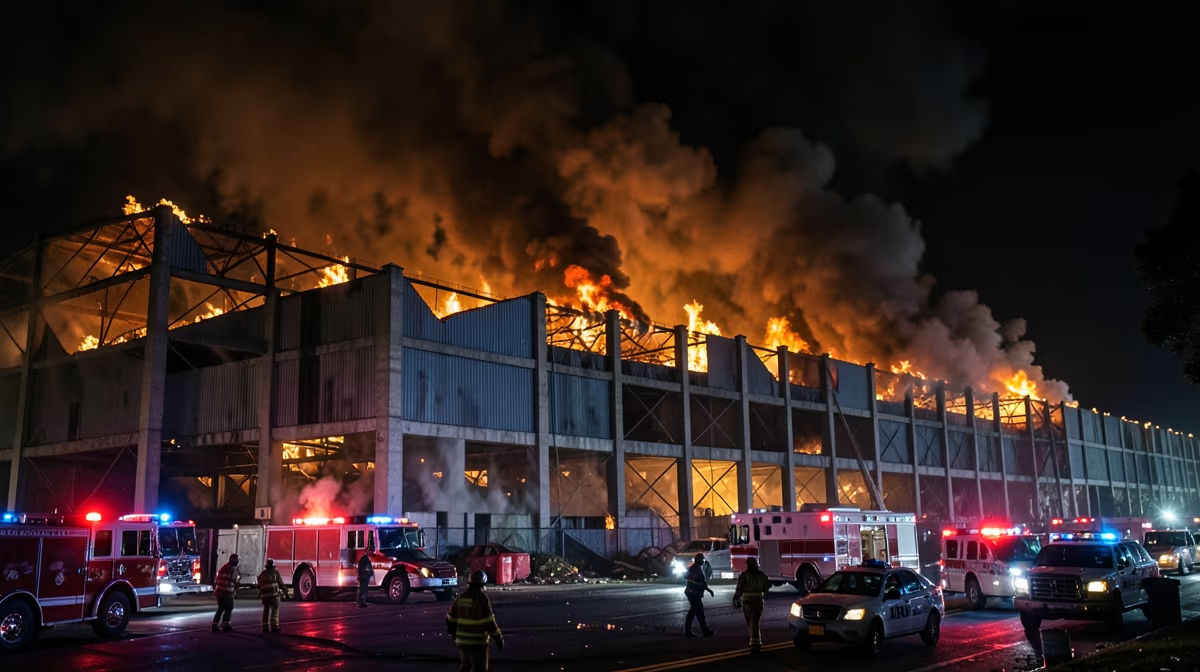
Modern automated fulfillment networks face unprecedented friction as long-range aerial operations target the commercial backbone of a major regional economy. Recent reports indicate that ukrainian drone strikes wildberries warehouses have significantly disrupted major supply chains inside Russia, marking a new phase in economic warfare. Ukrainian long-range drones struck major logistics hubs operated by Russia's largest online retailer, Wildberries, sparking massive fires and disrupting supply chains across several Russian regions this week.
Targeting Russian E-Commerce Infrastructure
The coordinated overnight drone attacks targeted large-scale warehouse facilities, causing significant structural damage and destroying vast inventories of goods intended for distribution across western Russia. Emergency services rushed to the scenes to combat fierce blazes that illuminated the night sky, while local authorities temporarily restricted civilian access to the surrounding industrial zones. Wildberries, a dominant force in the Russian e-commerce sector, confirmed that several fulfillment centers sustained direct hits. The company stated it is working to reroute logistics and assess the total financial losses resulting from the destroyed merchandise. While operations at the affected sites have been temporarily suspended, the firm emphasized its commitment to minimizing delivery delays for customers. Ukrainian military intelligence sources implied the strikes were part of a broader strategy targeting logistics infrastructure that supports the Russian war effort. By hitting critical supply and economic nodes deep within Russian territory, Kyiv aims to disrupt the logistical backing of the ongoing military campaign. Ukrainian forces have launched drone attacks targeting large logistics warehouses belonging to Wildberries, which is Russia's biggest online shopping company. These strikes are part of an ongoing strategy to hit infrastructure inside Russia that supports its war effort or economy. Wildberries operates massive distribution centers that process millions of packages daily. By hitting these facilities, the drone strikes cause significant physical damage, disrupt supply chains, and create financial losses for one of Russia's most prominent commercial giants.
Key Operational Facts
Ukrainian drones targeted large Wildberries warehouse facilities inside Russia. Wildberries is Russia's largest online retailer and e-commerce platform. The attacks caused fires, structural damage, and halted operations at the affected sites. No major civilian casualties have been officially highlighted, but logistics have been heavily disrupted. These strikes are part of a broader campaign by Ukraine to target Russian economic and logistical hubs. Confirmed details include the locations of the warehouse strikes, the occurrence of fires, and Wildberries' public acknowledgment of logistical disruptions and facility damage. The full extent of the financial losses, the exact number of warehouses successfully targeted, and the long-term impact on regional e-commerce delivery times remain under ongoing assessment as the situation unfolds. Ukrainian military intelligence suggested the strikes were legitimate operations aimed at dismantling war-supporting infrastructure, stating that logistics hubs fueling the aggressor economy remain valid targets for defense operations. Meanwhile, Wildberries representatives released a statement noting that safety is our top priority and we are actively cooperating with emergency services to secure the remaining facilities and reroute supply chains.
Economic And Strategic Analysis
The root cause of these operations involves targeting critical logistics and e-commerce infrastructure utilized by the Russian military-industrial complex and state-backed supply chains. This approach demonstrates Ukraine's reach deep into Russian territory, undermining domestic stability narratives and challenging the Kremlin projection of security. Economically, the disruption of major retail supply chains escalates logistics costs and induces panic among domestic Russian corporations supporting the war effort. Geopolitically, this shifts the cost of the war closer to the Russian civilian populace, testing Western tolerance for asymmetric escalation inside internationally recognized Russian borders. A hidden angle in these developments is the dual-use nature of massive digital logistics hubs, which often integrate military logistics data, contractor housing, or state-linked financial transactions. This mirrors historical parallel events involving strategic bombing campaigns targeting supply chain nodes and industrial logistics hubs during total war eras. Wildberries rapidly expanded to become the dominant e-commerce giant in Russia, heavily integrated into national digital infrastructure, before the ongoing conflict prompted Ukraine to expand deep-strike capabilities using long-range asymmetric drone platforms. Ukrainian intelligence subsequently identified civilian logistical networks serving dual-purpose functions for the Russian state, leading to targeted strikes on warehouses.
The Broader Implications For Drone Attacks On Logistics
This event matters because it shifts the conflict further into Russia's economic backyard, showing that even massive commercial operations are not safe from the war. It disrupts the daily lives of everyday Russian consumers who rely on Wildberries for goods, while putting financial pressure on companies that contribute to the Russian economy. Everyday Russian consumers who use Wildberries for online shopping, the employees working at the warehouses, and the company's management facing massive property and financial losses are directly affected. Wildberries is often called the Amazon of Russia and has grown rapidly to become the country's dominant online marketplace. As the war between Ukraine and Russia has dragged on, Ukraine has increasingly used long-range drones to strike fuel depots, factories, and logistics centers deep within Russian territory to weaken its opponent infrastructure. While Wildberries operates primarily within Russia and neighboring CIS countries, these strikes have minimal direct impact on the UK retail market. However, international observers and logistics experts monitor these events closely to assess the broader economic fallout and the shifting nature of drone warfare. The conflict escalation highlights the vulnerability of modern automated supply chains to asymmetric attacks.
Outlook And Future Projections
Expected developments over the next 24 hours include increased security protocols at Russian logistics hubs and immediate damage assessments by Wildberries management. Over the next 72 hours, supply chain disruptions are expected to affect regional deliveries, accompanied by heightened scrutiny on cross-border drone vulnerabilities in Russian media. Asymmetric drone attacks on logistics and economic infrastructure inside Russia will likely continue, forcing companies to invest heavily in localized air defense and redundancy. In the best-case scenario, minimal casualties with localized damage will lead to rapid rerouting of logistics and minor delays for consumers. Conversely, the worst-case scenario involves significant collateral damage, major supply chain collapse for essential goods, and retaliatory escalation against critical infrastructure. Large Russian retail and e-commerce companies are exploring various mitigation strategies, including improved site security and insurance adjustments. Some firms are reportedly looking into enhanced electronic warfare systems and physical fortifications to protect critical inventory hubs. Despite these challenges, companies strive to maintain consumer trust and operational continuity amidst ongoing security uncertainties.
Frequently Asked Questions
Have Ukrainian drone strikes targeted Wildberries warehouses?
Recent reports and intelligence updates have highlighted Ukrainian drone attacks targeting logistics infrastructure inside Russia, including facilities associated with major e-commerce platforms like Wildberries. These strikes are part of a broader strategy to disrupt supply chains and economic operations supporting the Russian military effort. Such attacks often aim to cause significant financial and logistical damage to key Russian commercial hubs.
Where are the Wildberries warehouses allegedly hit by drones located?
The targeted facilities are typically situated within Russian territory, often in regions bordering Ukraine or near major industrial and transport hubs used for distribution. Specific locations have varied depending on the operational scope of recent long-range drone campaigns conducted by Ukrainian forces. These areas are chosen to test air defense capabilities and disrupt critical supply networks.
How do Ukrainian drone strikes affect Wildberries operations?
Strikes on major distribution centers can cause substantial property damage, temporary suspension of sorting services, and delivery delays for customers across Russia. While Wildberries usually works quickly to reroute logistics and minimize downtime, these incidents introduce severe operational bottlenecks. The ongoing threat also forces the company to invest heavily in enhanced security and air defense measures for its facilities.
Why are e-commerce warehouses like Wildberries targeted by drones?
E-commerce hubs and large logistics complexes are increasingly viewed as dual-use infrastructure that can support logistical needs or symbolize the economic stability of the aggressor nation. Disrupting these high-volume centers creates economic friction and draws Russian air defense assets away from the frontline. Consequently, major commercial targets become strategic components in the broader campaign of asymmetric warfare.
What impact do these warehouse strikes have on the UK and international markets?
While Wildberries operates primarily within Russia and neighboring CIS countries, these strikes have minimal direct impact on the UK retail market. However, international observers and logistics experts monitor these events closely to assess the broader economic fallout and the shifting nature of drone warfare. The conflict escalation highlights the vulnerability of modern automated supply chains to asymmetric attacks.
How is Wildberries responding to the threat of drone attacks?
In response to the growing risk of aerial attacks, large Russian retail and e-commerce companies are exploring various mitigation strategies, including improved site security and insurance adjustments. Some firms are reportedly looking into enhanced electronic warfare systems and physical fortifications to protect critical inventory hubs. Despite these challenges, companies strive to maintain consumer trust and operational continuity amidst ongoing security uncertainties.
Conclusion
Recent developments confirm that long-range drone strikes have hit major Wildberries warehouse facilities inside Russia, causing structural damage, fires, and temporary operational suspensions at key logistics hubs. Wildberries management is currently conducting damage assessments and attempting to reroute supply chains to minimize delivery delays for consumers. Regional logistics face continued friction as emergency services secure affected sites and companies brace for sustained security vulnerabilities. Realistic next steps involve heightened physical security protocols across Russian commercial supply chains, ongoing logistics adjustments by corporate leadership, and continuous observation of cross-border asymmetric warfare impacts by international analysts.


