
Weather Volatility Grips India As Extreme Shifts Spark National Alarm
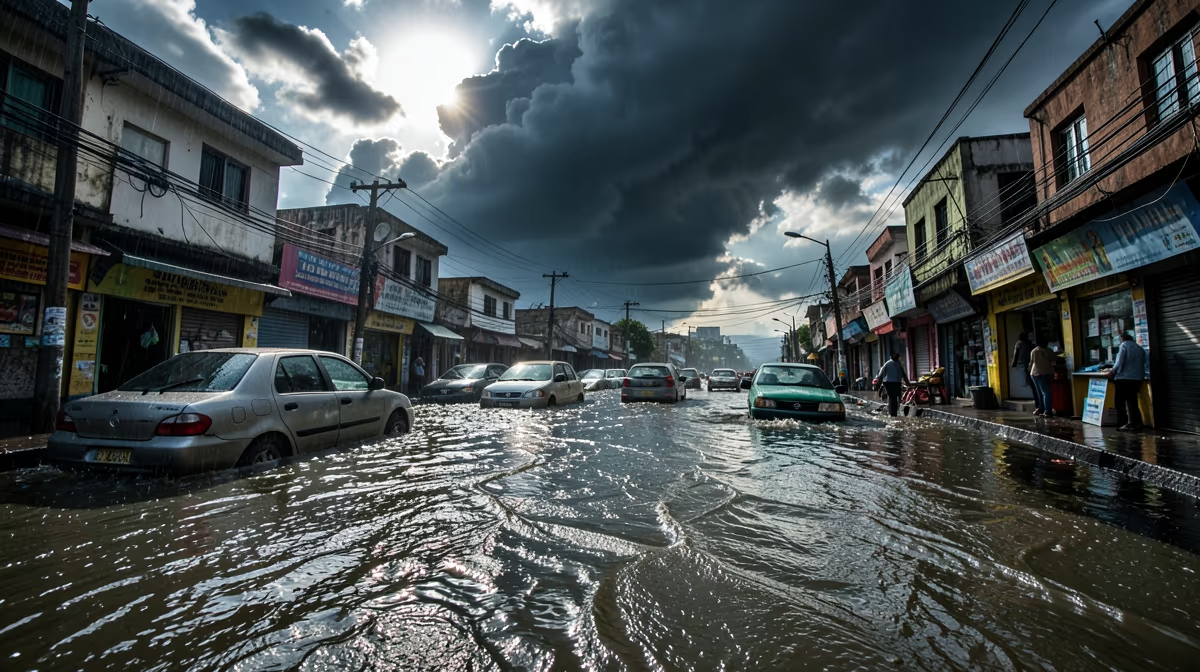
As excessive heat continues to sweep across various regions, staying updated with today's weather is crucial for public safety. Beneath a fractured subcontinent where scorching thermal spikes clash with violent, unseasonal downpours, millions of residents navigate a climate system growing increasingly volatile by the year.
Current Weather Forecast Across Major Indian Cities
The India Meteorological Department issued a red alert for heavy to extremely heavy rainfall across coastal Maharashtra and parts of Konkan, disrupting transport and prompting authorities to declare a holiday for educational institutions in Mumbai. Continuous overnight downpours led to severe waterlogging in several low-lying areas of Mumbai, including Dadar, Kurla, and Hindmata, slowing down vehicular traffic significantly. Suburban train services on the Central and Western lines experienced delays ranging from 15 to 30 minutes due to water accumulation on the tracks, affecting lakhs of commuters during the morning rush hour. Municipal authorities deployed additional water pumps and disaster management teams to clear flooded thoroughfares, while the Brihanmumbai Municipal Corporation urged residents to step out only if necessary. Further south, parts of coastal Karnataka and Kerala also experienced intense monsoon activity, with rivers flowing near the danger mark in some districts. The National Disaster Response Force stationed multiple teams in vulnerable zones across Maharashtra and Karnataka for swift evacuation and rescue operations if conditions worsen. Fishermen have been strictly advised not to venture into the Arabian Sea due to high wind speeds and turbulent sea conditions prevailing along the western coastline. According to IMD scientists, the active monsoon spell is being driven by a low-pressure area formed over the northeast and adjoining east-central Arabian Sea. Meteorological models indicate that the heavy rainfall spell is likely to persist over the Konkan region and adjoining Ghat areas for the next 48 hours before gradually reducing in intensity as the system moves inland. We have issued a red alert for Mumbai, Thane, Palghar, and Raigad districts as a deep depression over the Arabian Sea is intensifying moisture incursions, said Dr. M. Mohapatra, Director General of the India Meteorological Department. Citizens are advised to adhere strictly to safety advisories issued by local administration.
Health Advisories Amid Severe Excessive Heat Waves
India is currently experiencing extreme weather swings, marked by severe heatwaves in some regions and heavy unseasonal rainfall and floods in others. These sudden shifts are disrupting daily life, causing discomfort, and catching many communities off guard as the traditional weather patterns become less predictable. Meteorologists explain that these intense conditions are driven by a combination of global climate shifts and local atmospheric changes. As temperatures rise and monsoon patterns shift, India faces a higher frequency of extreme weather events, making it crucial for residents to stay updated with daily forecasts. Extreme temperatures are hitting parts of northern and central India, while unseasonal heavy rains and flash floods affect southern and eastern states. Agricultural crops are facing damage due to erratic weather patterns, and local authorities have issued weather warnings in multiple states. Furthermore, power grids are under immense strain due to spikes in electricity demand. These extreme weather events directly impact everyday life by threatening food security, disrupting transportation, and posing serious health risks like heatstroke. When crops fail due to floods or droughts, it drives up food prices for everyone, while intense heatwaves put vulnerable populations at immediate risk. Those most affected include farmers, daily wage workers, outdoor laborers, and residents in low-lying or urban flood-prone areas across various Indian states. Over the past decade, India has witnessed a noticeable shift in its weather patterns, moving away from traditional predictable seasons toward more frequent and intense extreme climate events due to broader global environmental changes.
Root Causes And Systemic Anomalies
The structural instability observed in contemporary weather patterns stems directly from anthropogenic climate disruption compounded by inadequate watershed management and over-extraction of groundwater, resulting in extreme volatility in the Indian monsoon system. Weather anomalies directly impact agrarian distress, which dictates election outcomes, as incumbent governments manipulate disaster relief funds and Minimum Support Prices to pacify crucial rural voting blocs, weaponizing relief administration for patronage. Fungible supply chains face inflationary shocks as erratic precipitation devastates staple crop yields including wheat, rice, and pulses, forcing food export bans, draining foreign exchange reserves, and widening the fiscal deficit through emergency subsidies. India's climate vulnerability diminishes its economic growth trajectory, constraining its capacity to act as a credible counterweight in the Indo-Pacific, while downstream water disputes intensify security dilemmas. Furthermore, climate-induced rural-to-urban migration is rapidly overwhelming Tier-2 and Tier-3 Indian cities, creating massive informal settlements prone to urban flooding and public health crises that escape federal monitoring metrics. This volatility mirrors historical parallels such as the severe droughts of the mid-1960s that forced India into massive PL 480 grain dependency on the United States, fundamentally altering its foreign policy posture and precipitating the Green Revolution, structurally integrating climate volatility into national security and macroeconomic planning.
Meteorological Projections For The Coming Days
Monsoon currents are expected to intensify along the western coast of India, bringing heavy to very heavy rainfall to parts of Maharashtra, Goa, and coastal Karnataka over the next 24 hours. Meanwhile, heatwave conditions will persist in isolated pockets of northwest India. Looking ahead to the next 72 hours, the monsoon trough will shift northwards, increasing rainfall activity over central India including Madhya Pradesh and Chhattisgarh, while relief from heat is anticipated in northern plains due to approaching western disturbances. Key institutional players monitoring these developments include the India Meteorological Department, National Disaster Response Force, and the Ministry of Agriculture, with primary impact concentrated in Konkan and Goa, Vidarbha, and Northwest India plains. Expert prediction indicates that the monsoon is progressing on a normal timeline overall, though regional distribution will be erratic with short-term deficit spells balanced by localized intense cloudbursts. In the best-case scenario, well-distributed rainfall revitalizes kharif sowing across central and southern states without causing severe urban flooding or infrastructure damage. Conversely, the worst-case scenario involves excessive, unmonitored downpours triggering flash floods, severe landslides in the Western Ghats, and crop damage in low-lying agricultural zones.
Frequently Asked Questions
What is the best weather app in India?
Several weather apps perform exceptionally well in India, including the official IMD app Mausam, AccuWeather, and Weather.com. These apps provide accurate local forecasts, radar maps, and timely alerts for extreme weather conditions.
Why is the weather so humid in India?
India's high humidity is primarily driven by its vast coastline along the Indian Ocean, Arabian Sea, and Bay of Bengal, which evaporate massive amounts of moisture. Additionally, seasonal monsoon winds carry warm, moisture-laden air across the subcontinent, especially during the summer and rainy months.
How does the Indian monsoon work?
The Indian monsoon is driven by a massive seasonal reversal of wind patterns and temperature gradients between the landmass and the ocean. During summer, the intense heating of the Tibetan Plateau creates a low-pressure area that pulls moisture-heavy winds from the cooler Indian Ocean, resulting in widespread rainfall.
Which month is the hottest in India?
May is typically the hottest month across most parts of India, just before the arrival of the southwest monsoon in June. During this time, temperatures in northern and central regions frequently soar above 40 degrees Celsius.
How can I check live air quality along with weather in India?
You can check live air quality index alongside weather updates using platforms like the Central Pollution Control Board portal, SAFAR-India, or apps like Plume Labs and IQAir. Most modern weather apps also integrate real-time AQI data for major Indian cities.
When does winter start in India?
Winter in India generally begins in November and extends through February, with January being the coldest month. While northern regions experience sharp drops in temperature and occasional snowfall, southern parts of the country experience a mild and pleasant winter.
Conclusion
The convergence of excessive heat warnings across northern plains and red-alert downpours across western coastal regions highlights the profound climate volatility currently testing India's infrastructure and public safety frameworks. Verified developments confirm that while disaster management teams and meteorological agencies remain on high alert, erratic seasonal shifts continue to threaten agricultural output, urban transit, and public health. Citizens and commuters are advised to monitor official updates from the India Meteorological Department and adhere strictly to local administrative advisories as monsoon currents and heatwave conditions evolve over the coming days.


