
Trump Iran Tensions Trigger Urgent Security Review Across Britain
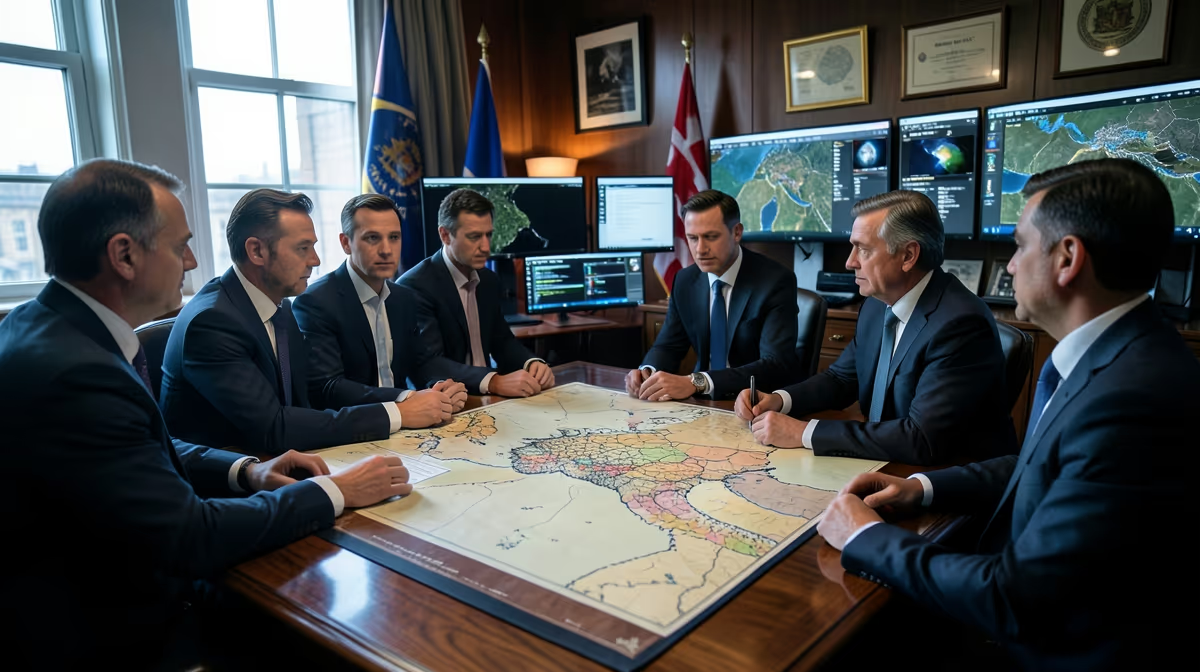
Donald Trump’s recent rhetoric regarding potential escalations with Iran has drawn sharp reactions across the United Kingdom, as British foreign policy officials monitor potential shifts in Washington’s stance on Middle Eastern security and nuclear diplomacy. As the latest updates on trump iran developments dominate world news headlines today, the underlying structural realities of transatlantic foreign policy are once again thrown into sharp relief. Relations between the United States and Iran have remained deeply strained since the 1979 Islamic Revolution, but the legacy of the Trump administration's foreign policy continues to serve as a primary pressure point for international relations, regional stability, and global energy markets.
Background And Historical Context
Donald Trump has a long history of dealing with Iran, marked by high tension and dramatic events. During his presidency, he took a very tough stance against the country, trying to isolate its leaders and limit their influence. The structural root cause of this ongoing friction lies in the incompatibility between Donald Trump's maximum pressure doctrine, aimed at regime destabilization through absolute economic isolation, and Iran's strategic imperative of asymmetric deterrence and regional hegemony. In May 2018, the United States unilaterally withdrew from the Joint Comprehensive Plan of Action and reinstated severe economic sanctions. Trump argued that the 2015 nuclear deal was a deeply flawed and one-sided agreement that failed to permanently block Iran's pathway to a nuclear weapon, while also criticizing the deal for failing to address Iran's ballistic missile program or its support for regional militant groups. Supporters of his decision believed maximum pressure was the only way to compel Iran into accepting a stricter treaty.
The maximum pressure campaign involved re-imposing severe economic sanctions aimed at crippling Iran's economy and forcing Tehran to renegotiate a more restrictive agreement. This weaponized the global financial system by removing Iranian oil from international markets, depressing Iran's currency, and driving European corporations out of Tehran due to secondary sanctions. Tensions reached a historical peak in January 2020 when a US drone strike in Baghdad killed top Iranian General Qasem Soleimani, triggering immediate retaliatory ballistic missile strikes from Iran on bases housing US troops. Iran responded to the maximum pressure campaign primarily through a strategy of strategic patience followed by gradual non-compliance with the nuclear deal's enrichment limits. Tehran also engaged in various provocative actions in the Persian Gulf region, including attacks on oil tankers and the downing of a US surveillance drone, alongside resuming higher levels of uranium enrichment and increasing its support for regional proxies.
What Unfolded In International Media
In statements that have circulated widely across international media, the former US president has repeatedly emphasized a hardline approach toward Tehran, raising concerns among European allies who favor continued diplomatic engagement. UK government sources have privately expressed apprehension that a return to maximum pressure policies could destabilize the region further and complicate ongoing multilateral efforts to contain Iran's nuclear program. British intelligence and diplomatic corps remain on alert, assessing how potential shifts in US leadership might impact broader coalition operations in the Gulf. Meanwhile, regional actors in the Middle East are recalibrating their own diplomatic strategies to hedge against any future resurgence of US-Iran hostilities. British diplomatic officials, speaking on the condition of anonymity, noted that the stability of the Gulf depends on predictable partnerships and adherence to international frameworks, while declining to comment directly on ongoing US electoral dynamics. The UK government maintains open channels with international partners regarding Middle Eastern security, and US political figures continue to debate the future of Iran policy. The precise nature of future US policy toward Iran remains contingent on political developments in Washington and ongoing regional security incidents.
Geopolitical And Economic Realities
The geopolitical angle of this ongoing crisis involves the accelerated erosion of Pax Americana credibility, pushing Tehran deeper into Sino-Russian economic orbits and prompting accelerated nuclear escalation as the sole insurance policy against regime change. From a political perspective, domestic political survival for Tehran's hardliners is juxtaposed with Trump's need to project decisive strength to appease hawkish domestic donors and the Gulf-Israel axis, bypassing multilateral consensus. Furthermore, this dynamic is paired with aggressive covert operations in the intelligence and cyber warfare domain, creating a persistent shadow war largely divorced from diplomatic theater. Historically, this mirrors the 1953 Anglo-American backed coup combined with Ronald Reagan's isolation and containment strategies against radicalized anti-Western regimes. For people in Britain, following these developments is important because any major conflict or policy shift in the Middle East can quickly affect global stability, trade routes, and oil prices. Changes in US policy toward Iran can trigger ripples across the global economy, affecting everything from the price of petrol at British pumps to international security. Because the UK is a close ally of the US, any escalation in tensions forces the British government to carefully balance its diplomatic and security strategies, directly impacting British citizens traveling or living in the Middle East, consumers facing fluctuating energy prices, businesses trading internationally, and global security forces.
Short Term Outlook And Predictions
Diplomatic rhetoric is intensifying with UK officials monitoring US policy shifts regarding Iran under a potential Trump administration. Over the next 24 hours, this diplomatic posturing is expected to remain high-profile. Within the next 72 hours, media speculation is projected to grow in British outlets regarding the future of the JCPOA and regional stability in the Middle East. Key players in this evolving matrix include Donald Trump, UK Prime Minister Keir Starmer, and Iranian President Masoud Pezeshkian, whose actions will heavily influence UK-US foreign relations and Middle East oil markets. Expert analysts suggest the UK will urge the US to maintain a diplomatic channel while preparing for increased enforcement of sanctions on Iranian oil. The best-case scenario envisions a renewed framework for containing Iran's nuclear ambitions through coordinated transatlantic diplomacy without military escalation. Conversely, the worst-case scenario points toward a rapid deterioration of US-Iran relations leading to proxy conflicts that strain UK military readiness and spike global energy prices.
Frequently Asked Questions
What was Donald Trump's policy on Iran during his presidency?
Donald Trump pursued a maximum pressure campaign against Iran after withdrawing the United States from the 2015 Iran nuclear deal in 2018. This approach involved re-imposing severe economic sanctions aimed at crippling Iran's economy and forcing Tehran to renegotiate a more restrictive agreement. His administration also authorized the targeted killing of top Iranian general Qasem Soleimani in January 2020.
Why did Trump withdraw the US from the Iran nuclear deal?
Trump argued that the Joint Comprehensive Plan of Action was a deeply flawed and one-sided agreement that failed to permanently block Iran's pathway to a nuclear weapon. He also criticized the deal for not addressing Iran's ballistic missile program or its support for regional militant groups. Supporters of his decision believed maximum pressure was the only way to compel Iran into accepting a stricter treaty.
How did Iran respond to Trump's maximum pressure campaign?
Iran responded primarily through a strategy of strategic patience followed by gradual non-compliance with the nuclear deal's enrichment limits. Tehran also engaged in various provocative actions in the Persian Gulf region, including attacks on oil tankers and the downing of a US surveillance drone. Additionally, Iran resumed higher levels of uranium enrichment and increased its support for regional proxies.
What was the UK's position on Trump's Iran policies?
The UK, alongside other European signatories, strongly disagreed with Trump's decision to abandon the Iran nuclear deal. British diplomats worked to keep the agreement alive and attempted to establish alternative trade mechanisms to bypass US sanctions. However, the UK frequently aligned with US concerns regarding Iran's destabilizing regional activities and ballistic missile developments.
Did Trump's policies lead to a military conflict with Iran?
While tensions reached historic highs—particularly following the assassination of Qasem Soleimani and subsequent Iranian missile strikes on US bases in Iraq—both sides managed to avoid an all-out war. Trump consistently stated that he wanted to avoid protracted military entanglements in the Middle East. Both Washington and Tehran calibrated their responses to prevent the situation from escalating into a direct military confrontation.
How does Trump's past stance on Iran impact current US foreign policy?
Trump's legacy continues to cast a long shadow over Middle Eastern diplomacy, influencing how foreign leaders and domestic politicians view future negotiations with Iran. His supporters argue that maximum pressure demonstrated American strength, while critics contend the policy failed to stop Iran's nuclear advancement and alienated key European allies. This divergence remains a significant point of debate in American foreign policy circles.
Conclusion
The ongoing discourse surrounding Donald Trump's approach to Iran highlights a complex intersection of historical grievances, economic sanctions, and transatlantic diplomacy. Verified developments confirm that UK foreign policy officials are actively monitoring political shifts in Washington, while international markets remain sensitive to potential changes in Middle Eastern security dynamics. As diplomatic channels and intelligence assessments continue to track developments over the coming days, governments and investors alike must navigate the persistent uncertainty surrounding US-Iran relations and regional stability.


