
AI Vision Vulnerabilities in Self-Driving Cars Spark Urgent Safety Debates
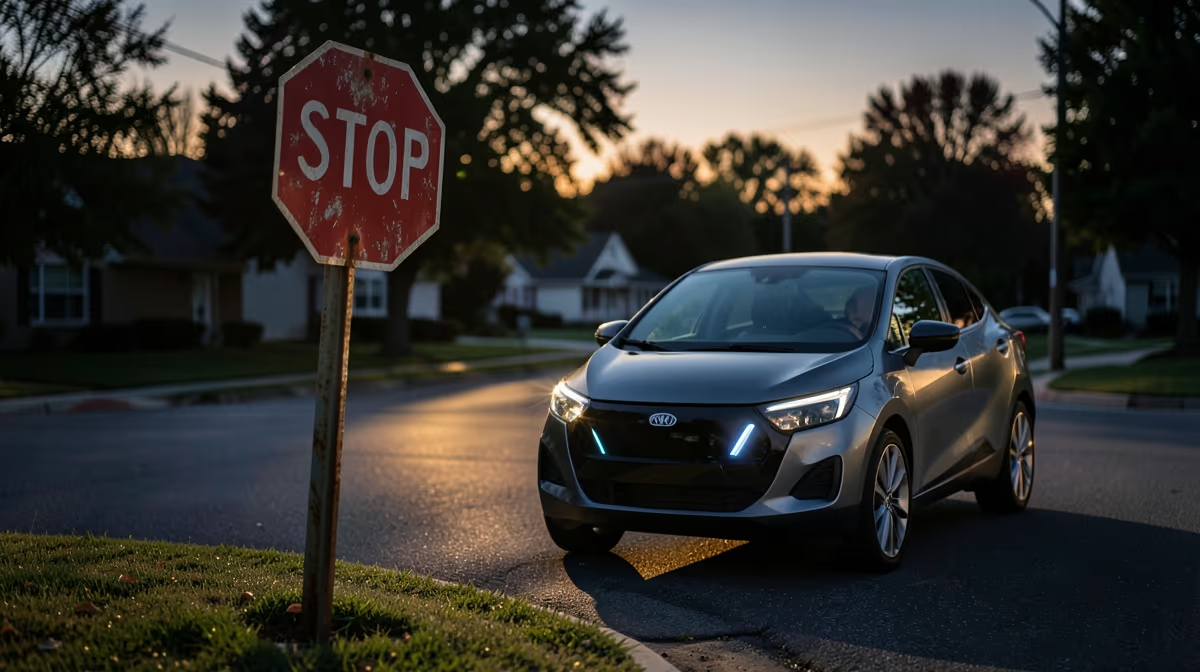
Recent studies reveal alarming AI vision vulnerabilities that threaten the safety of self-driving vehicles worldwide. Faded and weathered roadside infrastructure can easily disrupt complex neural networks, proving that software trained in pristine test environments still struggles with the messy realities of the physical world.
The Nature of Computer Vision Failures
Autonomous-driving systems rely heavily on advanced AI vision to interpret road signs, pavement markings, and environmental obstacles in real-time. However, new insights highlight that environmental degradation, such as weathered or worn-out traffic signs, can cause these complex neural networks to misinterpret critical driving cues. Because autonomous vehicles depend on the accuracy of these visual inputs to make split-second driving decisions, degraded infrastructure poses an unexpected hazard to vehicle safety. Industry experts and researchers continue to evaluate how well current computer vision algorithms can adapt to imperfect, real-world conditions rather than pristine test track environments. Addressing these sensor and software vulnerabilities remains a crucial engineering challenge as manufacturers push to deploy fully autonomous fleets onto public roads.
How Weathered Road Signs Bypass Machine Learning
Recent findings highlight a surprising vulnerability in autonomous vehicles, showing that worn or faded traffic signs can easily trick their artificial intelligence vision systems. While humans can usually figure out what a weathered stop or speed limit sign means, AI relies heavily on patterns and clarity to make split-second driving decisions. When these visual cues are degraded by weather, dirt, or age, the computer systems inside self-driving cars can misread them entirely. This exposes a major safety gap in current autonomous driving technology, proving that software trained in ideal conditions still struggles with the messy realities of the physical world.
- Worn traffic signs can fool AI vision systems used in autonomous vehicles
- The issue exposes critical risks and safety gaps in current self-driving technology
- AI systems rely heavily on clear visual patterns rather than human intuition to interpret road signs
- Weather, dirt, and aging infrastructure contribute to the degradation of traffic signs on public roads
- Tech Xplore reported on how these visual vulnerabilities impact autonomous-driving systems
Core Vulnerabilities and Infrastructure Challenges
The reliance of autonomous-driving AI vision systems on visual pattern recognition rather than robust contextual and multi-sensor validation leaves them vulnerable to degraded infrastructure. Municipalities and transportation authorities face mounting pressure and liability questions regarding infrastructure maintenance standards as autonomous vehicle testing expands. Automakers and technology developers face rising costs and potential delays as engineering teams are forced to account for unpredictable real-world physical degradation in safety-critical systems. Global standardization bodies and regulatory agencies may diverge in how they mandate sensor redundancy versus pure AI vision approaches for autonomous transport. Adversarial exploitation of worn or altered infrastructure could emerge as a low-cost vector for disrupting automated transport networks, paralleling the early transition from analog to digital navigation in aviation where sensor calibration errors and physical obstruction created unexpected vulnerabilities.
The Urgent Need for Robust Autonomous Driving Security
As companies push to put more self-driving cars on public roads, safety is the ultimate priority. If AI systems cannot reliably interpret basic road signs just because they are weathered or old, it creates serious risks for passengers, pedestrians, and other drivers sharing the road. Autonomous vehicle developers, transportation safety regulators, everyday drivers, and pedestrians sharing public roads are all directly affected by these technological blind spots.
Worn traffic signs expose critical autonomous driving risks in modern self-driving vehicle systems.
Near-Term Outlook and Industry Reactions
Discussions and initial industry reactions regarding the vulnerability of AI vision systems to worn traffic signs will likely circulate among technology and automotive analysts over the next twenty-four hours. Further technical scrutiny and debates regarding autonomous driving risks and the reliability of AI computer vision in real-world conditions are expected to gain attention within seventy-two hours. Key players navigating these challenges include autonomous vehicle developers, AI vision system engineers, and transportation safety regulators across impact areas covering autonomous driving safety, AI computer vision technology, and transportation infrastructure. Industry analysts expect an increased focus on how autonomous-driving software handles degraded or worn physical infrastructure, potentially prompting calls for more robust edge-case testing. In the best-case scenario, automakers and tech developers proactively update their computer vision models to account for worn signage, improving overall autonomous vehicle safety without major regulatory backlash. Conversely, the worst-case scenario involves severe vulnerabilities in AI vision processing leading to increased safety concerns and heightened regulatory scrutiny over the deployment of autonomous-driving systems on public roads.
Frequently Asked Questions
How do worn traffic signs fool AI vision systems in autonomous vehicles?
Worn, faded, or damaged traffic signs can be misinterpreted by artificial intelligence algorithms used in self-driving cars. Because these vision systems rely heavily on pattern recognition and clear visual cues, degradation on the surface of a sign can lead to critical misclassifications.
Why are autonomous-driving risks exposed by degraded street signs?
This vulnerability highlights a significant gap in how machine learning models process real-world imperfections compared to human drivers. While humans can easily contextually deduce what a weathered sign represents, AI models may fail entirely or make dangerous driving decisions based on flawed visual data.
Who is affected by AI misinterpretations of worn traffic signs?
Autonomous vehicle developers, transportation departments, and everyday motorists share the risks associated with these technological blind spots. As self-driving technology aims for broader deployment, ensuring that infrastructure is universally readable by machines becomes a pressing safety concern.
What happens next for autonomous vehicle developers addressing sign recognition flaws?
Automakers and tech firms are expected to refine their computer vision algorithms and incorporate redundant sensor modalities, such as high-definition mapping and LiDAR. Improving the robustness of AI models against visual degradation is essential before achieving widespread commercial autonomy.
What is the background behind AI vision vulnerabilities in self-driving cars?
Autonomous driving systems depend on cameras and deep learning frameworks to interpret road signs, lane markings, and traffic signals in real-time. Historically, training datasets often utilize pristine, ideal sign conditions, leaving neural networks ill-equipped to handle real-world wear and tear effectively.
What specific detail do researchers emphasize regarding faulty AI traffic sign detection?
Researchers point out that even minor surface blemishes or environmental weathering can drastically alter a neural network's confidence score. This creates a scenario where an autonomous vehicle might completely miss a critical regulatory cue like a speed limit or stop sign.
Conclusion
Recent findings confirm that worn traffic signs present recognition challenges for AI vision systems used in autonomous driving, exposing critical safety gaps. While developers continue to evaluate how well current computer vision algorithms adapt to imperfect real-world conditions, technical scrutiny from analysts and regulators remains high. Future developments will depend on how engineering teams modify algorithms and incorporate redundant sensor modalities to reliably handle weathered roadside infrastructure.
Sources
- Worn traffic signs fool AI vision systems, exposing autonomous-driving risks — Tech Xplore
- Motley Fool raises $25M from Bia Digital Partners and Patriot Capital — eciks.org
- RTX's $289 Billion Backlog, Explained — The Motley Fool
- Adobe: A Deep-Value Opportunity or an AI Disruption Trap? — The Globe and Mail
- Dimensional's David Booth Says Chasing AI Winners Is a Fool's Game, Even as Nvidia Defies the Odds — finance.biggo.com
- Don't let this resort stock's chart fool you, cheap call options could be an underrated opportunity — CNBC


