
Amazon Cargo Plane Crash at Miami Airport Sparks Major Safety Inquiry
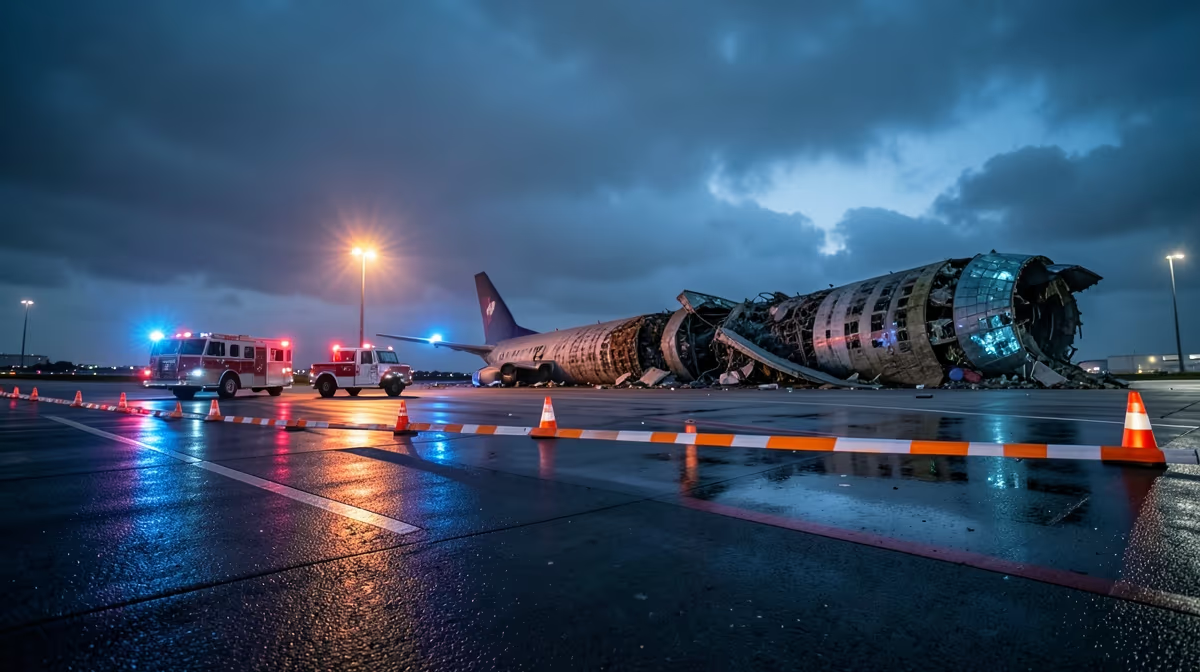
A standard evening of operations at Miami International Airport was shattered when a massive cargo flight veered violently off course, turning a routine transport run into a fatal disaster. The sudden, violent end to the flight has sent shockwaves through the aviation community, forcing immediate questions about how a modern logistics giant could suffer such a catastrophic failure. An Amazon cargo plane crashes at Miami airport, triggering immediate emergency responses and launching a comprehensive federal aviation investigation into the freight carrier's operations. The incident, which involved an Amazon Prime Air cargo flight, resulted in at least five confirmed fatalities, instantly drawing intense global attention to the rapid expansion and safety practices of corporate-owned logistics fleets.
The fatal runway excursion at Miami International Airport has thrust the safety protocols of Amazon Prime Air and its outsourced third-party carriers into the regulatory spotlight.
Timeline of the Miami airport cargo incident
The devastating crash unfolded on Sunday, September 6, 2026, when an Amazon cargo plane barreled off the runway at Miami International Airport. Within minutes of the runway excursion, emergency services responded to the scene, facing the arduous task of managing the immediate aftermath of a highly destructive freight aircraft incident. Initial reports from major global news organizations, including Reuters, The Guardian, and Al Jazeera, confirmed that at least five individuals lost their lives in the accident.
As emergency responders secured the crash site, international media outlets such as France 24, Politico, and Sky News began broadcasting the first cargo flight emergency response updates, detailing the scale of the tragedy at one of the nation's busiest transit hubs. The latest updates on Miami airport aviation incident indicate that recovery efforts are transitioning into a structured, multi-agency federal inquiry as municipal teams secure the wreckage.
Federal aviation authorities launch safety investigation
Following the initial rescue and recovery efforts, the National Transportation Safety Board and the Federal Aviation Administration launched a coordinated probe into the runway disaster. The immediate next 24 hours are focused on emergency response operations and establishing the groundwork for the NTSB's investigation at Miami International Airport. Over the next 72 hours, authorities expect to transition into the recovery phase, which involves clearing the affected runway and recovering the critical flight data recorders.
Analyzing Flight Telemetry and Maintenance Records
To determine what caused the Amazon cargo plane crash, federal investigators are scheduled to review a broad spectrum of potential factors. This comprehensive process will examine weather conditions at the time of landing, potential mechanical failures, and air traffic control records. Investigators will meticulously check the airline's maintenance history to verify if any pre-existing technical issues contributed to the aircraft veering off the runway. Additionally, safety experts will examine the active runway safety protocol executed by ground control and the flight crew during the landing sequence.
- Flight data recorder and cockpit voice recorder analysis
- Structural and engine maintenance logs of the contracted airframe
- Airport weather data, wind velocity, and visibility parameters
- Air traffic control recordings and runway safety protocol adherence
The Shifting Regulatory and Political Landscape
The fatal accident has immediately catalyzed a political discussion regarding the rapidly expanding logistics networks of major retail and technology corporations. Federal regulators face mounting pressure to enforce stricter oversight on corporate-owned fleets. While commercial passenger airlines operate under intense regulatory supervision, the rapid growth of e-commerce delivery networks has occasionally outpaced traditional oversight frameworks.
Subcontractor Safety Under the Spotlight
A critical, though often hidden, angle of this incident is the operational structure of Amazon Prime Air. Although the cargo flights operate under the prominent Amazon Prime Air brand, the actual flights are typically operated by third-party partner carriers. This arrangement is expected to spark rigorous labor and safety audits across outsourced subcontracting airlines. Legislators are likely to focus on whether third-party cargo operators are held to the same safety, maintenance, and training standards as legacy commercial carriers, potentially bringing subcontractor business models into the legislative spotlight.
Economic Fallout and Supply Chain Vulnerabilities
Beyond the immediate regulatory scrutiny, the crash has created significant economic and operational bottlenecks. Miami International Airport serves as a vital global gateway, acting as a critical transshipment point connecting North America with Latin America and the Caribbean. Disruptions to cargo operations at such a major hub carry massive logistical consequences, threatening to delay supply chains across multiple regions.
The Cost of Operational Disruptions
For Amazon, the accident represents potential financial and reputational liabilities during a period of aggressive logistics expansion. The sudden disruption of regional logistics at Miami airport forces shipping networks to reroute cargo, escalating operational costs and highlighting the vulnerabilities of hyper-fast global supply chains.
| Scenario Type | Expected Operational and Logistical Outcome |
|---|---|
| Best-Case Scenario | Quick retrieval of black boxes, identification of the cause without triggering widespread fleet groundings, and minimal disruption to broader air cargo networks. |
| Worst-Case Scenario | Discovery of systemic safety or mechanical failures leading to extended grounding of the cargo fleet and intense public scrutiny over Amazon's logistics operations. |
Historical Parallels in Cargo Aviation
The industry response to the tragedy draws direct comparisons to past cargo and commercial aviation accidents involving major logistics providers. Historically, major freight carrier crashes have served as catalysts for sweeping safety overhauls. Prior incidents involving rapid-delivery cargo fleets prompted federal authorities to redesign runway safety areas and implement more stringent flight crew rest and training requirements. Industry analysts note that this crash will likely lead to similar industry-wide modifications, especially regarding runway safety protocols at major international airports.
Aviation Safety Concerns and Industry Consensus
The broader aviation community is expressing deep concern over the incident. Analysts and logistics experts expect heightened scrutiny on cargo airline maintenance procedures, runway safety protocols at major hubs, and potential temporary disruptions to regional logistics.
This incident involves a major e-commerce shipping fleet and results in a tragic loss of life, raising immediate safety questions about cargo flight operations at major international airports.
The Amazon Prime Air safety record after accident investigations will corporate trust and partnership dynamics. As the NTSB and FAA piece together the final moments of the flight, the logistics industry must prepare for a future defined by stricter regulatory compliance and intense public scrutiny over aviation safety concerns at Miami international.
Frequently Asked Questions
What happened during the Amazon cargo plane crash at Miami airport?
An Amazon Prime Air cargo plane barreled off the runway at Miami International Airport, resulting in a fatal accident. Multiple major news outlets confirmed that the incident caused severe disruption and tragic loss of life at the facility.
How many people died in the Miami airport Amazon plane crash?
At least five people were killed in the devastating crash involving the Amazon cargo plane. Emergency response teams rushed to the scene as initial casualty reports emerged from international news sources.
Why does this cargo plane crash matter for Amazon's logistics network?
The incident raises critical safety and operational questions regarding Amazon's rapidly expanding Prime Air cargo network. Because the company relies heavily on fast freight transit, any major accident involving its contracted cargo fleet draws intense regulatory and public scrutiny.
Who is affected by the recent tragedy at Miami airport?
The families and colleagues of the victims are directly impacted by the loss of life resulting from the plane crash. Additionally, airport operations and regional supply chain schedules experienced immediate disruptions following the runway disaster.
What happens next following the fatal plane crash in Miami?
Federal aviation authorities and safety investigators will launch comprehensive inquiries to determine the exact cause of the runway excursion. Investigations typically review flight data recorders, maintenance records, and weather conditions at the time of the incident.
Which airline or carrier was operating the Amazon Prime Air flight?
While the flight was operating under the Amazon Prime Air brand, major cargo services are typically flown by partner airlines on behalf of Amazon. Detailed reports from news agencies continue to update specifics regarding the exact aircraft and operational partners involved.
Conclusion
The tragic runway excursion at Miami International Airport, which resulted in the confirmed deaths of at least five individuals, represents a watershed moment for corporate logistics and aviation safety. In the immediate term, recovery efforts and NTSB investigations will focus on securing flight data recorders to isolate the root cause of the crash. As regulators and industry experts analyze the findings, the incident is expected to usher in heightened scrutiny over subcontractor safety standards and runway protocols, leaving a lasting impact on how global e-commerce supply chains manage their rapid transit operations.
Sources
- At least five dead after Amazon cargo plane crashes at Miami airport — The Guardian
- At least five killed after Amazon cargo plane crash in Miami airport — Al Jazeera
- At least 5 killed in Amazon Prime Air cargo plane crash in Miami — Reuters
- Amazon cargo plane crashes at Miami airport, killing at least five — France 24
- At least 5 dead after Amazon plane barreled off runway at Miami airport — Politico
- At least five dead in Amazon plane crash — news.sky.com


