
Anak Krakatau Volcano Eruption Triggers Major Flight Cancellations
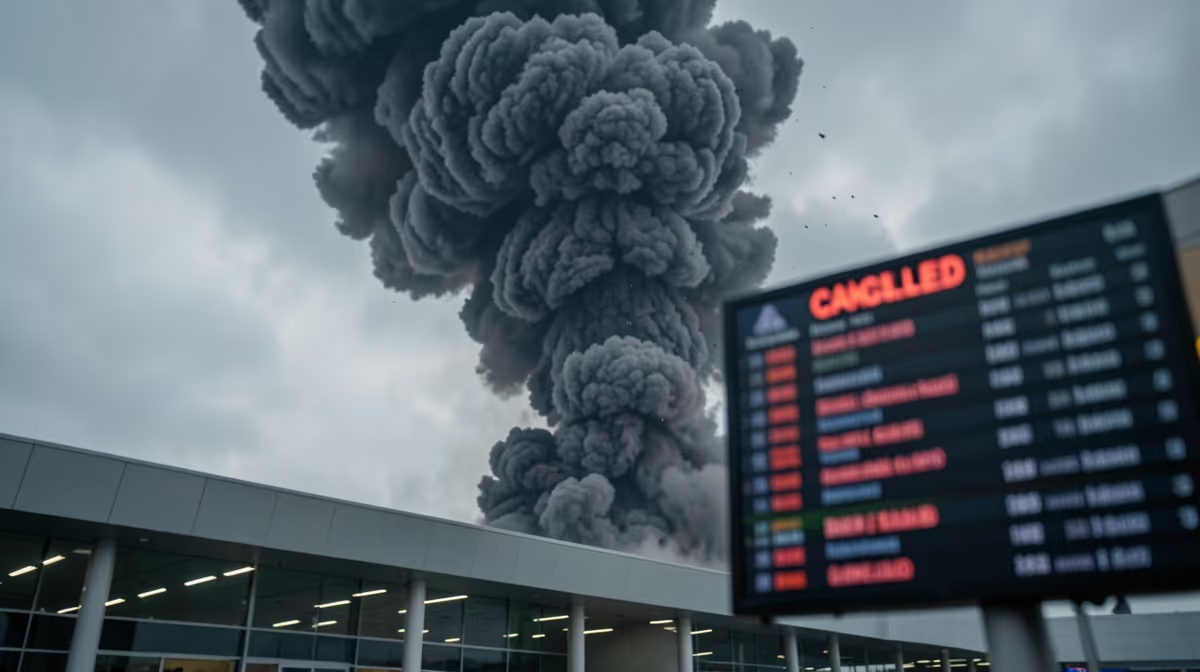
When the earth beneath the Sunda Strait violently fractures, the repercussions are felt instantly miles above in the international flight corridors of Southeast Asia. Recent seismic activity and the latest Anak Krakatau volcano eruption flight cancellations have left many passengers stranded across the region as aviation authorities issue strict safety warnings. Suspended flight operations and thick columns of ash drifting across major transit paths have turned this geological event into a major logistical challenge. For global travelers, the sudden grounding of aircraft serves as a stark reminder of the volatile forces shaping the Indonesian archipelago.
Aviation operations across Southeast Asia remain severely compromised as geological agencies track multiple simultaneous volcanic eruptions, prioritizing passenger safety over transport logistics.
Sunda Strait Unrest and the Aviation Standstill
This suspension has now impacted six regional airports across Indonesia. Air travel and flight schedules have been thrown into disarray, leaving thousands of passengers waiting for critical Jakarta flight schedule updates. Aviation regulators and airport operators are working to manage the backlog, though safe departures remain entirely dependent on weather patterns.
Evaluating the Airport Closures
The Science of Volcanic Ash and Aviation Safety
When an aircraft flies through an active plume, these particles are sucked directly into the jet engines, where the intense heat melts them. This liquid glass adheres to the turbine blades, blocking fuel nozzles and restricting the essential airflow required to keep the engine running safely.
Volcanic ash is extremely abrasive and can cause jet engines to stall or fail completely, making flight cancellations a necessary precaution during eruptions.
Consequently, the international aviation community treats any significant ash plume as an absolute barrier to flight. This aviation safety hazard is managed through structured protocols:
- Generation of a formal volcanic ash advisory by regional monitoring centers.
- Direct communications to issue real-time airspace closures.
- Implementation of strict safety clearances before commercial carriers can resume operations.
A Synchronized Tectonic Event Across the Archipelago
Among the most severe developments is the activity at Mount Dukono, where explosive eruptions have had tragic human consequences. Authorities have confirmed that three people were killed during the Mount Dukono volcanic eruption, highlighting the physical danger posed to surrounding communities. Simultaneously, Mount Ili has also erupted, adding to the cumulative volume of airborne ash.
| Volcano Name | Key Activity & Impact | Affected Sectors |
|---|---|---|
| Anak Krakatau | Severe explosive eruptions; massive ash plumes | Flight paths, six regional airports, Jakarta transit routes |
| Mount Dukono | High-intensity eruption; three confirmed fatalities | Local populations, regional hazard zones |
| Mount Ili | Explosive activity and significant ash emission | Regional airspace, local communities |
The concurrent eruptions highlight the intense geological forces operating beneath the Indonesian islands, creating a complex web of hazards for transport coordinators.
Ring of Fire Seismology and Root Causes
This subduction zone, which runs directly through the Sunda Strait, subjects the earth's crust to immense heat and pressure. Over time, tectonic stress accumulates along these plate boundaries. When this pressure is released, it can trigger simultaneous magma movement in multiple volcanic systems across the archipelago. This deep-seated geological alignment explains why volcanoes separated by hundreds of kilometers—such as Anak Krakatau, Mount Ili, and Mount Dukono—can experience heightened activity within the same short window.
The Evolution of Anak Krakatau
Because Anak Krakatau sits directly atop this highly active historical caldera, it remains one of the most closely monitored volcanic sites on Earth. Its geological inheritance means that any escalation in its activity immediately triggers high-alert status from international seismologists, who understand the profound capacity for rapid escalation inherent in the Sunda Strait subduction zone.
Socio-Economic Impacts and Geopolitical Ripple Effects
- Transport and Aviation: Airlines face short-term financial losses due to grounded fleets, re-routing expenses, and missed schedule windows.
- Tourism and Commerce: Widespread travel disruptions discourage international tourism and delay business travel, impacting local services.
- Global Supply Chains: Air freight networks relying on Jakarta experience immediate bottlenecks, delaying the delivery of high-value goods.
Politically, authorities face mounting pressure to balance public safety with vital economic operations. Reopening airspace too quickly risks a catastrophic aviation incident, while keeping airports closed worsens the regional economic slowdown. This delicate balancing act is further complicated by the ongoing Mount Dukono activity alerts, which demand constant attention from emergency response agencies.
Predicting the Next Phases of the Crisis
Over the next 24 hours, authorities will continue to monitor volcanic activity from Anak Krakatau and other erupting Indonesian volcanoes. The current priority is maintaining flight cancellations and airport closures to ensure absolute aviation safety while the ash plumes remain concentrated near established flight paths.
Over the next 72 hours, aviation authorities and regional airports will evaluate ash dispersion and seismic stability to determine if flight operations can safely resume. If wind patterns shift the ash clouds away from transit corridors and seismic tremors decrease, operators may begin a phased reopening of select facilities.
Potential Scenarios and Expert Analysis
Frequently Asked Questions
Why were flights canceled in Indonesia recently?
Flights at Jakarta and surrounding airports were canceled following a significant eruption of the Anak Krakatau volcano. Volcanic ash and debris forced aviation authorities to halt operations to ensure passenger and aircraft safety.
Which volcano erupted alongside Anak Krakatau?
Reports indicate that multiple volcanic activities occurred simultaneously across Indonesia, with Mount Ili and Anak Krakatau exploding. Additionally, a separate eruption at Mount Dukono resulted in casualties.
How many Indonesian airports were closed due to the volcanic activity?
The eruption of Anak Krakatau led to the closure of six Indonesian airports. Major hubs, including those situated significant distances away, suspended operations due to hazardous ash clouds.
Who is affected by the Anak Krakatau eruption?
Travellers, tourists, and local residents are heavily affected by the ongoing flight cancellations and airport closures. Airlines have had to ground flights and reschedule routes to avoid the dangerous ash plumes drifting across the region.
What happens next for travelers stranded by the cancellations?
Passengers affected by the closures are advised to monitor updates directly from their airlines and airport authorities. Operations will resume only after safety assessments confirm that the airspace is clear of volcanic ash.
What is the background of Anak Krakatau's volcanic activity?
Anak Krakatau, which translates to the 'Child of Krakatoa', is a notoriously active volcano in Indonesia prone to sudden eruptions. Its strategic location near busy shipping lanes and air routes frequently causes widespread travel disruptions during major explosive phases.
Conclusion
The concurrent eruptions of Anak Krakatau, Mount Dukono, and Mount Ili present a major challenge to regional infrastructure and aviation safety within the Indonesian archipelago. With six airports closed, including flight suspensions at the main airport near Jakarta, transport networks remain frozen as they wait for safety clearances. Verified reports of three casualties at Mount Dukono underscore the serious physical hazards of this tectonic phase. Moving forward, the next steps involve close collaboration between geological agencies, airport operators, and airlines to monitor wind patterns. Flights will remain suspended until rigorous assessments confirm that the airspace is completely clear of hazardous volcanic ash.
Sources
- Indonesia cancels flights at Jakarta airport as Anak Krakatau volcano erupts — thehindu.com
- Indonesia SHOCKER! Six Volcanoes Erupt | Mount Ili, Anak Krakatau Explode | World News — Asianet Newsable
- Three killed in Mount Dukono volcanic eruption in Indonesia — News On AIR
- Anak Krakatau: Volcano eruption closes six Indonesian airports — BBC
- Volcano Erupts In Indonesia, Main Airport 150 km Away Suspends Ops — ndtv.com
- Indonesia: Flights canceled as Anak Krakatau volcano erupts — dw.com


