
Trump Birthright Citizenship Order Hits a Major Federal Roadblock
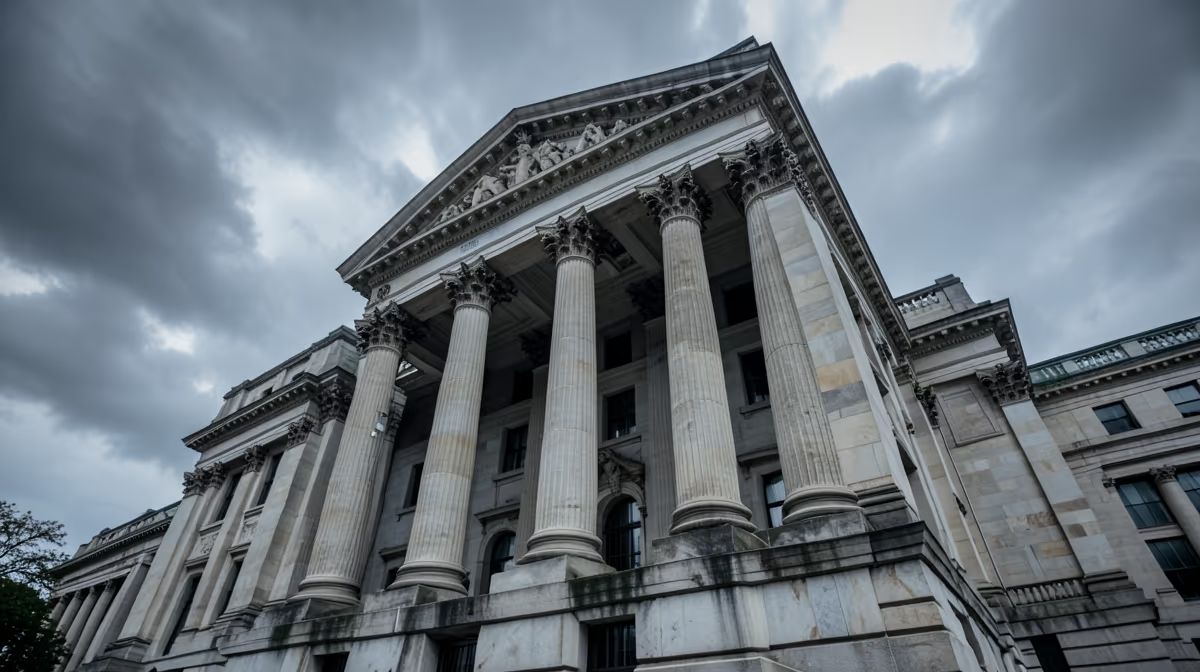
A federal judge has officially blocked the Trump birthright citizenship order, halting a controversial administration policy that sought to challenge the longstanding interpretation of the US Constitution. This decision marks a significant legal hurdle for the executive branch's immigration agenda, which has frequently relied on executive actions to reshape policies established by long-standing legal interpretations of the Constitution. Multiple major news outlets, including CBS News, Al Jazeera, The Hill, and The New York Times, reported on the judicial injunction that prevents the policy from taking effect while litigation proceeds in court.
Understanding the 14th Amendment Legal Challenge
The legal challenge centers on the administration's new executive actions or orders intended to narrow the application of birthright citizenship in the United States. Birthright citizenship in the United States is primarily rooted in the Citizenship Clause of the 14th Amendment, adopted in 1868, which states that all persons born or naturalized in the United States, and subject to the jurisdiction thereof, are citizens. Policies and executive orders attempting to restrict or redefine this interpretation routinely face intense constitutional scrutiny and legal challenges in federal courts.
The root cause of this ongoing battle stems from constitutional and ideological clashes over the scope of the Fourteenth Amendment regarding citizenship for children born on US soil to non-citizen parents. The executive branch seeks to fulfill core populist immigration platforms by challenging established constitutional interpretations, prompting swift legal pushback from judicial checks and balances. Legal challengers swiftly moved to stop the directive, arguing it directly violates the 14th Amendment of the U.S. Constitution.
Implications of the Federal Court Injunction
The recent ruling halts the policy from taking effect while the courts review its legality, marking another chapter in the ongoing legal battles over immigration and citizenship rights in America. This represents a continued legal effort by the administration to alter how citizenship at birth is granted. Legal uncertainty surrounding citizenship rights affects long-term workforce planning, state-level demographic projections, and public expenditure on social services and administrative litigation.
Furthermore, immigration policy shifts heavily influence the United States' international reputation regarding human rights, rule of law, and the global treatment of migrants and expatriates. The administrative burden and resource drain on lower federal courts tasked with repeatedly managing fast-tracked executive orders on immigration may force a premature Supreme Court showdown.
A federal judge has officially blocked the Trump administration's second attempt to restrict birthright citizenship, keeping current practices in place while constitutional litigation proceeds through the court system.
Key Facts of the Judicial Decision
- A federal judge has blocked the Trump administration's new order regarding birthright citizenship.
- The directive aimed to narrow or limit the traditional scope of birthright citizenship in the United States.
- Multiple major news outlets, including CBS News, Al Jazeera, and The New York Times, reported on the injunction.
- This represents a continued legal effort by the administration to alter how citizenship at birth is granted.
- The temporary block prevents the policy from going into effect while litigation proceeds in court.
Expectant parents, advocacy groups, legal scholars, and individuals navigating the U.S. immigration and citizenship system are directly interested in the outcome of these judicial decisions. Birthright citizenship is a foundational principle tied to the 14th Amendment of the U.S. Constitution. Decisions surrounding this policy impact constitutional interpretations, national immigration debates, and the legal rights of future generations born within the country.
Timeline of Administrative Actions
- Trump administration issues new executive order targeting birthright citizenship
- Federal judges and civil rights groups file swift legal challenges to block implementation
- Federal judge issues an injunction halting the administration's new birthright citizenship order
The timeline reflects prior executive and legislative battles over citizenship rights and constitutional interpretations during the post-Civil War reconstruction era and subsequent 20th-century immigration reforms. As the situation develops, legal teams on both sides will likely prepare detailed arguments for higher courts.
What Comes Next in the Courts
The Trump administration is expected to review the federal judge's ruling blocking the new birthright citizenship order and consider legal counter-strategies or immediate appeals. Over the next 72 hours, legal teams on both sides will likely prepare detailed arguments for higher courts, setting the stage for an extended legal battle over the limits of executive power regarding birthright citizenship.
Analysts would likely expect the administration to quickly escalate the matter to appellate courts, continuing a recurring pattern of executive actions clashing with federal judiciary blocks. The best-case scenario involves a swift and orderly judicial review process that clarifies constitutional boundaries on birthright citizenship without causing widespread administrative disruption. Conversely, the worst-case scenario entails prolonged legal uncertainty, intensified political polarization, and immediate administrative confusion regarding immigration enforcement and citizenship protocols.
Conclusion
A federal judge has officially blocked the Trump administration's recent attempt to restrict birthright citizenship, marking the administration's second effort to narrow the application of the 14th Amendment. Verified reports confirm that the judicial injunction halts the implementation of the policy while litigation proceeds through the court system. Key players including the Trump administration, the Department of Justice, and federal judges are navigating ongoing constitutional questions regarding executive power and immigration policy. As the Department of Justice evaluates potential appeals and higher courts prepare for further legal scrutiny, current birthright citizenship practices remain in place while the legal challenges continue.
Sources
- Judge blocks Trump's latest effort to narrow birthright citizenship — CBS News
- US judge blocks Trump’s latest effort to limit birthright citizenship — Al Jazeera
- Federal judge blocks Trump’s new birthright citizenship order — The Hill
- Judge blocks Trump’s new bid to curb birthright citizenship — WEAU
- Judge Blocks Trump’s Second Try to Restrict Birthright Citizenship — The New York Times
- US Federal judge blocks Trump administration's new birthright citizenship order — WION


