
Iran Drone Seizure in Strait of Hormuz Sparks Global Security Crisis
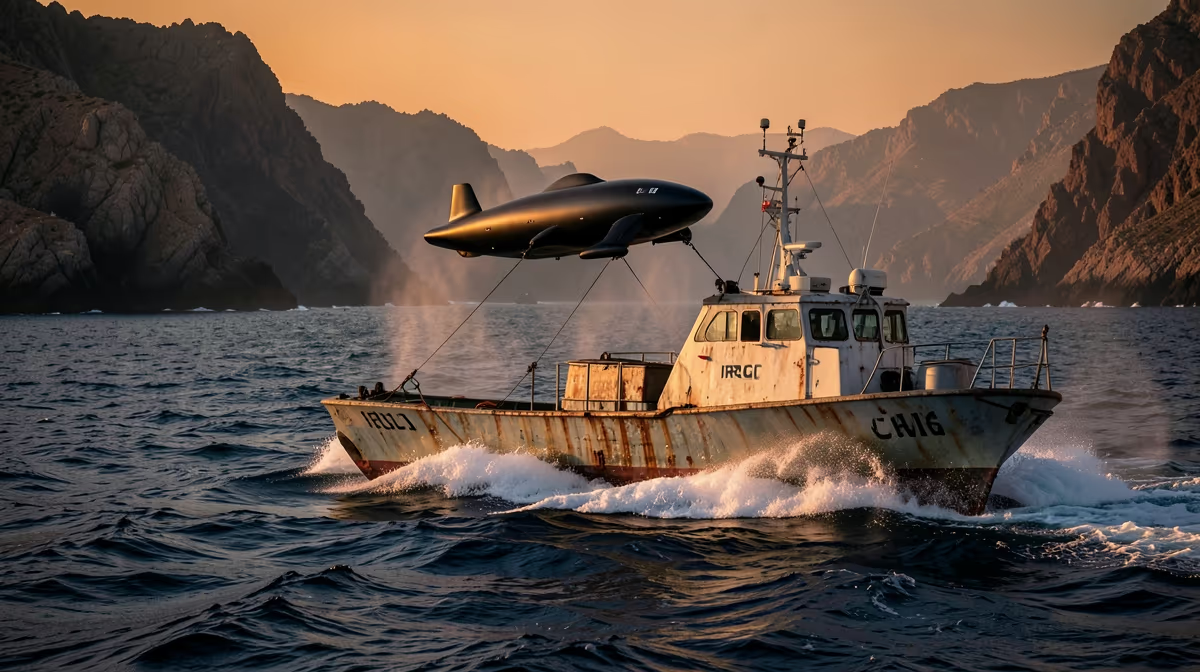
A silent mechanical failure beneath the waves of the world’s most critical maritime chokepoint has triggered a high-stakes geopolitical standoff between Washington and Tehran. The recovery of an unmanned undersea asset has once again turned a narrow strip of water into a dangerous theater of military posturing and strategic messaging. Recent geopolitical developments have heightened regional anxiety following the Iran drone seizure Strait of Hormuz incident, exposing the fragile nature of the Middle East maritime security crisis. The unfolding situation forces international observers to look closely at why did iran seize american drone hardware and how the U.S. military will navigate this delicate confrontation.
The incident in the Strait of Hormuz highlights the growing prominence of unmanned underwater systems in modern naval warfare and the acute risk of sensitive military technologies falling into foreign hands during mechanical malfunctions.
The Incident in the Strait of Hormuz
The United States military, however, has presented a different account of the event. U.S. Central Command publicly downplayed the significance of the IRGC's actions, asserting that the unmanned submersible was not intercepted during active operations but had instead suffered a technical malfunction prior to being retrieved by Iranian forces. According to American defense officials, the drone had become disabled and was drifting due to a mechanical failure. This technical failure allowed Iranian forces to locate and recover the asset, which they subsequently framed as a tactical capture rather than a simple salvage operation.
Conflicting Narratives and Strategic Posturing
Conversely, the United States military has focused heavily on de-escalation by characterizing the event as a routine equipment failure. By insisting that the drone malfunctioned, U.S. Central Command avoids having to frame the capture as a hostile act of aggression that would legally or politically necessitate a direct military response. This framing allows Washington to manage the crisis through standard operational channels rather than facing domestic pressure to initiate a retaliatory military action. The U.S. approach aims to prevent the incident from spiraling into a broader Persian Gulf military escalation, preserving the operational status quo while downplaying the strategic value of the lost equipment.
Geopolitical and Technical Implications
Beyond legal debates, intelligence agencies are focused on the technological risks of the capture, particularly the potential reverse-engineering of advanced acoustic and sensor payloads.
There is deep concern that Iranian engineers, potentially aided by allied foreign technicians, will attempt to achieve a technological breakthrough by initiating the reverse-engineering of these sensitive components, potentially compromising proprietary U.S. underwater detection capabilities.
Historically, this incident mirrors the 2016 capture of an underwater U.S. Navy drone by a Chinese naval vessel in the South China Sea, which was eventually returned following quiet diplomatic negotiations. Whether the current persian gulf tensions after drone capture will yield a similar resolution remains a critical question for defense analysts tracking Middle Eastern military developments.
Timeline of the Maritime Encounter
| Operational Phase | Event Description | Principal Entities Involved |
|---|---|---|
| Malfunction | An advanced U.S. Navy drone suffers a disabling mechanical failure. | United States Military |
| Interception | The IRGC locates, retrieves, and takes custody of the drifting drone. | Islamic Revolutionary Guard Corps (IRGC) |
| Disclosure | Iranian state media releases photos of the captured submarine drone. | Iranian State Media |
| Response | U.S. Central Command attributes the loss to a technical malfunction. | U.S. Central Command |
| Monitoring | Observers and planners assess the status of the vessel and retrieval options. | International Analysts |
Regional and Global Economic Impact
In addition to energy market volatility, the incident directly affects the commercial shipping sector operating within the Persian Gulf. Increased naval posturing and the potential for retaliatory actions raise the overall risk profile of the region. This heightened risk often translates into increased maritime insurance premiums for commercial tankers and cargo vessels transiting the Strait. The threat of escalation forces international shipping companies to weigh the costs of enhanced security measures against the stability of their transit routes, highlighting how localized military incidents can quickly ripple through the global economy.
Future Outlook and Security Scenarios
Analysts expect both Washington and Tehran to manage the incident carefully to prevent an unintended military escalation. Under a best-case scenario, the incident is treated as a routine technical malfunction and minor naval dispute, leading to quiet diplomatic engagement and the return of the equipment. In contrast, the worst-case scenario involves the seizure amplifying regional tensions, prompting increased naval posturing, retaliatory actions, and heightened operational risks for all shipping in the Strait of Hormuz.
Frequently Asked Questions
What happened regarding the American drone in the Strait of Hormuz?
Iran claimed to have seized an advanced U.S. underwater drone in the Strait of Hormuz, releasing pictures of the captured vessel. However, the U.S. military downplayed the incident, stating that the unmanned sub had simply malfunctioned.
Why does the seizure of the drone matter?
The incident highlights ongoing geopolitical tensions between the United States and Iran in a critical global shipping lane. Capturing advanced military hardware raises concerns over sensitive defense technology falling into foreign hands.
Who is affected by the tensions in the Strait of Hormuz?
International shipping lanes, global oil supplies, and regional security are directly impacted by military friction in the Strait of Hormuz. Both the U.S. and Iranian armed forces are closely affected by the operational security risks in these contested waters.
What happens next following the drone capture?
The U.S. military will likely review its procedures for recovering malfunctioning or lost autonomous marine assets in volatile regions. Diplomatic and military channels may also address the return of the equipment or further prevent similar standoffs.
What is the background of US drone operations in the region?
The United States frequently deploys unmanned surface and underwater vessels for surveillance and intelligence gathering in Middle Eastern waters. The Strait of Hormuz is a particularly strategic and heavily monitored chokepoint connecting the Persian Gulf to the Gulf of Oman.
Did the US confirm the drone was captured by force?
No, U.S. Central Command maintained that the drone had malfunctioned rather than being actively captured by hostile enemy action. Despite Iran releasing photos of the seized submarine, the U.S. minimized the significance of the event.
Conclusion
The incident in the Strait of Hormuz involving the capture of an advanced U.S. underwater drone serves as a stark reminder of the volatile nature of the Persian Gulf security landscape. While Iran’s Islamic Revolutionary Guard Corps has utilized the event to project maritime strength and deterrence, the United States has focused on a narrative of mechanical malfunction to keep escalation risks low. The coming days will be critical as diplomatic and military assessments determine whether this event will follow historical parallels of quiet resolution or trigger broader operational frictions in one of the world's most vital energy corridors.
Sources
- Iran claims to have seized American drone US says had ‘malfunctioned’ — The Guardian
- U.S. downplays Iran's seizure of unmanned sub in Hormuz Strait — cnbc.com
- Iran releases first pics of US submarine captured in Strait of Hormuz — AOL.com
- U.S. Central Command Says American Drone Captured by Iran ‘Malfunctioned’ — News of the United States - NOTUS
- IRGC says it captured advanced US underwater drone near Hormuz — Iran International
- Iran Says it Seized US Submarine Drone in Strait of Hormuz — Kurdistan24


