
Ministry of Defence Clears 1.10 Lakh Crore Package To Reshape Military Power
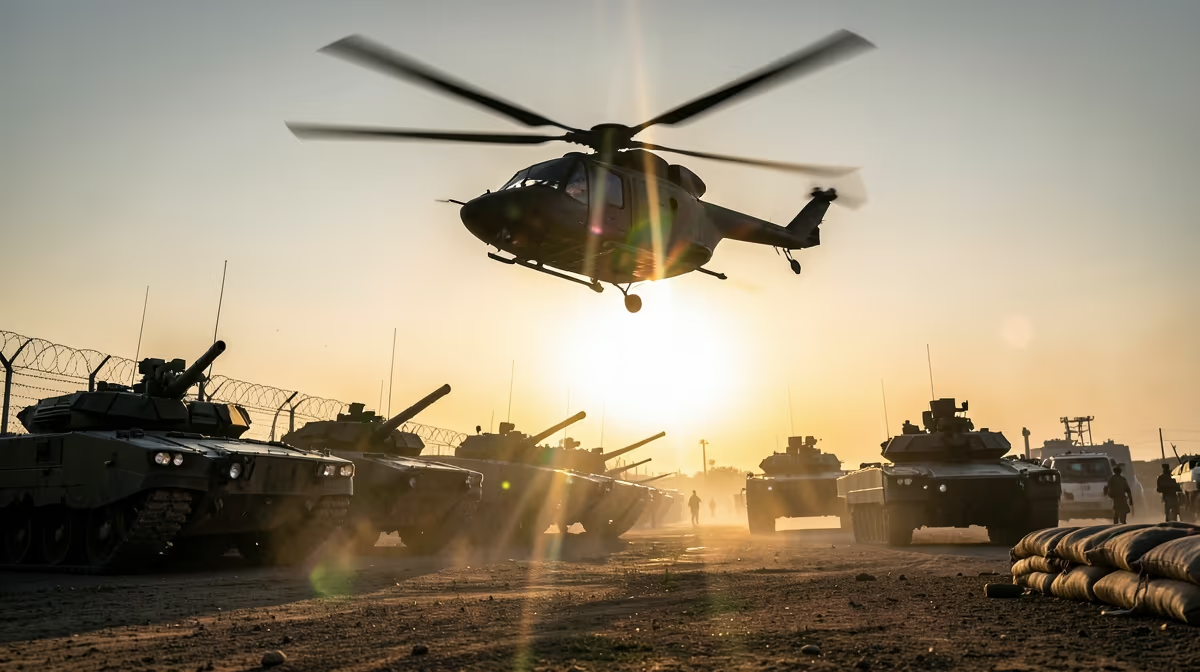
A quiet transformation is taking shape within the upper echelons of India's security architecture, driven by a massive capital injection destined to reshape regional deterrence. The scale of this modernization effort became clear when the government greenlit a sweeping plan to overhaul its land, air, and maritime combat systems.
The Ministry of Defence Rs 1.10 lakh crore approval marks a monumental step in bolstering the operational readiness of the Indian Armed Forces. By allocating these substantial funds across the services, the procurement framework directly addresses long-term capability gaps while steering the nation toward defense self-reliance. This capital clearance reflects a deliberate shift in how India prepares for contemporary defense challenges, ensuring its front-line assets match the realities of modern conflict landscapes.
The Rs 1.10 lakh crore capital acquisition plan marks a strategic turning point, balancing the urgent modernization needs of the Army, Navy, and Air Force with a deep commitment to domestic defense industrialization.
Key Highlights of the Rs 1.10 Lakh Crore Defense Acquisitions
The decision to clear acquisition proposals worth Rs 1.10 lakh crore represents a major financial commitment to national security, as reported by major outlets including Deccan Herald, Business Today, and India TV News in September 2026. The capital injection is meticulously structured to benefit all three operational wings of the military. Under the approved guidelines, the procurement strategy focuses heavily on advanced technologies, specialized vehicles, and enhanced aerial capabilities.
Key elements of the procurement include:
- Advanced helicopters designed for multi-role operational deployment across challenging terrains.
- Specialized mine-trawling tanks to facilitate secure ground movements in heavily defended or disputed zones.
- Modern electronic systems and high-tech defense hardware to upgrade legacy platforms.
This comprehensive procurement package is not merely a purchasing exercise but a structured effort to enhance tactical flexibility and situational awareness. By approving these proposals, the Defence Acquisition Council has cleared the path for the armed forces to initiate formal contracting processes, which will eventually transition these conceptual upgrades into active service platforms.
Impact on Army, Navy, and IAF Modernization Efforts
Modern warfare requires seamless coordination and high-tech capabilities across land, air, and sea domains. The newly approved capital acquisition plan is specifically tailored to meet these diverse needs, ensuring that each service branch receives specialized equipment to address its unique operational challenges.
For the Indian Army, the clearance of specialized trawl tanks is a critical development. These tanks are designed to clear minefields, ensuring safe passage for ground forces and armor during offensive operations. Additionally, the introduction of advanced helicopters will provide much-needed support for tactical transport, search and rescue, and reconnaissance missions, particularly in high-altitude border regions.
The Indian Navy and the Indian Air Force are also major beneficiaries of this defense package. By upgrading their respective fleets with modern systems and aircraft, the services can significantly improve their maritime surveillance, air defense, and deep-strike capabilities. This coordinated upgrade across the Army, Navy, and IAF ensures that the Indian military remains a highly capable and integrated fighting force, ready to respond to any security contingency.
Strategic and Economic Underpinnings of Procurement
Behind the massive financial commitment lies a calculated effort to reform the economics of defense procurement. The root cause of this major capital push is the urgent imperative to modernize aging military hardware while simultaneously bolstering indigenous defense manufacturing capabilities. This alignment is being pursued under the Atmanirbhar Bharat framework, which prioritizes domestic sourcing over reliance on foreign defense contractors.
The imperative to modernize aging hardware must align with the strategic goal of establishing a self-reliant defense manufacturing ecosystem.
From an economic perspective, the injection of Rs 1.10 lakh crore is expected to act as a significant catalyst for the domestic industrial base. By directing these massive contracts toward Indian firms, the government aims to stimulate high-tech manufacturing ecosystems, promote public-private partnerships, and generate skilled employment within the country. This approach not only secures India's defense supply chains but also helps establish a standardized, battle-tested baseline of indigenous platforms that could eventually support India's long-term defense export ambitions.
The Regional and Geopolitical Context of Modernization
The timing of this defense clearance is highly significant, occurring alongside major regional diplomatic and security developments. As India accelerates modernization across the Army, Navy, and Air Force, it signals a high level of strategic readiness and reinforces its regional deterrence posture amid evolving security dynamics in the Indo-Pacific.
This emphasis on regional engagement is underscored by Defence Minister Rajnath Singh’s upcoming three-day visit to Sri Lanka, which marks the first visit by an Indian Defence Minister to the island nation in 38 years. This high-profile diplomatic visit highlights India's ongoing efforts to build stronger security ties and foster maritime cooperation with its neighbors in the Indian Ocean region.
Additionally, to maintain complete operational transparency, the defense establishment has worked to clarify unrelated international trade developments. Recent media reports have explicitly distinguished official Defence Ministry transactions from independent commercial actions, clarifying that an Indian firm linked to an Estonian ammunition deal has no active dealings with the Indian Ministry of Defence. This distinction ensures that the Rs 1.10 lakh crore procurement package remains focused entirely on domestic capability building and authorized military upgrades.
Implementation Timeline and Risk Assessment
While the clearance of these capital proposals is a critical milestone, the transition from approval to active deployment involves a complex, multi-stage process. The overall lifecycle of these acquisitions can be understood through distinct phases of evaluation, clearance, and eventual deployment.
| Procurement Phase | Key Operational Focus | Primary Stakeholders Involved |
|---|---|---|
| Proposal Evaluation | Processing and tactical vetting of capability gaps | Service Headquarters, Defence Ministry |
| Council Clearance | Official approval of the Rs 1.10 lakh crore package | Defence Acquisition Council |
| Contracting & Tendering | Vendor negotiations and finalizing domestic terms | Public-Private Contractors, Procurement Wings |
| Deployment & Integration | Delivery and tactical training on new platforms | Indian Army, Navy, and Air Force |
Over the next 24 hours, further details regarding the specific financial allocation for the Army, Navy, and IAF are expected to emerge through official briefings. Within the next 72 hours, defense analysts and industry stakeholders will likely conduct a deep-dive review of the acquisition breakdown, focusing heavily on the technical specifications of the advanced helicopters and specialized trawl tanks.
According to expert predictions, the successful execution of this plan will depend on avoiding bureaucratic delays and supply chain bottlenecks, which represent the worst-case scenario for procurement timelines. In the best-case scenario, the smooth finalization of contracts will lead to the timely delivery of advanced hardware, significantly enhancing national security and defense readiness. This systematic approach draws historical parallels to the post-Kargil defense modernization overhaul of the early 2000s, which fundamentally reshaped India's long-term defense procurement strategy and acquisition timelines.
Frequently Asked Questions
What is the Defence Ministry's recent capital acquisition announcement?
The Indian Defence Ministry has cleared major capital acquisition proposals worth Rs 1.10 lakh crore. This substantial financial clearance aims to significantly boost the country's defense capabilities and military readiness.
Who will benefit from the Rs 1.10 lakh crore defence acquisition plan?
The acquisition plan is set to benefit multiple branches of the Indian military, including the Army, Navy, and Indian Air Force. These branches will receive critical upgrades and modern equipment to enhance their operational effectiveness.
What specific equipment and assets are included in the new defence proposals?
The cleared proposals include advanced military hardware such as advanced helicopters and mine-trawl tanks. These additions are designed to address specific strategic and tactical needs across the armed forces.
Why does this massive capital acquisition plan matter for India?
This acquisition plan represents a major step forward in India's ongoing efforts to modernize its armed forces and enhance national security. By investing heavily in domestic and foreign defense assets, India aims to maintain a strong deterrent posture in the region.
What happens next following the clearance of these defence proposals?
Following the initial clearance by the Defence Acquisition Council, the proposals will move forward into the contracting and procurement stages. The respective branches of the military will work toward integrating these new assets into their existing fleets and formations.
Are there any controversies or external connections linked to this approval?
While major procurement packages often draw public and media scrutiny, recent reports have clarified unrelated rumors, such as distinguishing independent commercial dealings from official defense ministry transactions. The current Rs 1.10 lakh crore package focuses strictly on authorized capital acquisitions for the Indian military.
Conclusion
The clearance of the Rs 1.10 lakh crore capital acquisition proposals marks a decisive moment in India's ongoing defense modernization journey. By addressing critical equipment needs across the Army, Navy, and Air Force—such as advanced helicopters and specialized trawl tanks—the Ministry of Defence is taking proactive steps to ensure the country's armed forces are fully prepared for future security challenges.
As the proposals transition from official clearance to active contracting, the focus will shift to execution, domestic manufacturing integration, and timely delivery. In an increasingly complex geopolitical environment, this significant financial investment serves as a clear statement of India's commitment to maintaining a robust regional deterrence posture while building a self-reliant national defense sector.
Sources
- Rajnath Singh set for 3-day Sri Lanka visit, first by an Indian Defence Minister in 38 years — The Hindu
- Indian Firm Linked To Estonia Ammunition Deal Has No Dealings With Defence Ministry — Deccan Chronicle
- Defence ministry clears capital acquisition proposals worth Rs 1.10 lakh crore — Deccan Herald
- India goes big on defence: Rs 1.10 lakh crore acquisition plan cleared. What Army, Navy, IAF will get — Business Today
- Advanced helicopters, trawl tanks and more: Defence ministry clears Rs 1.10 lakh crore acquisition proposals — India TV News
- Defence Minister Rajnath Singh to visit Sri Lanka next week — The Hans India


