
Russian Quieter Nuclear Submarines Are Creating A New NATO Defense Crisis
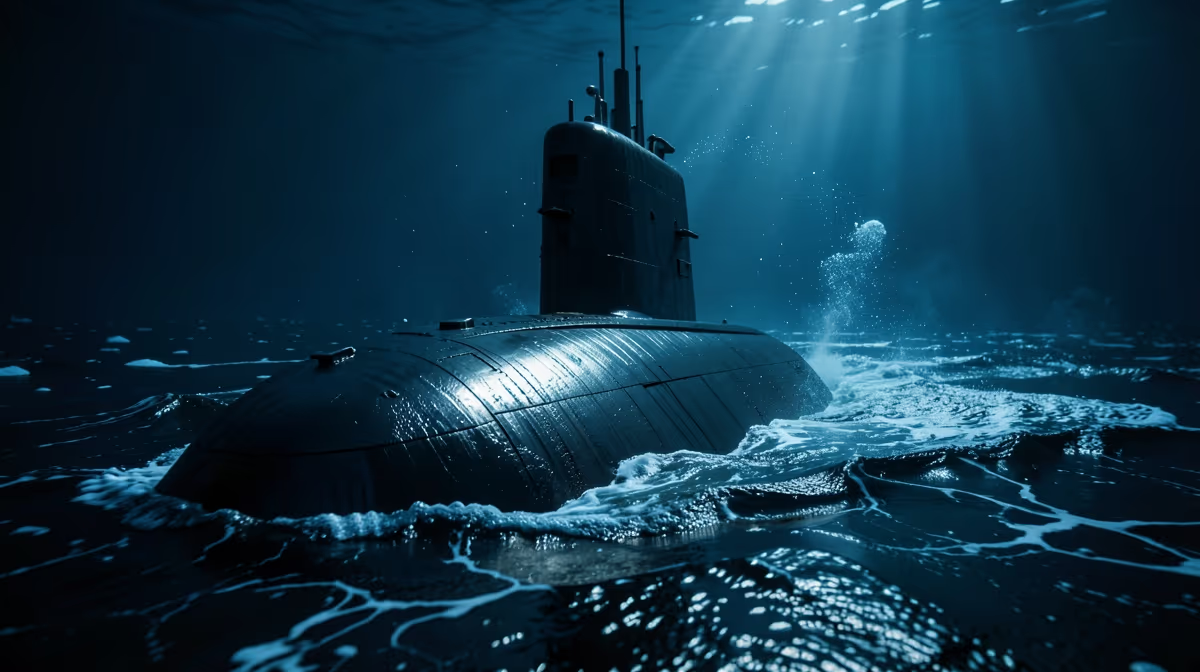
Deep beneath the frozen surface of the North Atlantic, a silent technological evolution is quietly shifting the global balance of power. While surface forces command public attention, the real struggle for strategic dominance is unfolding in the soundless depths where detection is the only line of defense. Recent intelligence reports highlighting Russia quieter nuclear submarines have sparked serious concerns among defense analysts worldwide. A former commander has warned that these advanced, highly silent vessels directly threaten NATO's maritime operations, exposing critical capability gaps in the alliance’s sub-surface naval threats detection network. Tracking these stealthier adversaries has become a primary security challenge.
The rapid quietening of Russian nuclear submarines, combined with severe shipyard maintenance backlogs among allied forces, is threatening NATO's traditional undersea dominance and forcing European allies to coordinate defenses independently.
The Silent Threat Beneath
The warnings issued by former military commanders highlight a growing technological disparity. For decades, Western powers maintained a comfortable lead in acoustic stealth, easily tracking adversarial movements through established maritime choke points. However, the ongoing technological evolution of Russian naval engineering has yielded quieter nuclear submarines that increasingly evade traditional detection grids. This development compromises the efficacy of established passive sonar tracking networks, rendering vast ocean corridors vulnerable to undetected movements. As Russian nuclear submarines deploy with higher degrees of acoustic stealth, the margin for error in allied maritime defense shrinks.
A Shifting Maritime Balance
This push for European defense autonomy comes at a time when allied assets are already stretched. To understand the current distribution of undersea capabilities and activities, it is useful to examine the operational status of key naval developments:
| Naval Asset or Operation | Strategic Implications | Operational Status |
|---|---|---|
| USS North Dakota (7,800-ton nuclear submarine) | Bolsters US Navy active deployment and deterrence | Returned to the active fleet |
| Kilo-class Submarines (Mediterranean) | Demonstrates cruise-missile capability by Africa's biggest military spender | Active regional deployment |
| 2,400-ton Submarine with Air-Independent Propulsion | Set to boost a key US ally's regional naval power | Nearing operational deployment |
| Allied Fleet Maintenance | Delays reduce overall vessel availability for continuous patrols | Chronic shipyard backlogs |
The deployment of Kilo-class submarines firing cruise missiles in the Mediterranean by Africa's biggest military spender underscores the growing proliferation of sub-surface naval threats outside of traditional northern arenas. Meanwhile, the addition of a 2,400-ton powerful submarine with air-independent propulsion is set to boost a U.S. ally's naval power, highlighting how regional partners are attempting to adapt to the shifting undersea equilibrium.
The Logistics Bottleneck and Fleet Maintenance
In the United States, Connecticut is currently part of a massive sub-building effort to address these challenges. Yet, a new report says Navy submarines lose years of operational time to persistent maintenance delays. These shipyard bottlenecks mean that even as advanced platforms like the 7,800-ton USS North Dakota return to the fleet to bolster strategic deterrence, other critical defense assets remain sidelined. This reduction in immediate fleet availability directly impairs NATO's capacity to maintain persistent anti-submarine warfare patrols, leaving gaps that quieter Russian nuclear submarines can exploit.
Geopolitical Pressures and European Autonomy
Financially, the burden of addressing these gaps is immense. Substantial financial resources are required to upgrade anti-submarine warfare capabilities, accelerate submarine maintenance cycles, and develop next-generation detection infrastructure amidst broader defense budget constraints. This economic angle forces difficult decisions for European governments, which must balance social spending with the high capital costs of naval modernization, specialized ASW aircraft, and localized submarine fleets.
The Hidden Battle for the Seabed
This shift alters the vulnerability profile of undersea communication and energy cables. These critical infrastructure links, laid across the seabed, are exposed to undetected interference if adversarial submarines can operate nearby without triggering traditional sonar alerts. Analysts point to a historical parallel in Cold War GIUK (Greenland-Iceland-United Kingdom) gap submarine tracking operations. During that era, the strategic goal was to bottle up and track Soviet submarines passing through a narrow geographic corridor. Today, the theater has expanded, and the acoustic signatures have faded, turning a geographically focused tracking task into a vast, data-driven intelligence challenge.
Strategic Outlook and Future Scenarios
Experts predict that naval planners will focus heavily on closing critical capability gaps in anti-submarine warfare as adversarial naval tech advances. Depending on how effectively NATO coordinates, two distinct paths lie ahead.
In the best-case scenario, NATO allies successfully accelerate collaborative submarine detection initiatives and reinforce maritime patrols, effectively mitigating tactical vulnerabilities. Through joint intelligence-sharing and synchronized technology investments, the alliance could restore its deterrent edge.
Conversely, the worst-case scenario would see persistent maintenance delays in allied fleets combined with increasingly stealthy Russian submarines. This dynamic would leave critical maritime corridors and seabed infrastructure entirely exposed to undetected patrols, fundamentally undermining NATO's maritime dominance.
Frequently Asked Questions
Why are Russia's nuclear submarines threatening NATO?
Russia's newer nuclear submarines have become significantly quieter, making them much harder to detect during patrols. Former commanders and defense analysts warn that this technological advancement poses a growing security challenge for the alliance.
What is NATO doing to guard against Russian nuclear subs?
NATO is actively racing to enhance its anti-submarine warfare capabilities and coordination among member states. These efforts are especially critical as the alliance adapts to strategic shifts and potential gaps in defense capabilities.
How are maintenance delays affecting submarine readiness?
Naval fleets, including the U.S. Navy, frequently lose years of operational time due to prolonged maintenance backlogs and shipyard delays. Such bottlenecks hinder the timely deployment of nuclear submarines needed for continuous deterrence and fleet readiness.
Who is most affected by the rise of quieter Russian submarines?
NATO member nations with maritime borders in the North Atlantic and European waters face the most direct security implications. Naval commanders and defense planners in these regions must urgently update their detection strategies to counter the stealthier Russian fleet.
What happens next as NATO addresses the submarine threat?
The alliance is expected to increase joint patrols, invest heavily in advanced sonar and surveillance technology, and bolster independent European naval coordination. These measures aim to close monitoring gaps and maintain maritime stability in contested regions.
What specific submarine classes are currently drawing attention?
Military reports frequently highlight advanced nuclear and diesel-electric vessels, such as Kilo-class submarines capable of firing cruise missiles in strategic waters like the Mediterranean. These platforms showcase the ongoing modernization and expanding reach of regional naval powers.
Conclusion
The warning from former military commanders regarding Russia’s quieter nuclear submarines serves as a stark reminder of the shifting power dynamics beneath the ocean surface. As adversarial naval engineering advances acoustic stealth to unprecedented levels, the traditional detection methods relied upon by NATO are being put to the test. This technological leap, happening in tandem with severe maintenance backlogs across Western fleets, has forced the alliance to reevaluate its strategic approach to anti-submarine warfare.
To maintain maritime dominance and secure critical seabed infrastructure, NATO members must prioritize joint patrols, accelerate shipyard turnarounds, and foster independent defense capabilities within Europe. The upcoming days will likely prove critical as defense officials meet to align on coordinated intelligence-sharing and next-generation detection strategies, paving the way for a more resilient and integrated response to sub-surface naval threats.
Sources
- Russia’s quieter nuclear submarines threaten NATO, former commander warns — Fox News
- NATO races to guard against Russian nuclear subs without the US — Politico
- CT is part of massive sub building effort. New report says Navy subs lose years of time to maintenance delays — Hartford Courant
- Navy Returns 7,800-Ton Nuclear Submarine USS North Dakota to the Fleet — Yahoo
- Africa’s biggest military spender shows off powerful Kilo-class submarines firing cruise missiles in the Mediterranean — Business Insider Africa
- 2,400-ton powerful submarine with air-independent propulsion set to boost US ally’s naval power — Interesting Engineering


