
Solar Storm Power Grid Risks Expose Hidden US Infrastructure Vulnerabilities
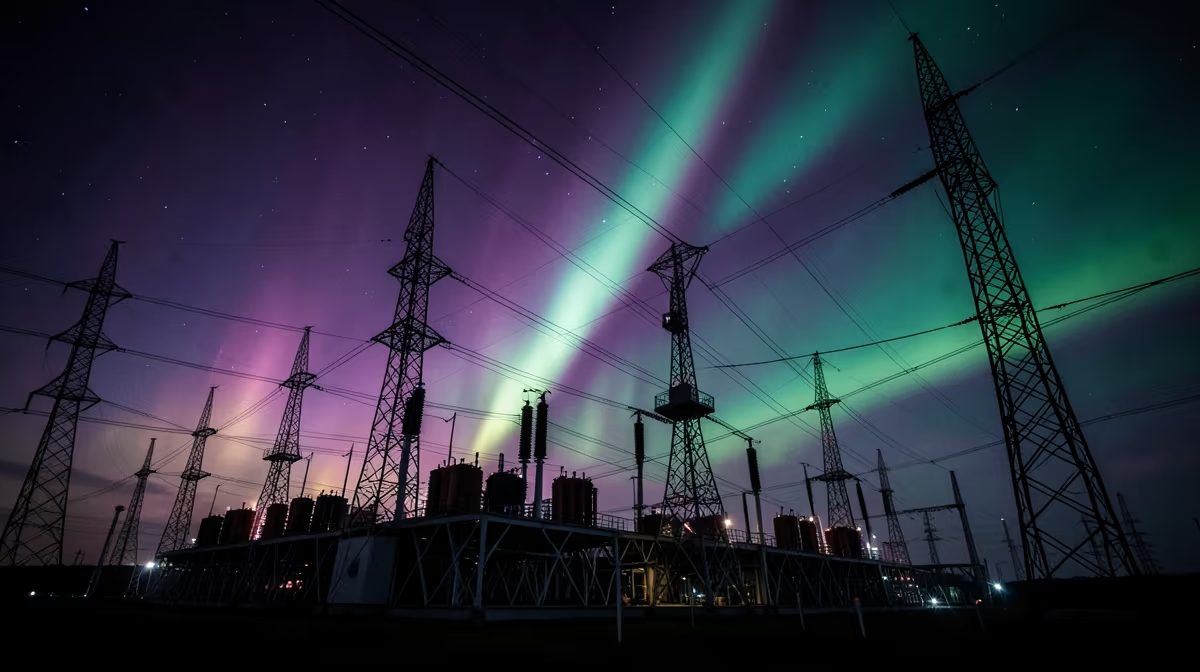
A new solar storm study has mapped out the specific U.S. regions and power grid vulnerabilities most at risk from extreme space weather, highlighting potential daily economic losses and infrastructure vulnerabilities. Experts warn that a severe solar storm power grid collapse is an escalating threat to modern civilization, driven by geomagnetically induced currents that challenge aging electrical systems.
Recent studies and reports from outlets including CNN, qz.com, and eos.org have shed light on the severe economic costs and grid risks associated with massive solar storms. Recent scientific studies have mapped out the specific regions of the United States power grid that are most vulnerable to a massive solar storm. These extreme space weather events occur when the sun flings massive amounts of magnetic energy and solar wind toward Earth, which can induce severe electrical currents in ground-based infrastructure. While everyday electrical systems are built to handle normal fluctuations, a severe solar storm can overwhelm transformers and knock out large sections of the power grid. New research not only pinpoints where outages are most likely to hit hardest, but newer AI models are also helping detect these warning signs hours before the solar energy impacts our atmosphere.
Mapping Infrastructure Risk and Daily Losses
Geomagnetic induced currents from extreme solar storms threaten high-voltage power networks, particularly in regions with vulnerable geological conductivity and aging electrical infrastructure. Solar storms are caused by eruptions on the sun, such as solar flares and coronal mass ejections. When these charged particles interact with Earth's magnetic field, they create geomagnetic storms. Historically, events like the 1859 Carrington Event disrupted telegraph systems worldwide, serving as a historic reminder of the power of space weather, much like the 1989 geomagnetic storm that collapsed the Hydro-Québec power grid, leaving millions without power for nine hours.
- New studies have mapped specific U.S. power grid risks and potential daily losses from solar storms
- AI models are now being developed to detect solar storm warning signs hours in advance
- Extreme solar storms have the potential to hit Earth harder than previously thought
- Geomagnetic disturbances can induce geomagnetically induced currents in power transmission lines
- Space weather remains a critical infrastructure challenge that many cities are underprepared to handle
Current assessments and new risk studies highlight localized vulnerabilities and potential daily economic losses. Specific geographic areas with high electrical conductivity contrasts and specific grid configurations are at higher risk of catastrophic failure during space weather events. Recent mapping studies highlight that certain regions experience drastically higher potential daily losses and transformer stress than others.
Economic Consequences and Financial Exposure
A severe solar storm risks massive daily economic losses, systemic market disruptions, and extensive capital costs to replace damaged transformers that lack redundant backups. The economic costs of a major solar storm could be devastating, resulting in billions of dollars in daily losses due to halted commerce, spoiled goods, and damaged electrical infrastructure. Analysts and researchers study these financial risks to emphasize the importance of investing in grid resilience before an event occurs.
Critical infrastructure vulnerability in the United States exposes potential systemic risks to the global economy, as financial systems, satellite communications, and interconnected supply chains rely heavily on uninterrupted North American power. A widespread power grid failure triggered by a severe solar storm could paralyze daily life by cutting off electricity, clean water access, communications, and financial networks for days or even weeks, resulting in massive economic losses.
Regulatory Landscape and Early Detection Technology
Federal oversight versus state and private utility autonomy creates a fragmented regulatory landscape, complicating mandatory grid hardening and funding allocation for space weather preparedness. Meanwhile, advances in artificial intelligence have begun to aid researchers, with new AI models capable of detecting solar storm warning signs hours in advance to provide crucial lead time for operators.
The increasing reliance on AI-driven early detection models may create a false sense of security if automated warning systems outpace the physical capability of grid operators to reroute power in real time. Nevertheless, researchers are increasingly turning to advanced technology, including specialized artificial intelligence models, to detect solar storm warning signs hours before they impact Earth, providing critical lead time for grid operators to take defensive measures and protect sensitive equipment.
A widespread power grid failure triggered by a severe solar storm could paralyze daily life by cutting off electricity, clean water access, communications, and financial networks for days or even weeks.
Future Outlook and Infrastructure Preparedness
In the next 24 hours, expect continued reporting and regional analysis regarding newly published solar storm studies mapping U.S. power grid vulnerabilities and associated daily economic losses. Over the next 72 hours, look for broader discussion among utility operators, power grid regulators, space weather researchers, and municipal authorities concerning space weather risk assessments, AI early-warning detection models, and infrastructure preparedness.
Analysts would likely expect increased pressure on policymakers to upgrade power grid resilience against extreme geomagnetic disturbances following recent risk-mapping studies. In a best-case scenario, new mapping and AI early-warning models enable grid operators to proactively secure vulnerable transformers and mitigate severe power outages before a major storm hits. Conversely, the worst-case scenario involves an unmitigated severe solar storm exploiting mapped regional vulnerabilities in the U.S. power grid, causing widespread blackouts and massive daily economic losses.
Frequently Asked Questions
What happens to the US power grid during a massive solar storm?
A massive solar storm can induce geomagnetically induced currents in power lines, potentially overloading transformers and causing widespread, long-term blackouts. Recent studies and mapping efforts aim to identify the most vulnerable regions across the United States to better prepare for these cascading grid failures.
Why are extreme solar storms a major risk for the US power grid?
These intense space weather events pose a severe threat because modern society relies heavily on continuous electricity for communication, transportation, and finance. Recent scientific studies indicate that extreme solar storms can hit Earth even harder than previously thought, making infrastructure hardening an urgent priority.
Which areas in the US are most vulnerable to solar storm power outages?
Specific geographic areas with high electrical conductivity contrasts and specific grid configurations are at higher risk of catastrophic failure during space weather events. Recent mapping studies highlight that certain regions experience drastically higher potential daily losses and transformer stress than others.
What economic impacts would a solar storm blackout cause?
The economic costs of a major solar storm could be devastating, resulting in billions of dollars in daily losses due to halted commerce, spoiled goods, and damaged electrical infrastructure. Analysts and researchers study these financial risks to emphasize the importance of investing in grid resilience before an event occurs.
How are scientists improving early warnings for solar storms?
Researchers are increasingly turning to advanced technology, including specialized artificial intelligence models, to detect solar storm warning signs hours before they impact Earth. These early detection systems provide critical lead time for grid operators to take defensive measures and protect sensitive equipment.
What is space weather and why do most cities ignore it?
Space weather refers to phenomena like solar flares and coronal mass ejections originating from the Sun that can disrupt Earth's magnetic field and technological systems. Many cities fail to adequately plan for these rare but high-impact events because they happen infrequently compared to traditional terrestrial natural disasters.
Conclusion
Recent scientific studies and risk-mapping efforts have provided a clearer picture of how extreme space weather and geomagnetic disturbances threaten the U.S. power grid and economy. With advanced artificial intelligence models improving early warning capabilities and new data pinpointing regional vulnerabilities, utility operators and policymakers face mounting evidence regarding the necessity of infrastructure hardening. Continued focus on space weather monitoring and risk assessment remains vital as researchers and authorities evaluate next steps for energy security.
Sources
- Here’s where a massive solar storm could take down the US power grid — CNN
- Solar storm study maps U.S. power grid risk, daily losses — qz.com
- The Economic Costs of Solar Storms — eos.org
- AI Model Detects Solar Storm Warning Signs Hours in Advance — ColombiaOne.com
- Extreme solar storms can hit Earth harder than thought — Geophysical Institute
- The Space Weather Problem Most Cities Never Think About — Forbes


