
Trump Falklands Policy Review Sparks Intense UK Defense Debate
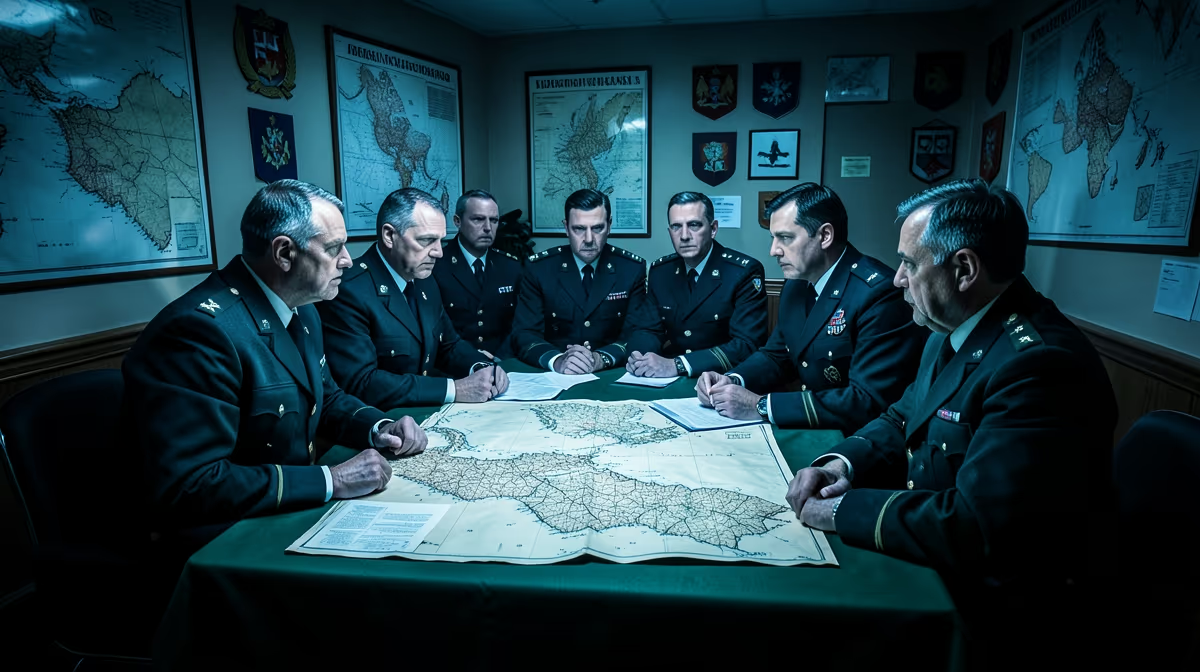
The recent Trump Falklands policy review has ignited serious concerns among British officials regarding national security and geopolitical stability. A major defense debate has sparked across the United Kingdom following hints from Donald Trump that the United States might review its support for the UK regarding the Falkland Islands, forcing policymakers to re-evaluate the nation's military readiness and strategic dependencies in the South Atlantic.
Background and Diplomatic Friction
Reports indicate that the United States position on the Falkland Islands is under review, with suggestions linking the potential shift to a lack of support for an Iran war. This unexpected diplomatic friction has left British officials and analysts rethinking the country's military readiness, highlighting how transactional foreign policy and disagreements over global conflicts can directly impact long-standing bilateral alliances.
- Donald Trump suggested he is reviewing US support for the UK over the Falkland Islands
- Reports hint the US stance may be tied to a lack of UK support in an Iran war
- Argentina has recently issued threats regarding Falklands oil fields
- Major news outlets including The Guardian, BBC, The Telegraph, and The Independent have covered the unfolding diplomatic tension
The Falkland Islands are a self-governing British Overseas Territory in the South Atlantic Ocean, but Argentina has long claimed sovereignty over them, leading to historical military conflict. Traditionally, major international allies like the United States have maintained diplomatic positions supporting stability and status quo arrangements in the region. However, a transactional shift in US foreign policy under Trump has linked historical security guarantees to immediate reciprocal support, creating severe vulnerabilities for the UK's overseas territories.
Regional Threats and Economic Fallout
Simultaneously, tensions in the region have been exacerbated by emerging threats directed at Falklands oil fields from Argentina. Argentina is emboldened by Washington's policy review to ramp up sovereignty claims and threats against Falklands resources, straining traditional transatlantic alliances in the South Atlantic. Renewed tensions over Falklands oil fields and maritime resources threaten regional stability, compounding financial risks for energy exploration and local British overseas territory economies.
The combination of shifting American diplomatic stances and renewed regional claims has placed British foreign policy and defense capabilities under intense scrutiny. As lawmakers and military officials assess the situation, the debate underscores long-standing questions regarding the reliability of traditional alliances in protecting overseas territories.
The security of overseas territories relies heavily on international alliances and diplomatic backing, forcing nations like the UK to re-evaluate their defense strategies and military capabilities in an increasingly unpredictable global climate.
Political and Strategic Implications
Domestic political pressure in Westminster mounts as opposition parties and defense hawks demand an urgent reassessment of the 'special relationship' and a self-reliant UK defense strategy. The policy shift may force a wider European defense decoupling, pushing the UK to seek deeper military and intelligence coordination with continental allies rather than relying on an unpredictable Washington.
Historical parallels are already being drawn by analysts, notably comparing the current climate to the 1956 Suez Crisis, when the UK realized its geopolitical ambitions and territorial dependencies were severely constrained by a lack of US financial and diplomatic backing.
| Timeline Phase | Key Event | Strategic Implication |
|---|---|---|
| Late August 2026 | Trump administration reviews US backing for the UK over the Falklands | Friction over Iran policy exposes transatlantic vulnerabilities |
| Early September 2026 | Argentina threatens Falklands oil fields | Heightened alarm in British media and renewed calls for military readiness |
| Present | Intense domestic debate in Westminster | Reassessment of traditional US security umbrellas and South Atlantic deterrence |
Analyst Perspective and Future Outlook
Defense analysts and commentators are evaluating the broader geopolitical implications of the US policy shift. As lawmakers and military officials assess the situation, the debate underscores long-standing questions regarding the reliability of traditional alliances.
- Continued debate and political reaction across British media regarding the US stance on the Falkland Islands, alongside monitoring of Argentine threats to regional oil fields.
- Intensified calls within the UK defense sector for self-reliance and strategic review of military readiness concerning overseas territories.
Expert predictions suggest that diplomatic tensions will likely prompt renewed parliamentary scrutiny over British defense capabilities and overseas commitments. The best-case scenario involves a reaffirmation of a robust independent UK defense posture and diplomatic reassurance that mitigates security risks around the Falkland Islands. Conversely, the worst-case scenario entails heightened geopolitical vulnerability for the UK coupled with aggressive moves by Argentina against Falklands oil fields amid shifting US alliances.
Frequently Asked Questions
What did Donald Trump say about the Falkland Islands?
Donald Trump suggested he is reviewing US support for the UK over the Falkland Islands. Reports indicate this potential shift in the US position is linked to a perceived lack of UK support for actions regarding Iran.
Why is the Trump Falklands policy review sparking a UK defense debate?
The review has sparked intense debate because it highlights vulnerabilities in Britain's geopolitical alliances and national security. Commentators argue that the development shows Britain must be fully prepared to independently defend its sovereign territories.
Who is affected by the US stance on the Falklands?
The primary parties affected are the United Kingdom, which maintains sovereignty over the territory, and the local population of the Falkland Islands. Additionally, Argentina is impacted, as geopolitical shifts often influence regional diplomatic and territorial ambitions.
What are Argentina's recent actions regarding the region?
Amid the diplomatic discussions and shifting US positions, Argentina has renewed tensions by threatening Falklands oil fields. These developments add a layer of urgency to the ongoing UK defense debates.
What happens next for UK defense strategy following the Trump statements?
British policymakers and defense experts are currently reassessing military preparedness and alliance reliability. The debate is likely to influence future defense spending and strategic autonomy in protecting overseas territories.
How does this policy review connect to broader international relations?
The situation underscores how transactional foreign policy and disagreements over global conflicts, such as those involving Iran, can directly impact long-standing bilateral alliances. It serves as a reminder of how shifting administrations can alter decades-old diplomatic norms.
Conclusion
The unfolding diplomatic friction surrounding the Trump Falklands policy review has underscored the critical need for robust national security and strategic self-reliance in the United Kingdom. With confirmed reports indicating a reassessment of US support linked to global disagreements, alongside active threats from Argentina toward Falklands oil fields, British defense capabilities and overseas commitments face unprecedented scrutiny. As policymakers, defense analysts, and lawmakers navigate this shifting geopolitical landscape, the primary focus remains on monitoring regional developments and ensuring comprehensive military preparedness for British territories in the South Atlantic.
Sources
- Trump’s Falklands move shows Britain must be ready to defend itself — independent.co.uk
- Trump suggests he is reviewing US support for UK over Falkland Islands — The Guardian
- Trump hints US would not back UK over Falkland Islands due to lack of Iran war support — BBC
- Argentina threatens Falklands oil fields — The Telegraph
- US threatens Britain over Falklands — The Telegraph
- Trump says he is reviewing US position on Falkland Islands — independent.co.uk


