
Ukraine War Latest Developments Reveal Growing Friction for Putin
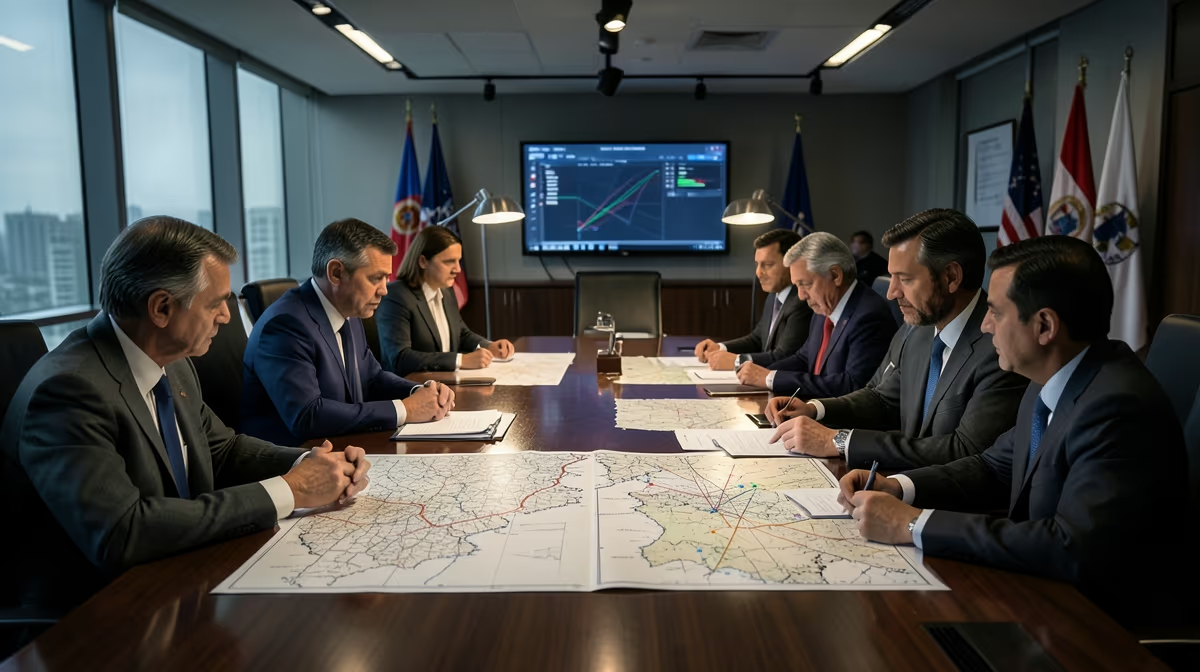
Stay informed with the Ukraine war latest developments as international diplomacy intensifies and global leaders react to ongoing military strategies. Recent developments in the Ukraine war highlight shifting diplomatic pressures on Moscow, alongside ongoing security incidents and sharp rhetoric involving Russian President Vladimir Putin and Western nations.
Diplomatic Friction and Regional Dynamics
President Vladimir Putin faces mounting geopolitical friction as international leaders address the ongoing conflict. Notably, discussions surrounding diplomatic interventions, such as Modi's plea to end the conflict, have drawn attention to Russia's isolation, even as Putin engages in contentious regional debates, such as sparring with Armenia's PM over EU or Eurasia alignment.
The persistent stalemate in Ukraine and Russia's refusal to de-expand or de-escalate despite growing international diplomatic pressure and internal ally friction form the root cause of these ongoing political maneuvers. Vladimir Putin faces mounting friction both internationally—from Modi's peace appeals and spats with regional partners like Armenia—and domestically, as pressure builds regarding the high cost of the ongoing conflict.
Simultaneously, the prolonged mobilization and war footing continue to strain Russia's economy, while broader global supply chains and diplomatic leverage face constant turbulence due to escalating rhetoric and retaliatory measures. The conflict is driving a deeper wedge between Russia and Western powers, highlighted by veiled threats toward the UK, tensions over European drone incidents, and nuanced diplomatic interventions by nations like India. Subtle shifts in the stance of Russia's traditional allies and partners may signal an exhaustion point behind closed doors, potentially paving the way for non-Western led mediation frameworks. This dynamic bears a historical parallel to the diplomatic and economic isolation experienced by the Soviet Union during the protracted Soviet-Afghan War in the 1980s.
Security Incidents and Western Tensions
Tensions have expanded into direct security friction with European powers. Putin has dismissed Germany's move to blame Russia for the Leipzig drone incident as a 'grave mistake.' This comes alongside ongoing Western concerns over civil aviation threats and veiled warnings directed at the UK.
- Russia responded to Zelenskyy's civil aviation threat
- Modi made a plea to Putin to end the conflict
- Putin sparred with Armenia's PM over EU or Eurasia alignment
- Putin called Germany's move to blame Russia for the Leipzig drone incident a grave mistake
- Rosenberg reported on Putin's veiled threat to the UK as part of a campaign against the West
International diplomatic friction and security incidents involving Russia, Germany, the UK, and Armenia have been widely reported across multiple news outlets. How diplomatic appeals and ongoing European security investigations will impact Kremlin decision-making and international relations remains unconfirmed.
Internal Pressures and Future Outlook
Amid these developments, analytical reports and commentary suggest that internal and external pressures continue to build around the Kremlin, prompting observers to evaluate the long-term viability of Russia's current military and diplomatic trajectory in the Ukraine war.
Expect continued diplomatic friction following Russia's official responses to Zelenskyy's civil aviation threats and Germany blaming Russia for the Leipzig drone incident over the next 24 hours. Medium-term developments over the next 72 hours are likely to focus on escalating rhetoric between Moscow and Western capitals, including Britain and Germany, alongside ongoing international diplomatic pressure from figures like Modi. Key players involved include Vladimir Putin, Volodymyr Zelenskyy, Narendra Modi, German authorities, UK officials, and the Armenian PM, with impact areas spanning European security and airspace management, diplomatic relations between Russia and Western nations, and international mediation efforts.
Analysts would likely expect further diplomatic maneuvering and heightened security alerts across Europe as Russia responds to accusations regarding drone incidents and Western threats. In the best-case scenario, international diplomatic engagement, such as Modi's plea, opens constructive channels for de-escalation and addresses ongoing regional conflicts without further military expansion. Conversely, the worst-case scenario involves a complete breakdown in diplomatic communication leading to retaliatory measures over airspace and drone incidents, further entrenching the conflict and widening tensions with the West.
Frequently Asked Questions
How has Russia recently responded to threats regarding civil aviation?
Russia has issued specific responses to concerns raised over civil aviation threats linked to the ongoing conflict in Ukraine. These developments highlight the expanding scope of tensions affecting international airspace and safety measures.
What was the significance of Modi's plea to Putin regarding the Ukraine conflict?
Indian Prime Minister Narendra Modi made a notable diplomatic plea to Vladimir Putin, urging an end to the ongoing conflict. Observers are analyzing what this means for international pressure on Moscow and India's balancing act in global geopolitics.
Why did Vladimir Putin recently spar with Armenia’s Prime Minister?
Putin engaged in a tense exchange with Armenia's Prime Minister amid broader discussions involving strategic alignment toward the EU or Eurasia. This reflects Moscow's ongoing efforts to maintain influence in its traditional regional sphere.
How did Putin react to Germany blaming Russia for the Leipzig drone incident?
Vladimir Putin dismissed Germany's move to blame Russia for the Leipzig drone incident, describing it as a 'grave mistake.' The diplomatic friction adds to the already strained relations between Moscow and European capitals.
What are analysts saying about Putin's recent veiled threats to the UK?
BBC commentators note that veiled threats directed at the United Kingdom are part of a broader, sustained Russian campaign against Western nations. This strategy aims to deter continued Western support for Ukraine.
What pressures are mounting internally for Putin regarding the war?
Recent reports indicate that even long-time associates are privately or publicly advising Putin to withdraw from Ukraine to protect his own political survival. While he maintains a firm public stance, these shifting dynamics point to growing long-term strain.
Conclusion
Recent developments in the Ukraine war underscore a deeply volatile environment characterized by continuous friction between Russia and Western powers, ongoing international diplomatic interventions, and rising security incidents. With Russia responding to civil aviation concerns, dismissing German accusations over the Leipzig drone incident, and facing direct pleas from global leaders like Narendra Modi, the trajectory of the conflict remains heavily influenced by geopolitical maneuvering and security alerts across Europe.
Sources
- Ukraine war latest: Russia responds to Zelenskyy's civil aviation threat — Sky News
- Ukraine war: What to make of Modi's plea to Putin to end conflict — BBC
- EU or Eurasia: Why Putin sparred with Armenia’s PM — Al Jazeera
- Germany’s move to blame Russia for Leipzig drone incident ‘a grave mistake,’ says Putin– Europe live — The Guardian
- Putin’s friends finally tell him the truth: Get out of Ukraine to save yourself — The Independent
- Rosenberg: Putin's veiled threat to UK part of Russia's campaign against West — BBC


