
US Urges NATO Allies to Prepare for Potential Russian Attacks
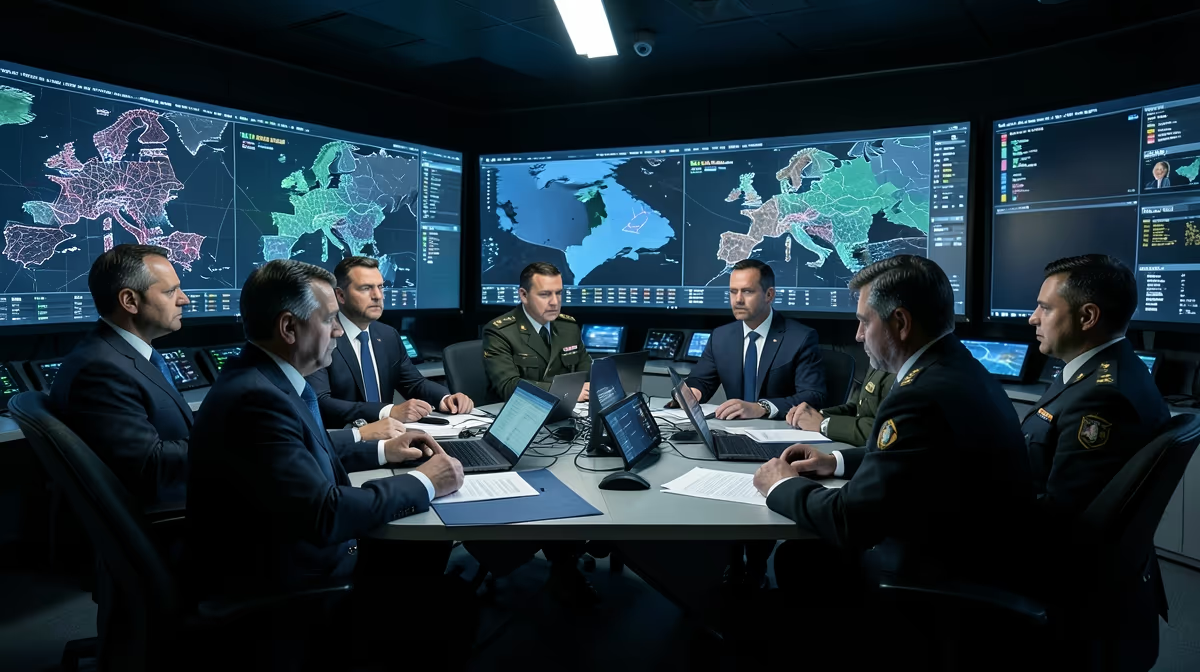
The United States has urged NATO allies to prepare for potential Russian attacks amid growing security concerns and recent escalations across Europe, including a drone incident in Leipzig. This heightened sense of urgency among Western nations reflects mounting tensions, which have prompted officials to call Moscow's recent actions increasingly reckless.
What Unfolded
In response to what NATO leadership describes as increasingly reckless behavior from Moscow, European Commission and NATO chiefs are holding high-level talks to address mounting Russian threats. The discussions follow a new escalation in Leipzig, Germany, which has directly blamed Moscow for a recent drone incident.
In addition to diplomatic and strategic coordination, technological enhancements are underway. Defense reports note that Dataminr artificial intelligence technology is set to go live on the NATO Maven system. Meanwhile, broader security measures continue alongside ongoing counterintelligence efforts within alliance nations, such as the legal proceedings involving a Canadian national suspected of spying on NATO who was denied bail.
Key Facts
- The United States has urged NATO allies to prepare in case Russia launches potential attacks.
- European Commission and NATO chiefs are holding high-level talks to address mounting Russian threats.
- Germany has blamed Moscow for a recent drone incident in Leipzig, which prompted vows of increased pressure from the EU and NATO.
- NATO's Rutte stated that Russia is increasingly reckless following recent escalations.
- Dataminr AI technology is reportedly set to go live on NATO's Maven system to bolster defense capabilities.
The United States has strongly urged its NATO allies to step up preparations for potential Russian attacks following escalating security incidents in Europe.
Security Assessment and Root Causes
The escalation of hybrid warfare and direct provocations by Russia within European borders, highlighted by recent drone incidents in Germany, have severely eroded the perceived security threshold between active conflict zones and NATO territory. Western political leaders are facing intensifying domestic and cross-border pressure to demonstrate a united, firm deterrent posture. High-level talks between European Commission and NATO chiefs underscore a political urgency to align institutional defenses and reassure vulnerable member states.
Increased threat levels and defensive preparations require accelerated defense spending and technology integration, such as the deployment of advanced AI analytics onto defense networks like NATO Maven, impacting national budgets and critical tech supply chains. The transatlantic alliance is being forced to rapidly adapt its deterrence doctrine from long-term posturing to immediate readiness against reckless gray-zone aggression, shifting the strategic balance along Europe's eastern and central flanks.
Timeline of Recent Developments
| Date / Phase | Event / Action |
|---|---|
| Late August 2026 | Intelligence and legal countermeasures tighten as allied nations process insider threat investigations and deploy advanced AI systems to NATO architecture. |
| Early September 2026 | Emergency high-level consultations between European Commission and NATO leadership convene following a major drone escalation incident in Leipzig. |
| Present | The **US NATO warning Russia** prompts comprehensive alliance-wide preparations for potential direct Russian aggression, matched by vows from the EU and NATO to escalate diplomatic and strategic pressure. |
Why This Matters
As security tensions in Europe escalate, the risk of miscalculation or direct confrontation between Russia and Western nations increases. Strengthening NATO preparedness and unity is crucial for deterring potential conflicts and maintaining regional stability. Citizens and governments across NATO member states in Europe and North America, as well as populations living near European border regions, are directly affected by these security developments.
NATO, or the North Atlantic Treaty Organization, is a military alliance of European and North American nations established after World War II to provide collective security against potential threats. Tensions between NATO and Russia have significantly intensified following geopolitical shifts and military conflicts in Eastern Europe over recent years.
What Comes Next
NATO and European Commission chiefs are expected to continue high-level talks addressing heightened Russian threats and the recent drone incident in Leipzig over the next 24 hours. Allied nations will likely evaluate defense readiness measures and potential responses over the next 72 hours in reaction to increasingly reckless Russian activities. Analysts expect increased coordination between NATO and EU leadership alongside reinforced defense readiness across member states following recent escalations.
In a best-case scenario, diplomatic unity and enhanced surveillance measures deter further escalations, leading to de-escalation and strengthened allied defense postures without direct conflict. In a worst-case scenario, continued provocations and hybrid incidents deepen tensions between Russia and NATO, accelerating military mobilization and escalating geopolitical confrontation across Europe.
Frequently Asked Questions
Why did the US urge NATO allies to prepare for potential Russian attacks?
The US has urged NATO allies to enhance their readiness following a series of rising tensions and incidents across Europe. Recent events, such as a drone incident in Leipzig, have heightened concerns regarding Moscow's actions.
What recent escalation prompted a response from the EU and NATO?
The EU and NATO vowed to increase pressure on Russia following a new escalation involving a drone incident in Leipzig, Germany. German officials openly blamed Moscow for the security breach, prompting high-level diplomatic discussions.
Who is involved in the high-level talks addressing Russian threats?
European Commission and NATO chiefs are holding direct talks to coordinate a unified response against ongoing Russian threats. NATO leadership has characterized Russia's recent behavior as increasingly reckless.
What technological upgrades are NATO and its partners implementing?
In response to growing security challenges, technological advancements are being integrated into defense structures. For instance, Dataminr AI technology is set to go live on the NATO Maven system to improve threat detection and situational awareness.
How are European nations and international allies affected by these security developments?
European member states, particularly near the Eastern flank and regions experiencing direct incidents, face heightened security risks. Allies are reassessing defense protocols, enhancing intelligence sharing, and preparing civilian and military infrastructures for potential contingencies.
What happens next as NATO and EU leaders address these security challenges?
NATO and EU officials are expected to finalize enhanced deterrence measures and tighten pressure campaigns against Moscow. Further coordination meetings will focus on strengthening member state defenses and accelerating technological integration.
Conclusion
The United States has called on NATO allies to enhance their preparedness for potential Russian attacks, directly responding to mounting security concerns and the recent drone incident in Leipzig, Germany. With European Commission and NATO leadership engaged in high-level talks, member states are moving to coordinate defense strategies, increase political pressure, and integrate advanced technological tools such as the Dataminr AI system into NATO Maven. As allied nations continue to evaluate readiness measures and counterintelligence efforts in the face of recognized security threats, diplomatic unity and strategic defense alignment remain central to the alliance's ongoing response.
Sources
- US urges NATO allies to prepare in case Russia attacks — USA Today
- European Commission and NATO chiefs to hold talks on Russian threats — Euronews.com
- EU and Nato vow to step up pressure on Russia after 'new escalation' in Leipzig — BBC
- Russia increasingly reckless, says Nato’s Rutte as Germany blames Moscow for Leipzig drone incident – Europe live — The Guardian
- Dataminr AI tech to go live on NATO Maven system: CEO — Breaking Defense
- The Canadian suspected of spying on NATO was denied bail. Here's what comes next — CBC


