
US Military Strikes on Iran Trigger Global Emergency and Market Chaos
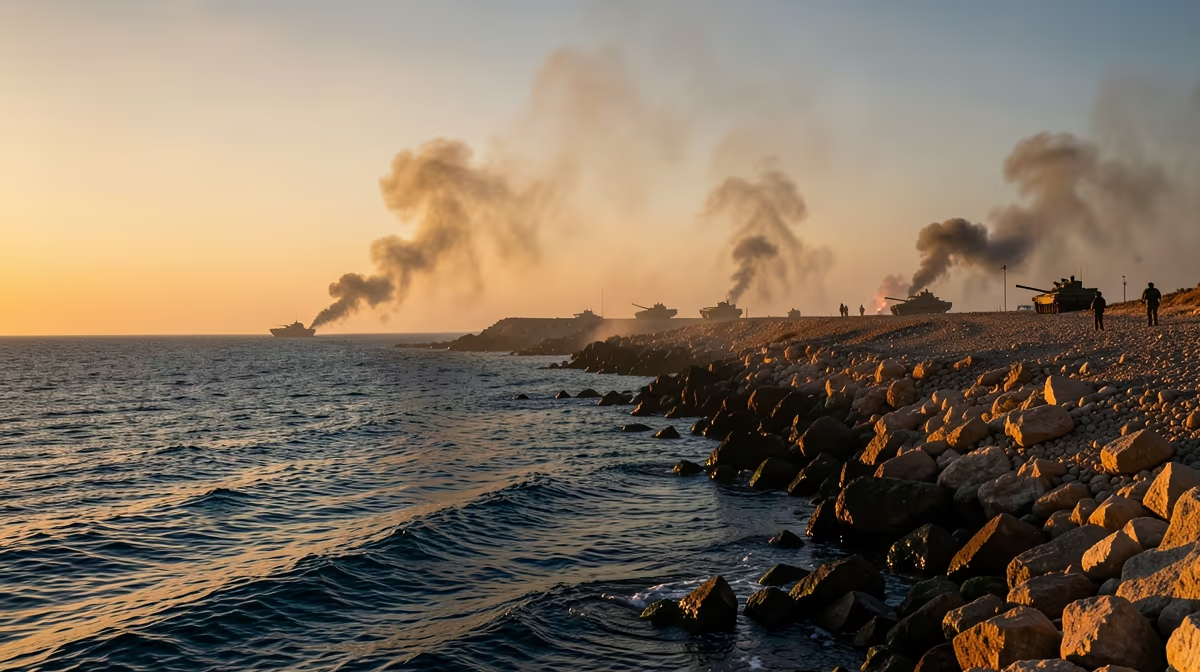
The **US military carries out strikes on Iran**, marking a dangerous new phase in the ongoing Middle East conflict. This sudden escalation follows a monthlong lull in major hostilities, instantly reverberating through international security corridors and financial markets.
Background and Root Cause
The root cause of this military action stems from escalating strategic confrontations and deterrence efforts between the United States and Iran, following prolonged tensions over regional influence and proxy activities. Military tensions between the United States and Iran have a long, complex history rooted in geopolitical disagreements, economic sanctions, and regional influence in the Middle East. Conflicts in this oil-rich region frequently disrupt global energy supplies, causing immediate volatility in international oil markets.
- Escalating strategic confrontations between the US and Iran
- Prolonged tensions over regional influence
- Historical friction regarding proxy activities in the Middle East
What Unfolded on the Ground
The recent military strikes by the US have led to mounting tragedy and international friction. According to reports from The New York Times and the BBC, an attack in a small Iranian town tragically struck a wedding, resulting in four deaths. While Iranian officials have condemned the event as a war crime, the US has maintained that it does not target civilians, with Fox News reporting that leaders expressed confidence following the military action.
- The US military carried out strikes on Iran after a monthlong lull in hostilities
- A US strike killed four people at a wedding in an Iranian town, according to Iran and news sources
- The US military denies deliberately targeting civilians
- Iran accused the US of committing a war crime over the wedding strike
- Trump expressed confidence after the strikes
Regional Security Impact
In retaliation for the renewed strikes, Iran has fired upon its Gulf neighbors, breaking a monthlong lull in hostilities, as reported by NPR. The strikes have destabilized the broader Middle East, drawing in regional neighbors as Iran retaliates against Gulf states, severely intensifying global security and supply chain vulnerabilities.
- Iran fired on its Gulf neighbors in retaliation for the US strikes
- Regional security in the Gulf faces heightened instability
- Neighboring nations are drawn into the expanding conflict sphere
Economic Fallout and Market Reaction
The escalation has sent shockwaves through the global economy. NBC News and ABC News note that oil prices surge after the renewed US strikes, heightening inflation fears and pushing the US oil reserve to a 44-year low amid a broader global energy shortage.
| Metric / Indicator | Status Amid Conflict |
|---|---|
| US Strategic Oil Reserve | Reached a 44-year-old low |
| Global Energy Supply | Experiencing severe shortages |
| Crude Oil Futures / Prices | Experiencing sharp upward surge |
Political and Geopolitical Dimensions
Political leadership in Washington faces mounting pressure to demonstrate strength against regional provocations, while confronting domestic scrutiny over the expanding scope of kinetic engagements and civilian casualties. Officials from the US and Iran are expected to issue statements defending their military and diplomatic positions, while international bodies will likely call for de-escalation.
The US military strikes on Iran trigger global concerns as oil prices surge amid the escalating Middle East conflict.
Future Outlook and Analyst Predictions
Following recent U.S. military strikes on Iran and subsequent civilian casualties at a wedding event, diplomatic tensions remain elevated as Iran issues accusations of war crimes while the U.S. denies targeting civilians. Meanwhile, regional fallout continues with Iran retaliating against Gulf neighbors, keeping energy markets volatile.
As oil prices surge and U.S. oil reserves hit multi-decade lows amid global energy shortages, heightened inflation fears are expected to persist. Markets and international observers will closely monitor potential further military escalations or diplomatic interventions in the region. Analysts would likely expect continued volatility in global oil markets and heightened geopolitical friction as the fallout from the renewed strikes and civilian casualties reverberates across the region.
Frequently Asked Questions
What happened during the recent US military strikes on Iran?
The US military carried out renewed strikes on Iran, leading to heightened regional tensions and a retaliatory response from Tehran. Reports indicate the military action has resulted in significant incidents on the ground, including a tragic strike in a small Iranian town.
Why did the US military carry out strikes against Iran?
While specific immediate triggers vary, the renewed military action follows a monthlong lull and comes amid escalating geopolitical friction between the two nations. The ongoing conflict aims to address perceived security threats in the region.
Who is most affected by the US strikes on Iran?
Civilians caught in the crossfire are deeply affected, with reports emerging of tragic casualties during celebrations like weddings in Iran. Additionally, US Gulf neighbors face direct retaliation, and global consumers are impacted by economic fallout.
What is the specific detail regarding civilian casualties from the strikes?
Iranian officials have accused the US of committing a 'war crime' after a strike allegedly killed four people at a wedding in a small Iranian town. Meanwhile, the US military has maintained its denial of deliberately targeting civilians.
How are the US strikes affecting global energy and the economy?
The conflict has triggered a sharp surge in oil prices, heightening inflation fears worldwide. Furthermore, the broader energy shortage and ongoing war have caused US oil reserves to drop to a 44-year low.
What happens next as Iran retaliates against US strikes?
With Iran firing on its Gulf neighbors in retaliation for the US attacks, the situation threatens to spiral into a wider regional conflict. Observers and leaders like Donald Trump are monitoring the fallout as energy markets and diplomatic channels react.
Conclusion
The US military has carried out strikes on Iran, leading to reported civilian casualties at an Iranian wedding, subsequent retaliatory fire by Iran on Gulf neighbors, and a significant spike in oil prices alongside a drop in US oil reserves. The full extent of the damages from the ongoing military exchanges, potential further retaliatory actions, and the long-term impact on global energy markets and diplomatic relations remain uncertain. International observers, policymakers, and energy market participants continue to monitor the evolving geopolitical situation closely.
Sources
- Trump expresses confidence after US military carries out strikes on Iran — Fox News
- In Small Iranian Town, a U.S. Attack Turns a Wedding Into a Tragedy — The New York Times
- Iran says US strike killed four at wedding in 'war crime' as US denies targeting civilians — BBC
- Iran fires on its Gulf neighbors, retaliating for U.S. strikes after a monthlong lull — NPR
- US oil reserve hits 44-year-low amid Iran war, global energy shortage — ABC News - Breaking News, Latest News and Videos
- Oil prices surge after U.S. renews Iran strikes, heightening inflation fears — NBC News


