
US Military Strikes Iranian Targets in Major Middle East Escalation
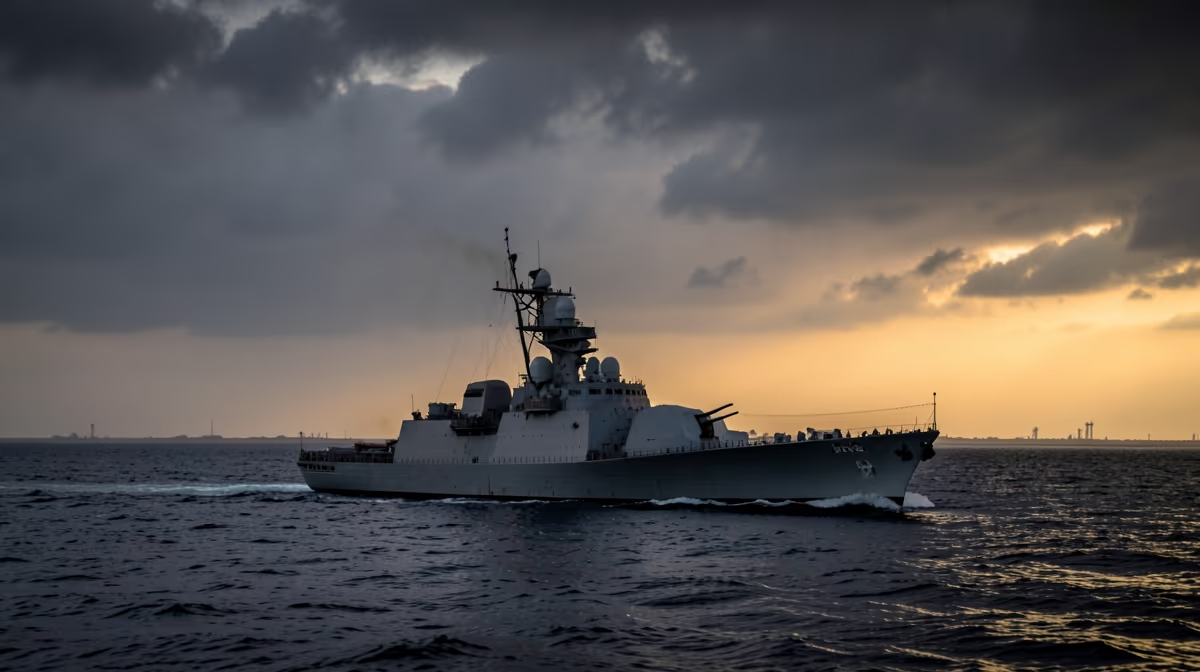
The US military strikes Iranian targets following a series of escalating tensions across the region, according to recent updates from CENTCOM. The United States military has carried out a new wave of airstrikes targeting Iranian and Islamic Revolutionary Guard Corps assets following attempted attacks in the Strait of Hormuz, according to reports from CNN, BBC, Axios, and CENTCOM.
CENTCOM confirms new military operations against Iranian targets
The fresh military actions follow escalating tensions in the strategic Strait of Hormuz, prompting the U.S. Central Command to authorize and execute retaliatory strikes against IRGC targets. The operations come amid ongoing regional friction and perceived threats to maritime navigation and U.S. forces in the area.
The United States military has carried out a fresh wave of airstrikes targeting Iranian facilities, specifically focusing on assets belonging to the Islamic Revolutionary Guard Corps. According to U.S. Central Command, these military actions were launched following recent attempted attacks in the strategically vital Strait of Hormuz.
Despite warnings and threats from Washington, Iranian officials have already vowed to respond to the latest military operations. The exchange of threats and direct action raises immediate concerns about further military escalation in the region.
- The US military has carried out a new wave of strikes targeting Iranian interests
- US Central Command confirmed that the operations targeted IRGC facilities
- The strikes followed attempted attacks in the Strait of Hormuz
- Iran has publicly promised to respond to the US military actions despite threats from Donald Trump
- Major news outlets including CNN, BBC, Al Jazeera, and Axios have reported on the developing situation
Implications for security in the Strait of Hormuz and the wider region
The Strait of Hormuz is one of the world's most critical shipping lanes for global oil supplies. Any military conflict or heightened security tension in this narrow waterway can disrupt international shipping, drive up global energy prices, and quickly spiral into a broader regional war.
Governments and militaries in the Middle East, international shipping companies, global energy consumers facing potential fuel price shifts, and civilians living in the region are directly affected by this ongoing situation. The United States and Iran have experienced decades of geopolitical tension, frequently punctuated by naval standoffs and skirmishes in the Persian Gulf and the Strait of Hormuz. The IRGC has historically played a central role in Iran's maritime and regional military operations, making it a frequent target for US countermeasures during periods of high escalation.
A cycle of retaliatory strikes leading to broader regional conflict, severe disruption of global maritime commerce, and threats to energy supplies remains a core concern for international observers.
Strategic motivations and regional consequences
Escalating maritime tensions and attempted attacks in the Strait of Hormuz triggered direct US military intervention against Islamic Revolutionary Guard Corps targets. The Trump administration faces domestic pressure to project strength in the Middle East, while Iranian leadership navigates internal political imperatives to project defiance despite severe economic and military asymmetries.
Fears of prolonged disruption in the Strait of Hormuz—a vital global energy transit chokepoint—threaten immediate volatility in international oil markets and shipping insurance costs. The strikes risk widening regional flashpoints into a direct, sustained confrontation between Washington and Tehran, drawing in international concern over freedom of navigation.
The timing of these maritime skirmishes may reflect back-channel deterrence failures, where localized naval friction quickly outpaces diplomatic off-ramps. Historically, this dynamic carries parallels to the 1988 Operation Praying Mantis, wherein the US Navy engaged Iranian forces in the Persian Gulf following mining operations.
Timeline of developments
- Attempted attacks occur in the Strait of Hormuz, prompting an immediate military evaluation.
- CENTCOM and the US military launch targeted retaliatory strikes against IRGC assets.
- Iran vows a direct response to the new wave of US strikes amidst ongoing threats.
International observers and media outlets including Al Jazeera, The Jerusalem Post, and Stars and Stripes are closely monitoring the situation as military spokespersons assess the operational outcomes of the strikes and prepare potential defensive postures in the Persian Gulf region. Iranian officials are expected to issue formal condemnations and statements regarding the military response, while U.S. military leadership is likely to provide operational updates through CENTCOM briefings.
Outlook and security assessments
Further military updates from CENTCOM and official responses from Iranian leadership regarding the retaliatory strikes in the Strait of Hormuz are expected over the next 24 hours. Over the next 72 hours, analysts anticipate heightened regional tensions, potential diplomatic maneuvers, and assessments of maritime security in the Strait of Hormuz following attempted attacks and subsequent US strikes.
Key players in this evolving dynamic include the US military, CENTCOM, Iranian targets, and the IRGC. Impact areas span the Strait of Hormuz, Middle East regional security, and global oil and shipping routes. Experts suggest continued friction and a heightened posture in the region as Iran weighs its promised response against ongoing US and allied deterrence efforts.
The best case scenario involves a de-escalation of hostilities through diplomatic channels, avoiding further kinetic exchanges while securing safe passage through the Strait of Hormuz. Conversely, the worst case scenario involves a cycle of retaliatory strikes leading to broader regional conflict, severe disruption of global maritime commerce, and threats to energy supplies.
The Strait of Hormuz remains a fragile maritime chokepoint where military escalation between the US and Iran threatens global energy supplies and shipping lanes.
Frequently Asked Questions
Why did the US military launch new strikes on Iranian targets?
The recent US military strikes were launched following attempted attacks in the Strait of Hormuz. According to CENTCOM and reports from outlets like the BBC and CNN, the military action targeted Islamic Revolutionary Guard Corps assets in response to these provocations.
What areas were targeted in the latest US military operations against Iran?
The fresh strikes targeted specific IRGC-linked locations, with military activity heavily concentrated around strategic maritime chokepoints like the Strait of Hormuz. These operations are part of a retaliatory campaign by US forces in the region.
How has Iran reacted to the new wave of US strikes?
Despite warnings and threats from figures like Donald Trump, Iranian officials have publicly promised to respond to the latest wave of US military strikes. This raises concerns about a further escalation of tensions in the Middle East.
What is the background behind these retaliatory US strikes?
The US actions follow ongoing friction in vital shipping lanes, specifically centered around attempted attacks in the Strait of Hormuz. The military response highlights the volatile security situation involving US forces and Iranian Revolutionary Guard Corps elements.
Who is affected by the ongoing military escalation between the US and Iran?
Regional stability, commercial shipping, and military personnel stationed in the Middle East are directly affected by this renewed cycle of strikes and counter-threats. Allies and international observers are closely monitoring the situation for potential disruptions to global energy supplies.
What happens next as Iran promises to retaliate against the US?
As Iran vows to answer the recent military actions, security analysts anticipate heightened alert levels for US forces in the region. The potential for further kinetic exchanges depends heavily on how both nations navigate the standoff in the coming days.
Conclusion
The United States military has carried out a fresh wave of retaliatory airstrikes targeting Iranian and Islamic Revolutionary Guard Corps assets following attempted attacks in the Strait of Hormuz. While CENTCOM has confirmed the execution and targeting of these military operations, Iranian leadership has publicly vowed to respond despite warnings from Washington. As regional security remains on high alert, international observers, defense analysts, and global markets continue to monitor developments surrounding maritime safety in the Persian Gulf and the potential for further military escalation.
Sources
- US military carries out new strikes on Iranian targets — CNN
- Iran promises to respond to new wave of US strikes despite Trump’s threats — aljazeera.com
- US forces strike IRGC targets in Iran, CENTCOM says — stripes.com
- US launches strikes on Iran following 'attempted attacks in Strait' — BBC
- U.S. military conducting fresh strikes in the Strait of Hormuz — Axios
- US launches retaliatory strikes against Iran — The Jerusalem Post


