
USS Abraham Lincoln Deployment Ends With A Transformation That Stuns Observers
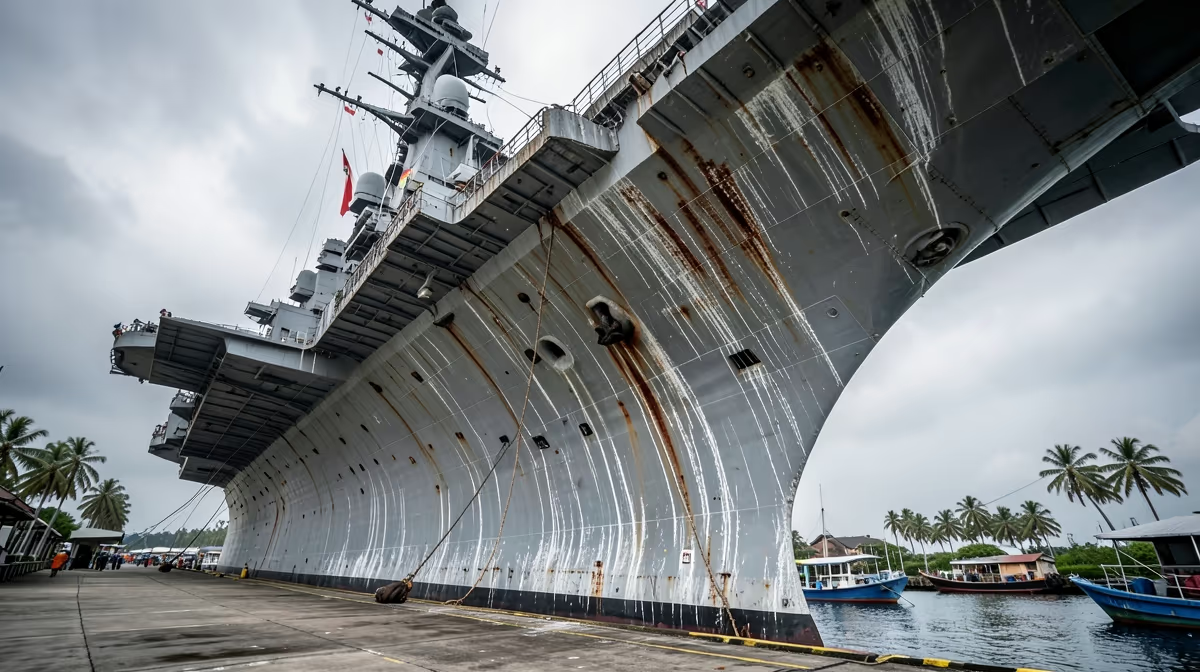
When a 100,000-ton nuclear-powered giant emerges from the ocean caked in thick layers of salt and rust, it tells a story far deeper than any official military press release. The recent appearance of a heavily weathered warship in Southeast Asian waters has laid bare the extreme physical and human toll of modern maritime chess.
The USS Abraham Lincoln deployment has officially concluded following a remarkable 286-day mission in the Indo-Pacific region, highlighted by a strategic port call in Thailand. After spending nearly ten months away from its home port, the massive aircraft carrier has finally departed Thai waters, marking the final stretch of one of the longest continuous naval deployments in recent memory.
The record-breaking 286-day deployment of the USS Abraham Lincoln highlights both the immense strategic reach and the growing physical and psychological strain on the United States Navy’s global fleet.
The Toll of a Record-Breaking Ocean Odyssey
The sheer scale of the USS Abraham Lincoln's mission represents a massive operational undertaking. Stretched across nearly ten months, this deployment has pushed both the Nimitz-class aircraft carrier and its thousands of crew members to their absolute limits. Standard naval deployments typically last around six months, making a 286-day stint at sea an exceptionally grueling and demanding endeavor.
The prolonged timeline of this deployment reveals a relentless operational schedule, driven by shifting global security dynamics and high-tension environments. The carrier's journey is mapped across several key phases:
| Date | Milestone |
|---|---|
| December 2025 | USS Abraham Lincoln begins its protracted deployment cycle into high-tension operational zones. |
| September 2026 | The carrier arrives in Thailand for a much-needed port call and maintenance following a record-breaking 286-day deployment. |
| Present | The vessel departs Thailand and heads back to the United States amidst discussions on the sustainability of prolonged naval deployments. |
This timeline illustrates how intense global security demands have forced extended operational cycles. By staying at sea for nearly ten months, the carrier group provided continuous presence, but did so at a significant cost to its physical hull and the personnel on board.
The Strategic Respite in Thailand
Following its grueling period at sea, the USS Abraham Lincoln made a highly anticipated five-day port call in Thailand. This stop served a dual purpose: providing the exhausted crew with a much-needed opportunity to rest and recharge, while allowing the ship to undergo essential, localized maintenance.
During the five "incredible" days docked in the country, the sailors enjoyed a brief but vital respite from their demanding duties. At the same time, the vessel underwent a high-profile physical cleanup. The carrier was given a badly needed exterior scrubbing to wash away the heavy salt buildup and grime accumulated over its hundreds of days at sea.
Beyond the physical benefits to the ship and crew, the stop underscored Washington's ongoing efforts to maintain a visible maritime presence and cultivate soft-power alliances in Southeast Asia. Port calls in strategic partner nations like Thailand serve as a key diplomatic tool, reinforcing bilateral relations and demonstrating the US Navy's capacity to operate and sustain its forces within the region.
Visible Wear and the Logistics of Rust
As the USS Abraham Lincoln sat docked during its US Navy Thailand port call, its physical appearance became a major talking point among naval experts, media outlets, and defense analysts. Photos and observer reports from the port call revealed a heavily weathered warship covered in highly visible rust. This prompted widespread discussions, particularly in publications like the National Interest and TWZ, regarding whether such a level of visible degradation is normal for a modern nuclear-powered carrier.
Naval experts noted that while rust is a natural consequence of operating steel hulls in harsh, highly corrosive saltwater environments for nearly 300 days, the visible wear on the USS Abraham Lincoln is a stark symbol of deeper logistical challenges. The physical degradation of the ship highlights several critical factors facing the modern fleet:
- Material Degradation Costs: Prolonged exposure to oceanic elements accelerates the decay of protective coatings, leading to extensive rust that requires labor-intensive scraping and painting.
- Maintenance Backlogs: The longer a ship remains deployed, the more routine maintenance tasks are deferred, compounding the workload once the vessel eventually enters a shipyard.
- Dry-Dock Availability: Extended missions delay scheduled dry-dock periods, creating a bottleneck in naval maintenance facilities that struggle to keep pace with heavily worn ships.
Ultimately, the visible rust documented in Thailand serves as a physical manifestation of the heavy material toll that maintaining a continuous global presence takes on aging naval platforms.
Geopolitical Signaling in the Indo-Pacific
The context behind this historic deployment is deeply rooted in the broader Indo-Pacific defense strategy. Operating a carrier strike group for 286 days allows the United States to project power and reassure regional allies of its security commitments. However, analysts point out a hidden angle in the ship's weathered appearance: the visible wear and tear may inadvertently signal the heavy toll that pacing multiple demanding theaters simultaneously takes on the US fleet.
Historically, carrier strike groups have been stretched thin during periods of heightened tension, drawing parallels to Cold War-era carrier operations when prolonged deployments were used to maintain global presence. Today, the US Navy finds itself balancing persistent security commitments in both the Indo-Pacific and Middle Eastern theaters.
This dual-theater demand forces carriers to stay on station longer, accelerating the wear on hulls, propulsion systems, and onboard electronics. While the visible presence of a carrier strike group sends a powerful deterrent message to adversaries, the physical state of the ship also reveals the high logistical price of maintaining such an intense operational tempo.
The Human Cost of Extended Deployments
While the technical and geopolitical aspects of the carrier's deployment are heavily analyzed, the human element remains the most profound. Spending nearly ten months away from home places an immense psychological and physical strain on the thousands of service members aboard the USS Abraham Lincoln, as well as the families they leave behind.
My son has finally arrived in Thailand after this record deployment, and I am just so relieved.
This sentiment, shared by the mother of an aboard sailor, reflects the deep anxiety and emotional exhaustion experienced by military families during extended missions. For many loved ones, the news of the ship's arrival in Thailand and its subsequent departure for home brought a long-awaited sense of comfort and closure.
The situation has also sparked domestic political scrutiny over military welfare and personnel welfare. Policymakers and military leaders are increasingly forced to balance the strategic necessity of signaling strength to adversaries against the very real threat of personnel exhaustion, decreased retention rates, and the mental health challenges associated with prolonged sea duty.
Operational Outlook and the Journey Home
With its historic port call in Thailand concluded, the USS Abraham Lincoln has begun its long-awaited transit back to the United States, representing the final phase of its historic journey.
The Next 24 to 72 Hours
Best-Case and Worst-Case Scenarios
Conversely, the worst-case scenario involves the potential for unforeseen mechanical or engineering issues. After 286 days of continuous, high-tempo operations without major shipyard maintenance, the carrier's aging systems are highly vulnerable to wear-induced failures, which could potentially disrupt its transit timeline or demand unexpected logistical support.
Frequently Asked Questions
What is the USS Abraham Lincoln?
The USS Abraham Lincoln is a nuclear-powered US Navy aircraft carrier that recently completed a historic deployment. It has been traveling abroad on a mission lasting nearly an entire year.
How long was the USS Abraham Lincoln's deployment?
The aircraft carrier completed a record-breaking 286-day deployment. This exceptionally long mission kept the ship and its crew away from home for an extended period.
Why did the USS Abraham Lincoln stop in Thailand?
The carrier made a port call in Thailand, spending five days in the country. During this stop, the ship underwent a much-needed scrubbing and maintenance following its grueling deployment.
Why was the USS Abraham Lincoln looking so rusty?
After spending nearly 300 days at sea in harsh oceanic environments, the ship's exterior accumulated noticeable rust. Naval experts noted that such wear and tear is common during extended deployments without extensive dock maintenance.
Who was affected by the lengthy deployment?
The extended tour significantly impacted the thousands of sailors on board and their families back home. Loved ones expressed immense relief and excitement as the crew finally arrived in Thailand and prepared to return to America.
What happens next for the USS Abraham Lincoln?
After enjoying a few days of rest and maintenance in Thailand, the aircraft carrier headed back home to the United States. The voyage marks the conclusion of its monumental 286-day mission.
Conclusion
The departure of the USS Abraham Lincoln from Thailand marks the final chapter of a historic 286-day deployment that has tested the limits of both naval engineering and human endurance. While the five-day port call provided vital rest for the crew and essential cleaning for the heavily weathered hull, the visible rust and wear on the carrier have sparked important conversations about defense budgets, maintenance backlogs, and the sustainability of current global naval operations. As the carrier strike group continues its transit back to the United States, defense analysts and military leaders will undoubtedly study the outcomes of this deployment to address the delicate balance between strategic power projection and the long-term readiness of the fleet.
Sources
- Mother of USS Abraham Lincoln sailor "so relieved" son has arrived in Thailand after record deployment — CBS News
- USS Abraham Lincoln heading home to America after five ‘incredible’ days in Thailand — New York Post
- US aircraft carrier departs Thailand after port call — Bangkok Post
- Was It Normal for the USS Abraham Lincoln to Look So Rusty in Thailand? — nationalinterest.org
- USS Abraham Lincoln Is Getting A Badly Needed Scrubbing While In Thailand — TWZ
- Nuclear-powered USS Abraham Lincoln ends record 286-day deployment — Interesting Engineering


