
Iran War Oil Shock Triggers Alarming Shift in Global Reserves
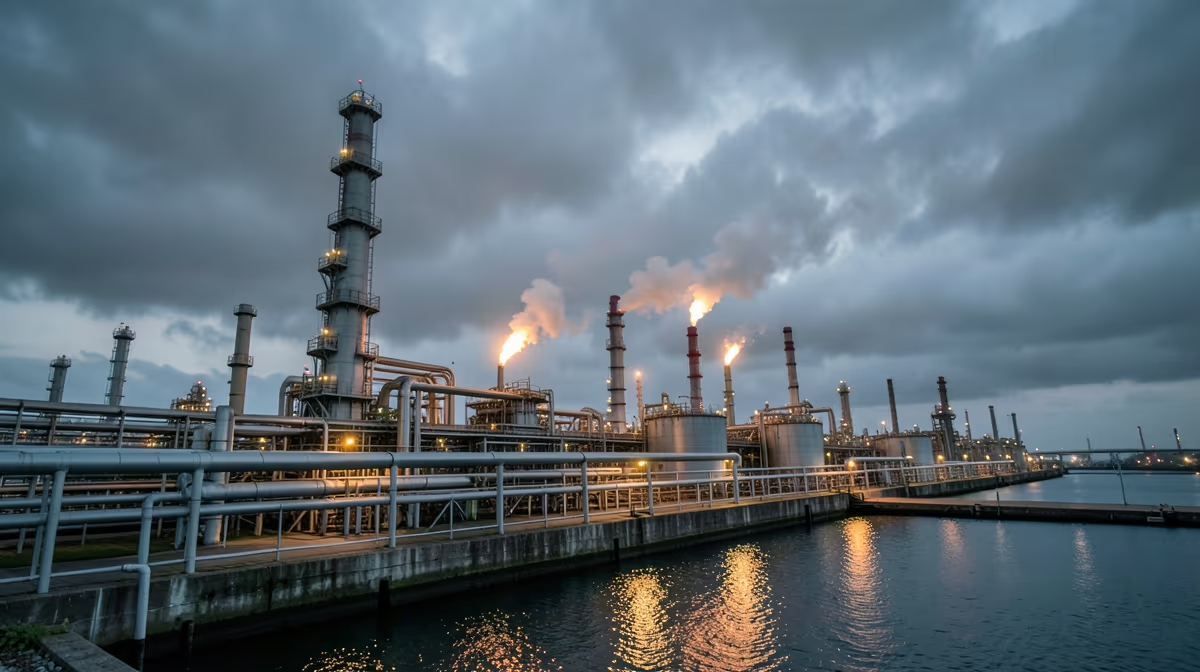
The safety cushions that long shielded the global economy from Middle East volatility have quietly vanished, leaving international crude supply exposed to the slightest geopolitical tremor. As regional friction intensifies, the threat of an Iran war oil shock has exposed severe energy market vulnerability, turning executive warnings from major producers into urgent financial indicators. Without strategic reserves and commercial crude stockpiles to absorb sudden supply disruptions, international markets are operating without the safety net that historically contained runaway price spikes.
The strategic reserves and commercial oil buffers that previously absorbed the Iran war shock have been effectively drained, leaving global markets acutely exposed to sudden supply disruptions.
The Exhaustion of Strategic Petroleum Cushions
Global petroleum markets have historically relied on a blend of spare production capacity and strategic petroleum reserves to neutralize sudden geopolitical shocks. When conflicts erupted across oil-producing regions in past decades, these built-in reserves functioned as shock absorbers, releasing crude rapidly to prevent widespread market panic and physical shortages.
That protective framework has now reached a critical turning point. Chevron's CEO has issued a stark warning that the vital oil buffers that cushioned the earlier shocks of the Iran conflict have been drained. This systematic drawdown of commercial and sovereign stockpiles means that the global oil supply no longer possesses the excess capacity needed to offset unexpected regional outages. When unexpected conflicts emerge in vital production corridors, producing entities and consumer nations lack the backup inventory required to step in and stabilize prices, leaving everyday markets directly exposed to raw volatility.
The underlying root cause traces back to the prolonged drawdown of both sovereign petroleum reserves and commercial corporate inventories following sustained tensions across the Middle East. While drawing down emergency buffers provided temporary relief during earlier phases of friction, it systematically emptied the storage facilities that modern economies depend upon during severe geopolitical confrontations.
Operational Restructuring and Corporate Capital Strategy
Against this backdrop of tightening international balances, major energy corporations are reshaping their broader business operations and capital allocations. Chevron is currently managing several high-profile domestic and international developments that highlight how large producers are adjusting to shifting market conditions.
At home, Chevron is undertaking a $715 million overhaul of its downtown headquarters in Houston, solidifying the city as its corporate operational anchor. Simultaneously, the company has had to address operational challenges on the ground, including a recent loss-of-containment incident at a Chevron well site in Lea County that forced local authorities to close Orla Road. These localized industrial realities illustrate the constant logistical pressures energy giants navigate while balancing broader international obligations.
| Timeline Marker | Strategic Event or Milestone | Market Significance |
|---|---|---|
| September 2026 | Chevron confirms operational expansion in Venezuela | Strategic move toward diversified regional production hubs |
| October 2026 | Chevron CEO warns global oil buffers are drained | Official corporate alert on structural energy market vulnerability |
| Late October 2026 | Energy markets react to depleted reserves amid tech sell-offs | Major firms prioritize cash preservation and defensive positioning |
Beyond domestic infrastructure, international diversification has become a central strategic pillar. In September 2026, Chevron confirmed plans to expand its operations in Venezuela, reflecting a deliberate effort to establish production presence across alternative resource basins. As traditional supply lines face ongoing scrutiny, expanding extraction in diverse geographic territories serves as a hedge against acute regional bottlenecks.
Market Dynamics: Energy Equity Resilience and Competitor Allocation
The depletion of strategic stockpiles has coincided with broader financial market realignments. Amid widespread technology sector sell-offs, institutional investors have turned toward defensive value assets and established cash generators. Notable market movements, such as Berkshire Hathaway relying on cash reserves alongside holdings in Coca-Cola and Chevron, underscore the defensive role energy equities play during periods of economic instability.
Energy analysts continuously evaluate the operational discipline of Chevron alongside peer giants like ExxonMobil. When oil buffers are depleted, corporate capital allocation becomes a defining metric for institutional investors tracking energy market vulnerability.
- Maintaining robust defensive cash positions to weather sudden pricing swings
- Balancing extensive capital expenditures against maintenance and containment requirements
- Reallocating drilling capital toward secure and accessible operational basins
- Enhancing dividend and cash flow stability while equity markets experience broader tech sell-offs
Both Chevron and ExxonMobil face an investment community focused on capital discipline. With global supply cushions exhausted, upstream producers must navigate volatile crude futures while managing complex supply chain risks and localized facility maintenance.
Geopolitical Exposure and Strategic Realignment
The systemic erosion of crude cushions carries severe geopolitical consequences that extend far beyond corporate balance sheets. In the international arena, governments and energy regulators face intense pressure over long-term energy security management. Prolonged geopolitical friction across the Middle East has exposed the clear mathematical limits of short-term supply cushioning.
Historically, the modern situation finds a direct parallel in the 1973 oil crisis, an era that laid bare the extreme fragility of depleted global petroleum buffers and ultimately forced wholesale structural shifts in international energy security policies. Today, the geopolitical vulnerability of the Middle East directly amplifies systemic risks across international trade lanes. Western nations and major energy conglomerates are being forced to recalibrate their dependence on volatile producing zones.
The rapid depletion of commercial buffers may force a quiet realignment of multinational oil diplomacy toward localized and diversified production hubs.
This dynamic points toward a quiet operational realignment. By expanding operational footprints in regions like Venezuela and reinforcing domestic infrastructure, major energy companies are attempting to insulate themselves against potential future supply blockades in traditional export regions like the Middle East.
Downstream Economic Impact on Global Consumers
The structural draining of petroleum reserves is not merely an abstract metric for commodity traders; it directly dictates the cost of living across the globe. When upstream buffers disappear, the transmission mechanism from geopolitical conflict to end-consumer pricing accelerates dramatically.
Without sufficient backup inventory to absorb market disruptions, price volatility cascades downstream into transportation, freight logistics, and consumer goods. Everyday drivers face rapid price escalations at the fuel pump, while aviation passengers and commercial shipping operators encounter rising fuel surcharges.
Furthermore, industrial manufacturers and businesses that rely on petroleum products as core inputs must absorb unpredictable wholesale price fluctuations. Because refined fuels underpin global transport networks, an unmitigated shock in crude benchmarks swiftly ripples through broader consumer price indices, reducing household purchasing power and compounding broader economic uncertainty.
Near-Term Trajectory and Analytical Scenarios
The immediate path forward for the global energy market will depend heavily on corporate reserve reporting, geopolitical developments, and strategic output decisions. Over the next 24 hours, markets and energy analysts will continue monitoring executive commentary regarding depleted global oil buffers and the ongoing geopolitical risks stemming from potential supply shocks.
Over the next 72 hours, investors and energy sector observers will scrutinize how major corporations like Chevron and ExxonMobil manage capital allocation, routine operations, and heightened market volatility. Energy analysts broadly expect sustained crude volatility and intensive scrutiny of corporate inventories and operational buffers as geopolitical friction persists.
Market observers have outlined two distinct operating pathways for the global economy moving forward:
- Best-Case Scenario: International energy markets absorb ongoing supply pressures smoothly while producers maintain disciplined operations, strong cash reserves, and steady crude outputs across diversified production bases.
- Worst-Case Scenario: Escalating geopolitical friction collides with drained strategic stockpiles, triggering sharp global crude price spikes, severe supply constraints, and intensified market instability.
How major producers balance their capital expenditure against these structural supply challenges will determine the stability of the global oil supply in the months ahead.
Frequently Asked Questions
What did the Chevron CEO warn about oil buffers and the Iran war shock?
The CEO of Chevron warned that global oil buffers, which previously cushioned markets against shocks like the Iran conflict, have now been drained. This depletion leaves the energy market more vulnerable to sudden geopolitical disruptions.
Why does the depletion of global oil buffers matter for energy markets?
Without sufficient oil buffers, any escalation in geopolitical tensions or supply disruptions can lead to sharp and volatile spikes in global oil prices. This increases economic pressure on consumers and industries reliant on stable petroleum supplies.
Who is affected by the draining of oil shock buffers?
Global consumers, businesses, and energy companies like Chevron and ExxonMobil are directly impacted by the tightening of oil reserves. Higher price volatility can influence broader market performance and corporate investment strategies.
What happens next if global oil reserves remain low?
Markets will likely remain highly sensitive to news from major producing regions, particularly the Middle East. Any further supply constraints could trigger immediate price surges due to the lack of a protective cushion.
How are major energy companies positioned amidst current market conditions?
Major energy firms are navigating these tightening supply conditions while also managing large-scale infrastructure projects, such as Chevron's downtown Houston headquarters overhaul. Investors continue to evaluate companies like Chevron and Berkshire Hathaway's holdings for stability against tech sector sell-offs.
What specific operational updates involve Chevron recently?
Alongside commentary on global oil markets, Chevron has confirmed plans to expand its operations in Venezuela and has addressed localized infrastructure incidents, such as a loss-of-containment event at a well site in Lea County.
Conclusion
Chevron's confirmation that global oil cushions have been drained marks a critical development for international energy stability. With commercial inventories and strategic petroleum reserves exhausted after absorbing previous geopolitical friction in the Middle East, the global market operates without its traditional safety buffers. As energy giants continue balancing domestic facility management in Houston and Lea County with operational expansions in Venezuela, corporate resilience and capital allocation will face continuous testing. The near term will see energy analysts, regulatory authorities, and investors closely monitoring inventory balances, where any sudden disruption could trigger immediate volatility across global supply chains.
Sources
- Chevron's $715 million downtown headquarters overhaul makes Houston its home — The Business Journals
- Lea County closes Orla Road after loss-of-containment incident at Chevron well site — CBS7
- Berkshire beats the tech sell-off with Coke, Chevron and cash — TheStreet
- Better Oil Stock: Chevron (CVX) vs. ExxonMobil (XOM) — The Motley Fool
- Chevron CEO warns oil buffers that cushioned the Iran war shock have been ‘drained’ — Fortune
- US oil giant Chevron confirms it will expand operations in Venezuela — AP News


